- By Admin
- Integro
- The winter freeze problem: why cold weather exposes band heater limitations
- Two paths to barrel warming: uninsulated bands versus full-wrap jackets
- Why air gaps and wind chill destroy heating efficiency
- By the numbers: how ambient temperature drops impact power draw
- The brutal truths: where these heaters actually break down
- Deciding based on your material's viscosity thresholds
- From scorched honey to smooth resin: operations that made the switch
- Common Questions About Drum Heaters in Cold Weather
The winter freeze problem: why cold weather exposes band heater limitations
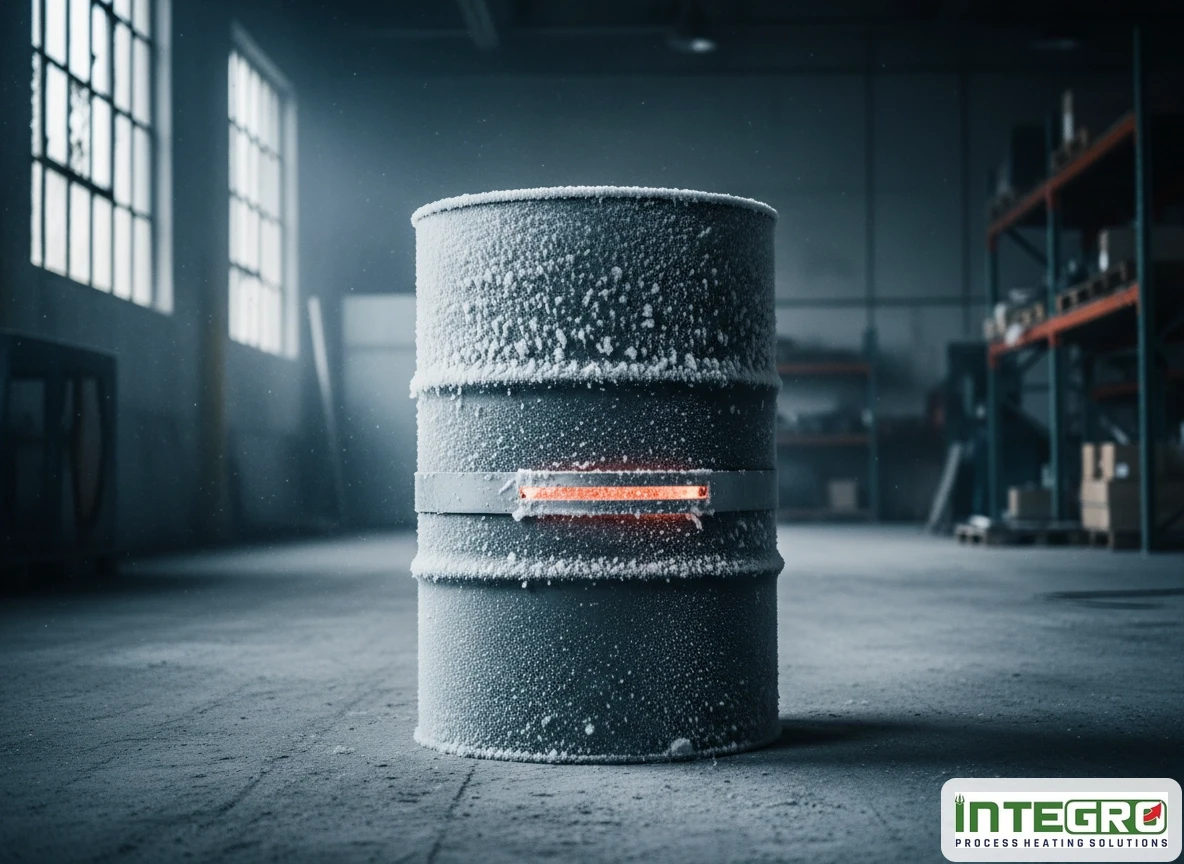
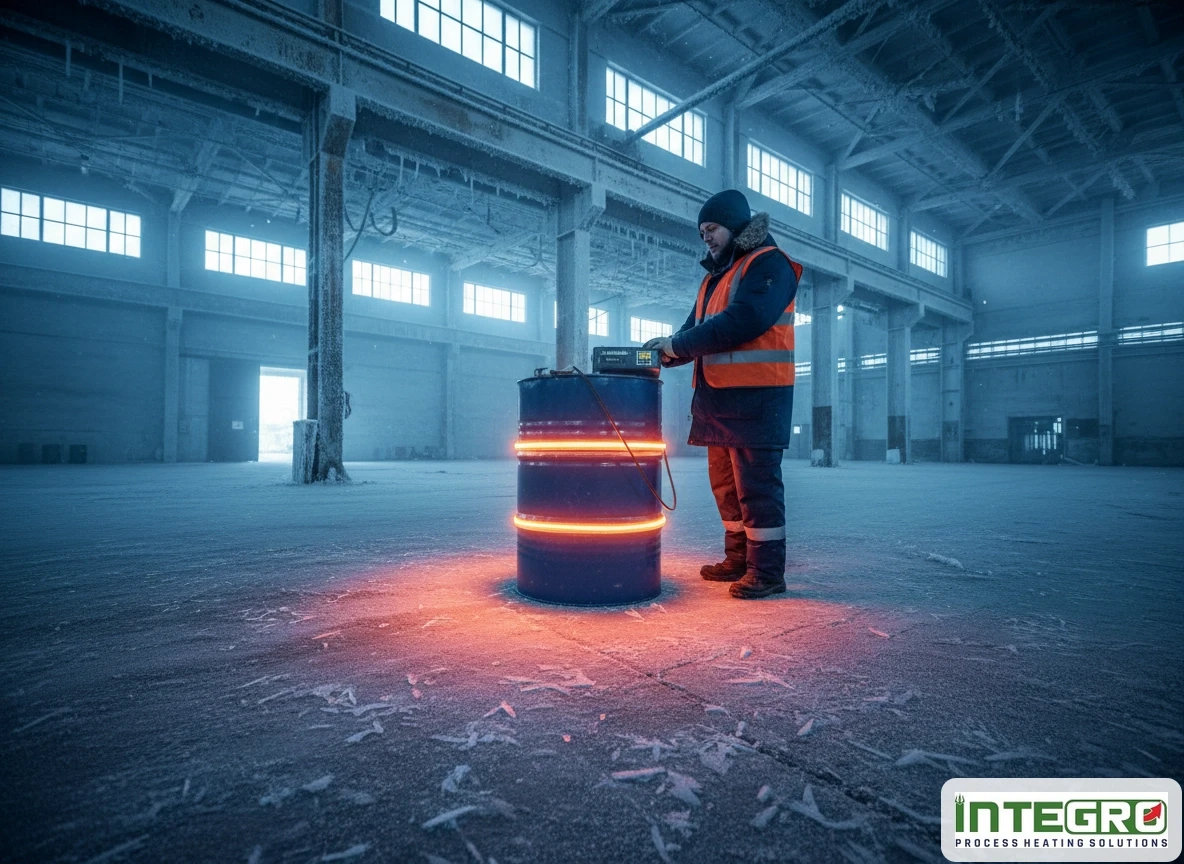
Picture walking into your warehouse on a freezing 20°F morning. Your production line is dead in the water because some resin has turned to thick gel inside its drum. You clamp a metal band around the bottom, crank the thermostat, and wait. Hours pass. The top of the barrel is still frozen solid, but the product right next to the heater is already starting to scorch. It's a mess.
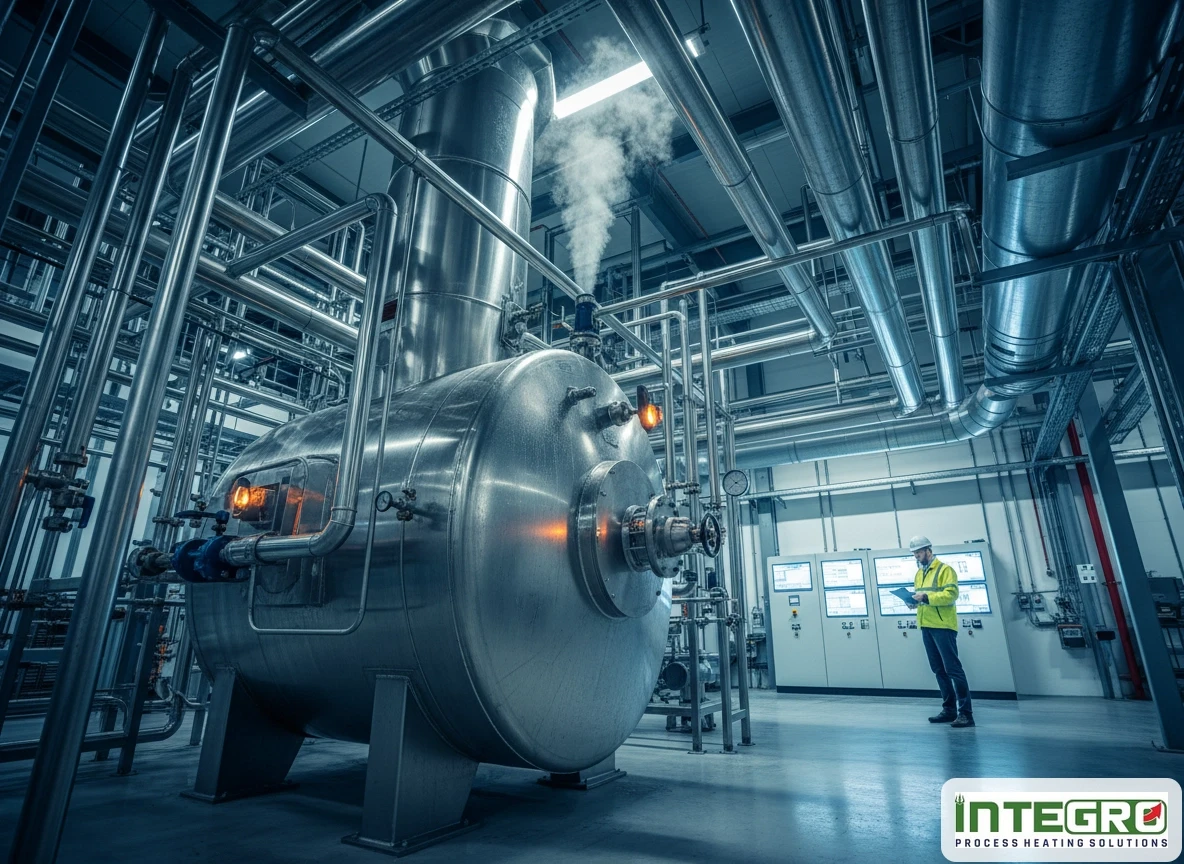
This happens every winter. When the temperature drops, the flaws of a rigid 55 gallon drum heater show up fast. Metal drums warp and expand when they get hot, which means a stiff metal band can't actually stay flush against the surface. You get tiny air gaps. Those gaps act like little insulation pockets, blocking the heat. Instead of warming your product, about half of your expensive electricity just vents straight into the cold room.
It gets worse. Since these bands don't have any insulation on the outside, they're totally exposed to drafts. The internal elements have to run wide open just to keep up with the heat loss. That constant strain is exactly why these bands burn out so fast. Sure, some cheap, thin liquids might survive this uneven heating, but sensitive chemicals or food ingredients get ruined instantly.
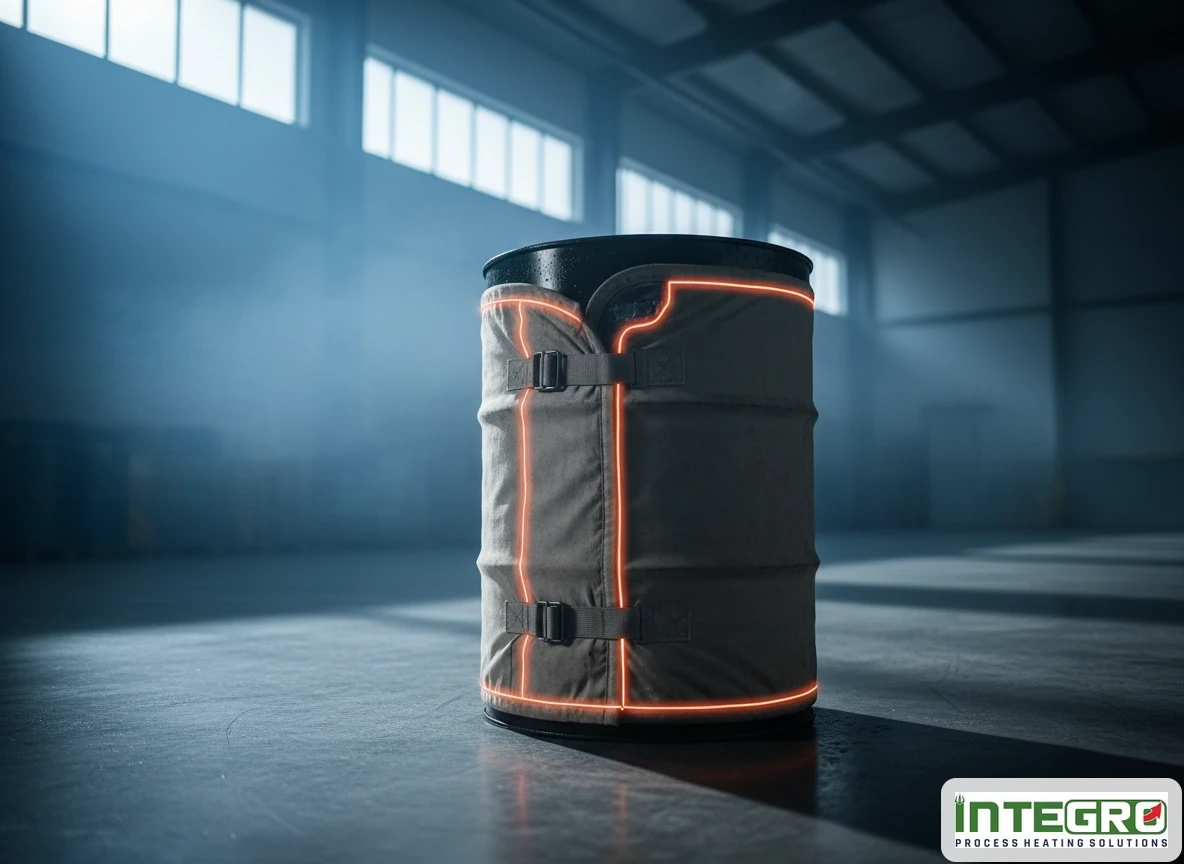
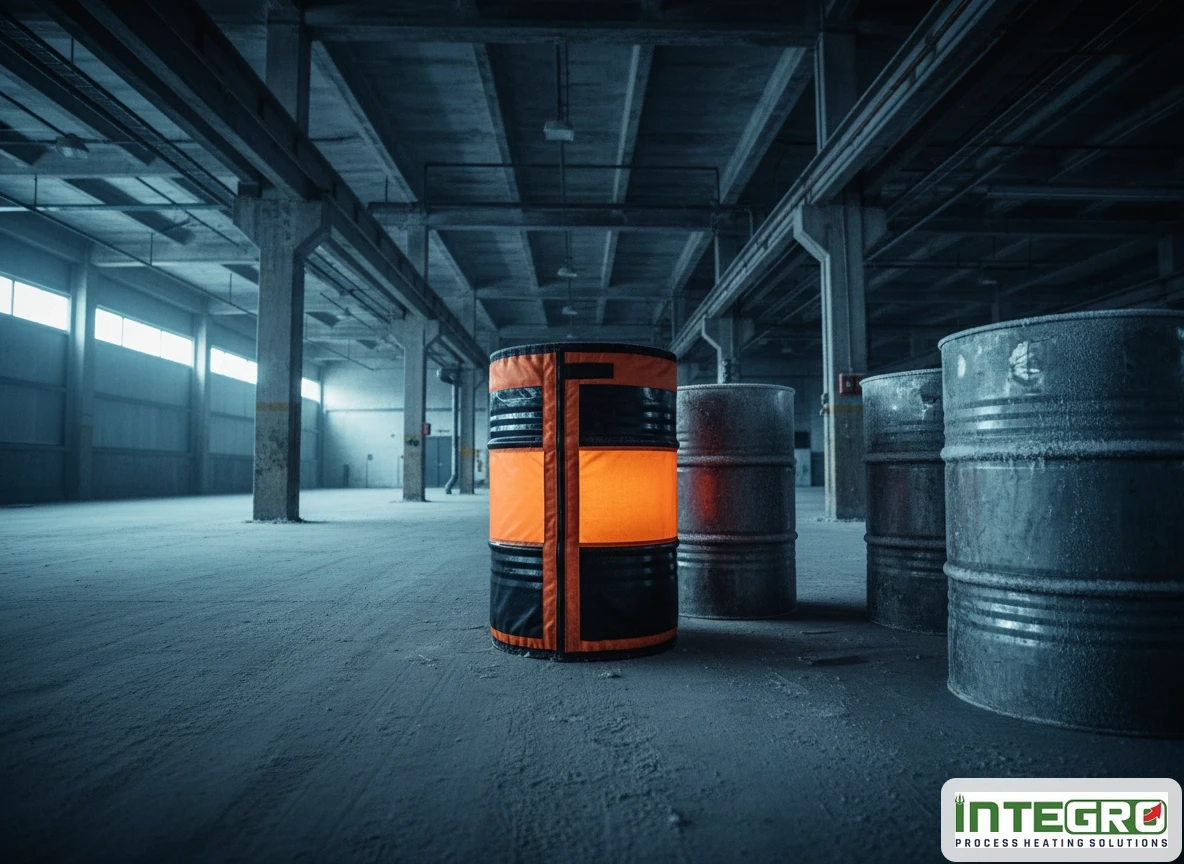
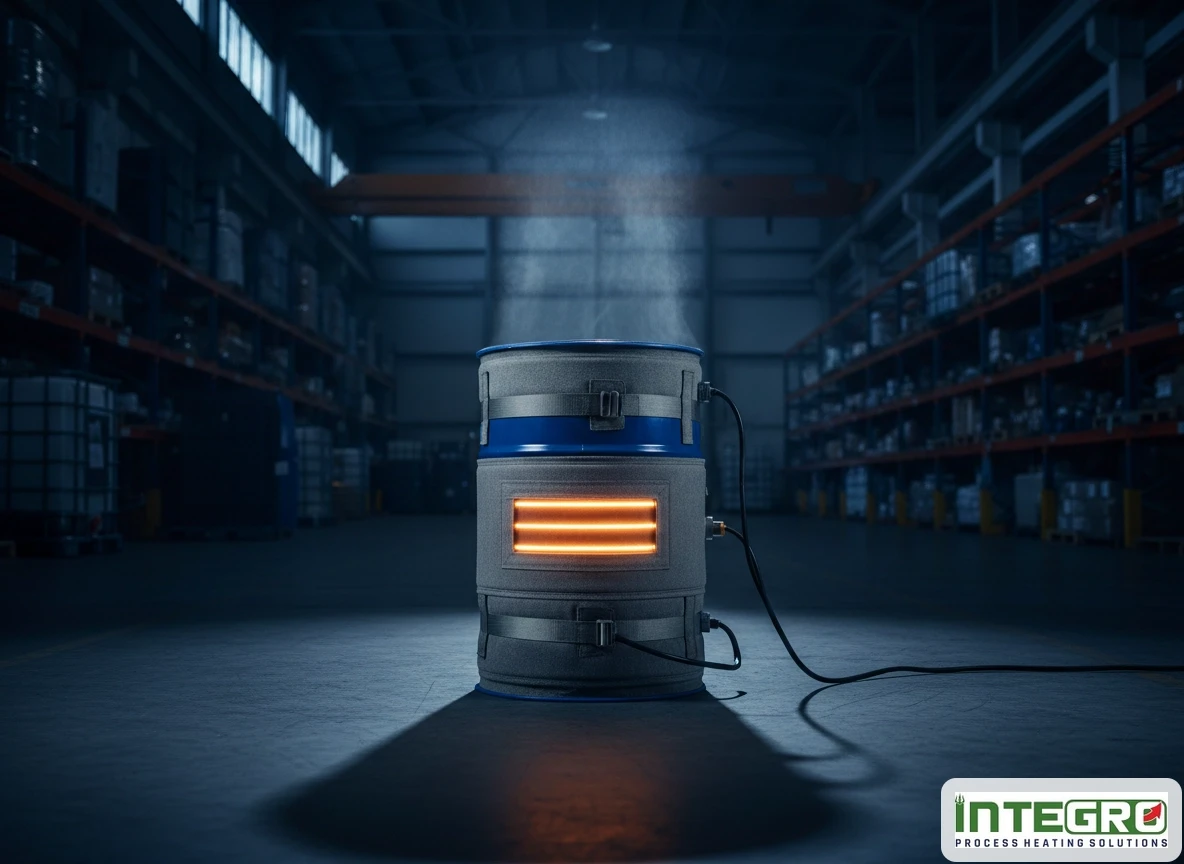
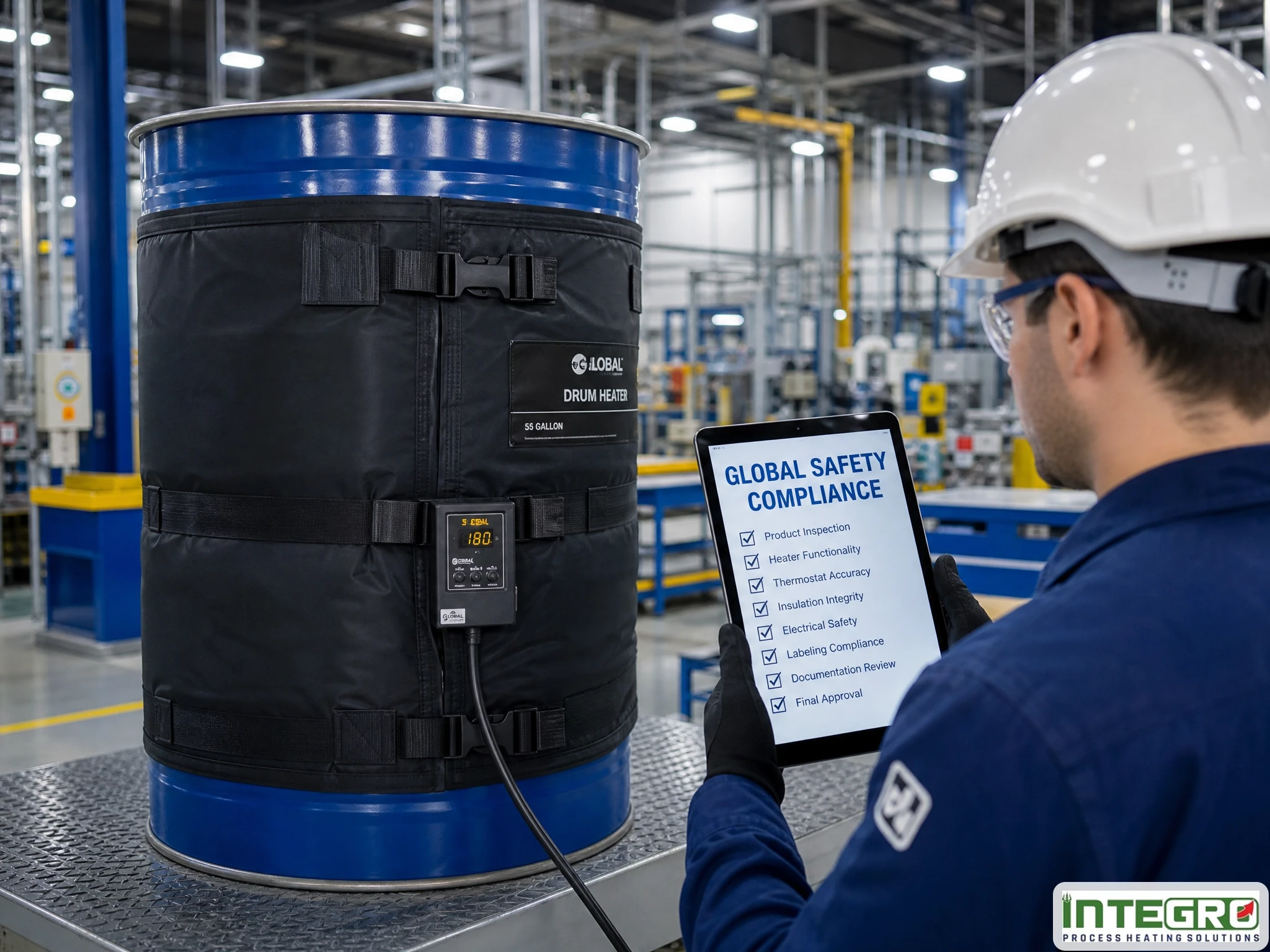
We see operators try to fight the winter chill by cranking up the dial on their industrial drum heater. But more power doesn't fix a bad connection; it just burns your product faster. If you're tired of dealing with scorched materials and dead heaters, switching to an insulated flexible heating jacket makes a lot of sense. These jackets wrap the whole drum, keeping the heat inside where it belongs so you can actually get to work.
Two paths to barrel warming: uninsulated bands versus full-wrap jackets
So, you've got a sluggish 55-gallon drum sitting in a cold warehouse, and you need to get its contents moving. How do you actually get heat into that material? Historically, operators grabbed a few cheap, narrow silicone or metal band heaters, clamped them on, and cranked up the dial. But if you look closely at the physics of how heat moves, that approach is incredibly inefficient.\n\nUninsulated bands cover only a tiny fraction of the barrel's surface area. Think about it: you're applying intense, concentrated heat to a narrow strip while leaving the rest of the metal body completely exposed to the freezing air. Up to 50% of your generated energy simply escapes into the room. If there are any slight dents or air gaps, the band runs hot, risks burning out, or worse, scorches your expensive product inside.\n\nThat's where a flexible heating jacket completely changes the math. Instead of relying on localized, high-wattage strips, these drum heating blankets wrap the entire container in a snug, insulated thermal envelope. This full-coverage approach means you don't need extreme, scorching temperatures in one spot to warm the whole barrel.\n\nDoes this mean band heaters are completely useless? Not necessarily. If you're working in a warm indoor room and only need to maintain low temperatures on a highly conductive metal drum, bands might get the job done. But the moment wind chill or sub-zero drafts enter the equation, uninsulated bands fail to keep up. When weighing a 55-gallon drum heater blanket vs band setup, the blanket's ability to distribute a lower watt density uniformly across the entire container wall makes it the far safer, more efficient choice. If you want to stop wasting energy and protect your materials from localized overheating, a full-wrap barrel heater blanket is the logical way to go.
Why air gaps and wind chill destroy heating efficiency
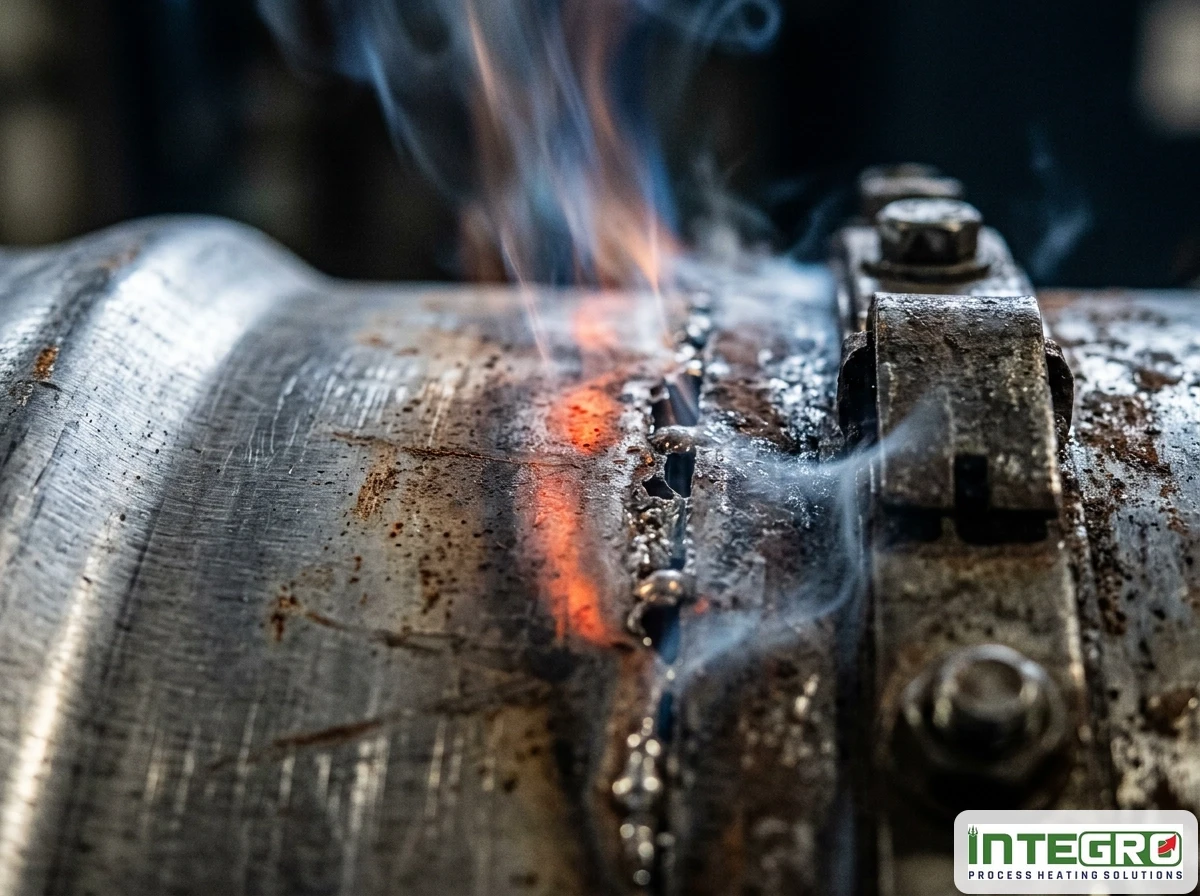
When you strap a rigid metal band or a narrow silicone drum heater onto a cold 55-gallon steel drum, you're fighting a losing battle against physics. The microscopic reality of metal-on-metal contact is surprisingly imperfect. Even a barrel that looks perfectly smooth to the naked eye has tiny surface irregularities, weld seams, and out-of-round deviations. This creates microscopic air gaps between the heating element and the container wall, completely stalling thermal conduction.
Air is a notorious thermal insulator, possessing a thermal conductivity of roughly 0.024 W/m·K at room temperature. When a heater cannot make direct, pressurized contact with the surface, heat must transfer via convection and radiation across these air pockets. But in freezing ambient conditions, that heat doesn't make it into your high-viscosity product. Instead, the heat takes the path of least resistance, radiating outward into the cold shed or yard. If you're using a standard electric barrel heater without a protective insulated envelope, you can expect over 50 percent of your generated thermal energy to escape straight into the atmosphere.
The devastating impact of convective wind chill
Now, introduce a sub-zero draft or wind chill into the equation, and your efficiency drops off a cliff. Forced convection accelerates this thermal loss exponentially. As cold air sweeps across the exposed, uninsulated back of a metal band heater, it strips away the thermal boundary layer. This forces the internal resistance wires to run continuously at maximum capacity to compensate.
This continuous cycling is a primary driver behind band heater burn-out issues, as the element overheats internally while the actual drum contents remain frozen. At Integro Process Heating Solutions, we frequently see facilities crank up the voltage to force heat through these gaps, which only accelerates element degradation.
Why surface contact area dictates thermal transition
To understand why, we have to look at Fourier’s Law of Heat Conduction. The rate of heat transfer is directly proportional to the contact area and the temperature gradient. Narrow bands cover less than 20% of a standard drum's surface. When you couple this limited footprint with air gaps, the thermal transition is severely bottlenecked.
And because uninsulated bands lack a reflective or insulating barrier on their outer face, the energy goes where it's easiest to go,into the room, not the product. This lack of contact and insulation is why we design our drum heating jackets to physically wrap the entire container, trapping the heat where it belongs. While results vary based on the specific material viscosity and ambient wind speed, switching from uninsulated bands to full-wrap insulated solutions typically slashes energy consumption by half while eliminating localized hot spots.
By the numbers: how ambient temperature drops impact power draw
When sub-zero drafts hit an exposed 55-gallon container, the mathematics of thermal loss shift dramatically. Standard plant logs show that an uninsulated metal band heater can lose nearly 50 percent of its total generated energy directly to ambient air when temperatures drop below freezing. That is not just wasted electricity. It is a severe performance penalty that forces facility managers to look closely at engineered custom process heating alternatives. We can trace this energy waste back to surface area coverage and watt density. A narrow band heater concentrates intense heat into a tiny fraction of the barrel wall, often running at extreme watt densities that quickly degrade elements. Meanwhile, a full-wrap drum warmer blanket distributes a much lower, uniform watt density across almost the entire surface of the container. That expansive coverage changes the thermal equation entirely. Instead of fighting ambient drafts with brute force, a well-insulated jacket retains heat directly against the fluid mass. When we analyze real-world telemetry from cold storage yards, facilities transitioning from rigid bands to flexible jackets routinely see power draw stabilize. They avoid the continuous maximum-draw cycle that wrecks electrical components during deep winter freezes. And while some operations try to compensate by pairing band heaters with self regulating heat trace lines around outlet valves, that makeshift setup still leaves the bulk of the barrel wall completely exposed to convective losses. The numbers make the underlying physics clear. If you want to keep viscous resins flowing smoothly without watching your utility bills spike, total surface insulation is the only logical path forward.
The brutal truths: where these heaters actually break down
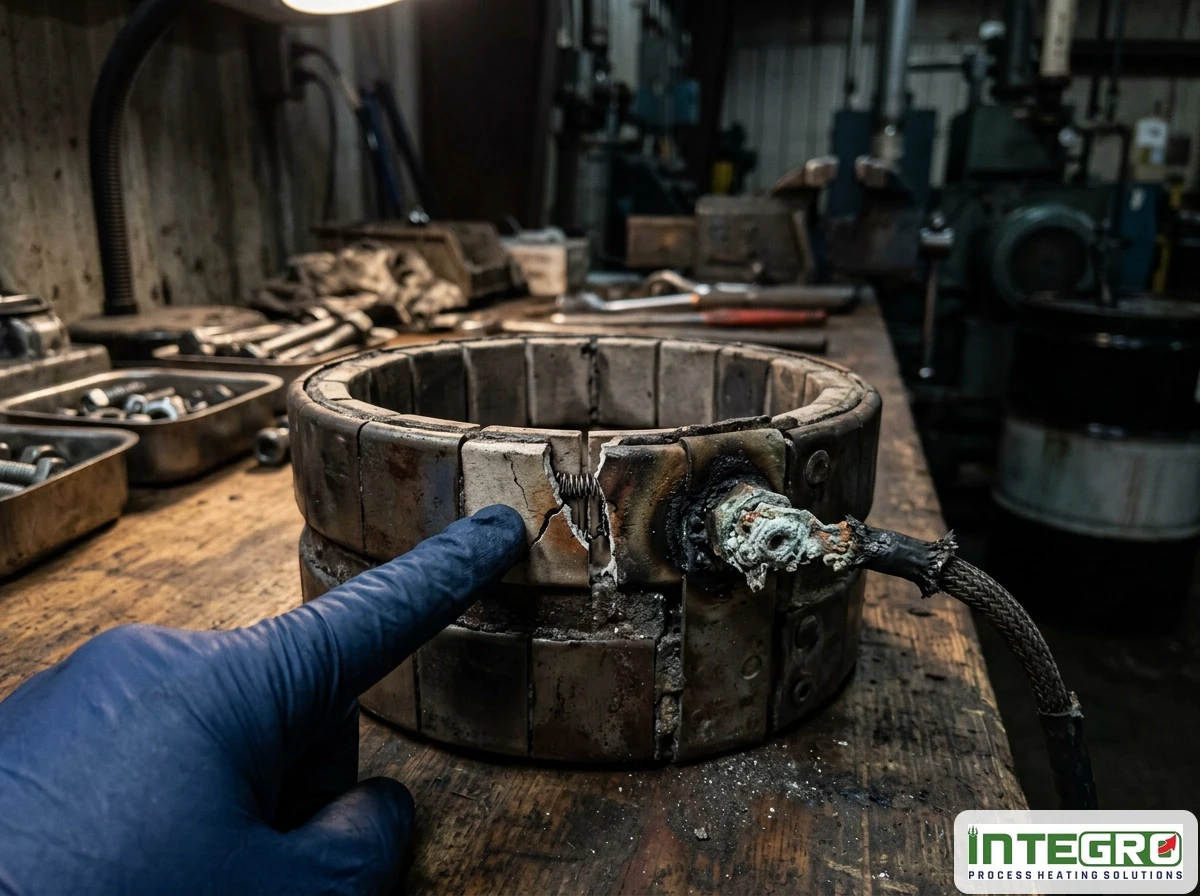
Let's stop talking about abstract thermal calculations and look at what happens when these systems hit the dirty concrete of a real plant floor. If you've used a standard metal band heater, you already know they don't die a peaceful death. They spark, they scorch, and they fail when your production line is backed up.
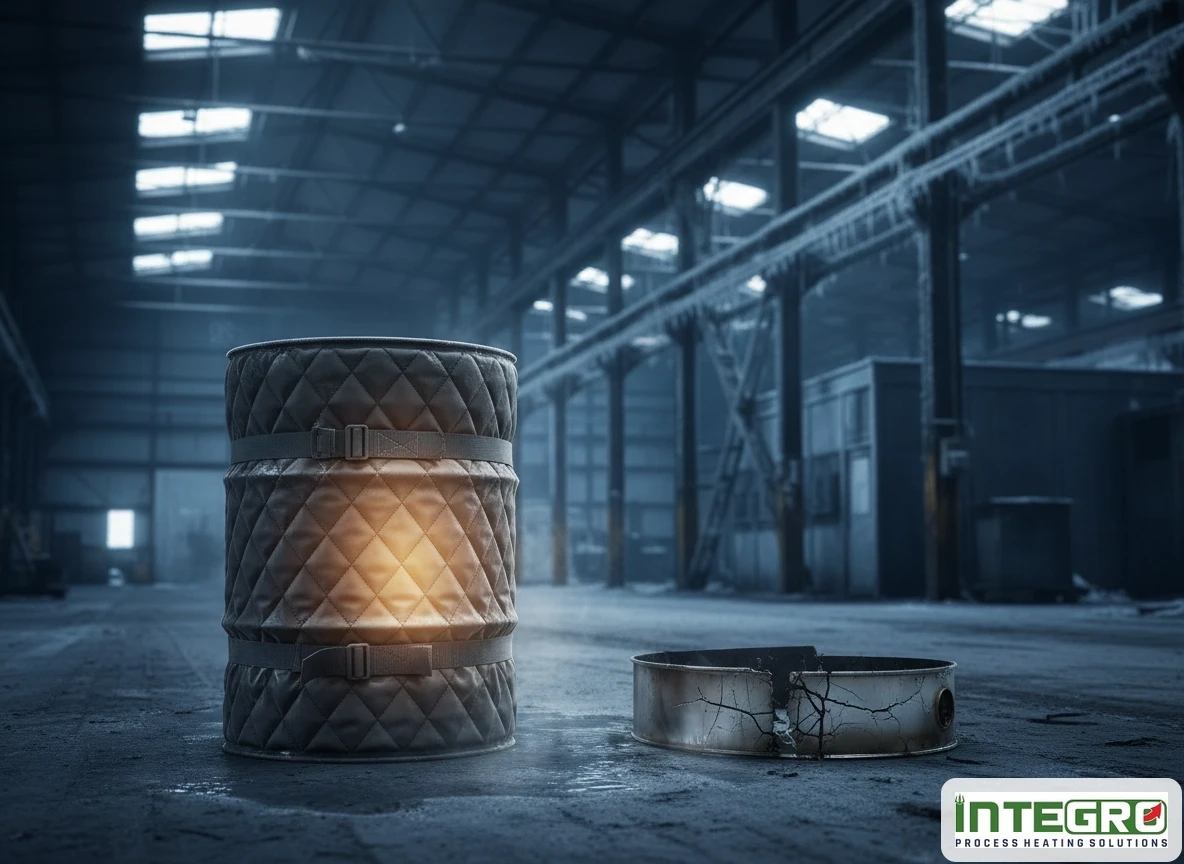
The most common point of failure is structural degradation from moisture ingress. When a cold 55 gallon drum heater sits in a damp warehouse or outdoor shed, condensation pools directly around the lower heating elements. Once you flip the switch, that trapped moisture turns to steam, shorting out the internal wiring almost instantly.
The weak points of rigid bands
Then there are the mechanical connections. Rigid band heaters rely on exposed pull-wire terminals that take a beating during daily drum changeouts. Operators drag them across concrete, overtighten the clamping bolts, or yank on the power cords. This physical abuse quickly leads to terminal fatigue, loose connections, and arcing. While some heavy-duty bands use ceramic insulation to delay this, the physical strain eventually wins. You can check out the common signs your band heater is failing to spot these issues before they halt your process.
Even if the electrical connections hold, the thermal physics of a narrow barrel warmer work against it. Because a band heater concentrates high wattage into a tiny surface area, it creates intense localized hot spots. This leads to localized scorching of sensitive materials like honey, resins, or chemicals. The product burns onto the inner drum wall, insulating the rest of the fluid from the heat. Meanwhile, the band keeps pumping energy into that insulated hot spot until the internal resistor wire literally melts itself.
In contrast, full-wrap jackets distribute lower wattage across the entire surface area. They don't have to run red-hot to do their job. It's the difference between trying to heat a room with a blowtorch versus a central radiator. One burns the wall; the other warms the space.
Deciding based on your material's viscosity thresholds
Once we move past the physical failures of these heating systems, we have to look at what's actually inside your barrels. How do you choose between a quick band and a total wrap? It comes down to viscosity thresholds and how your material reacts to heat. If your material is highly temperature-sensitive, the choice is usually made for you.
Viscosity and the scorching hazard
If you're dealing with low-viscosity, water-like fluids that only need a mild temperature bump to prevent freezing, a basic band might work. But let's be honest: most industrial materials aren't that forgiving. If you're handling thick resins, heavy oils, or food-grade syrups, localized heat is your worst enemy. A narrow band will scorch the product right at the contact point while leaving the rest of the drum crystallized. To avoid this, we at Integro Process Heating Solutions recommend switching to uniform drum heating blankets that distribute lower watt density across the entire surface.
Matching the container to the method
What about your drum material? If you're using plastic poly drums, clamp-on metal bands are out of the question because they'll easily melt through the plastic. You need a gentle, distributed thermal footprint. For these setups, a flexible barrel heater blanket is your safest bet.
What's your target temperature? If you need to hit 150°F on a sub-zero day, an uninsulated band will lose half its heat to the wind. It'll run endlessly, driving up your energy bills while failing to warm the core of the drum. This constant thermal struggle often triggers the classic band heater failure points we see when elements run continuously at maximum capacity. True, a band heater might save you a few dollars upfront, but the cost of ruined product or damaged drums quickly erases those short-term savings.
From scorched honey to smooth resin: operations that made the switch
Imagine walking into a plant on a sub-zero morning to find your transfer pumps screaming. That's exactly what a Midwestern adhesive manufacturer faced when their high-viscosity epoxy resin became as thick as cold asphalt. The operators had strapped three metal band heaters to each drum, but the localized, intense heat scorched the material near the container wall. It created a ruined crust. The core remained solid. The resulting pump cavitation threatened to destroy their expensive gear pumps and halted their entire assembly line for two shifts.
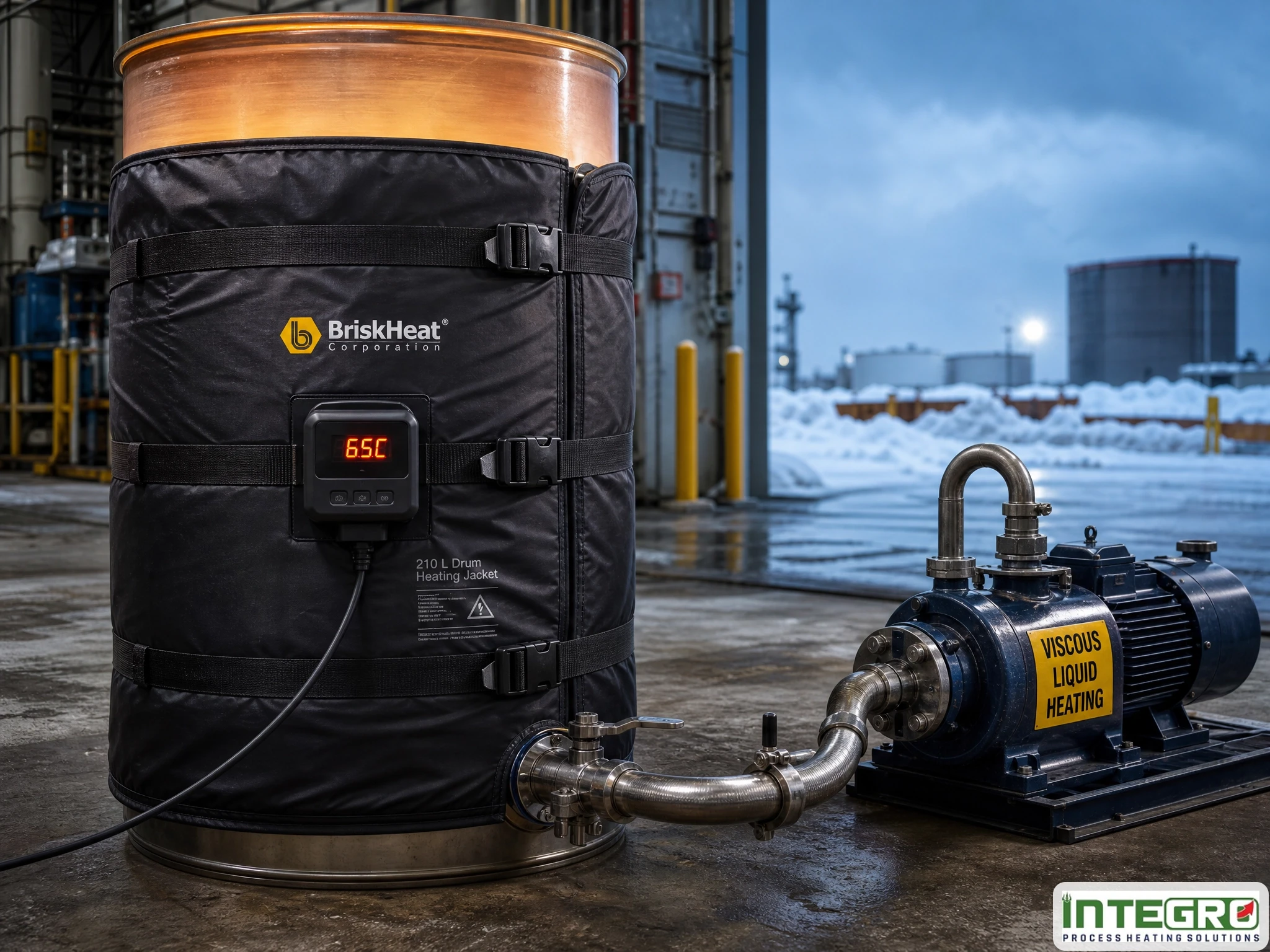
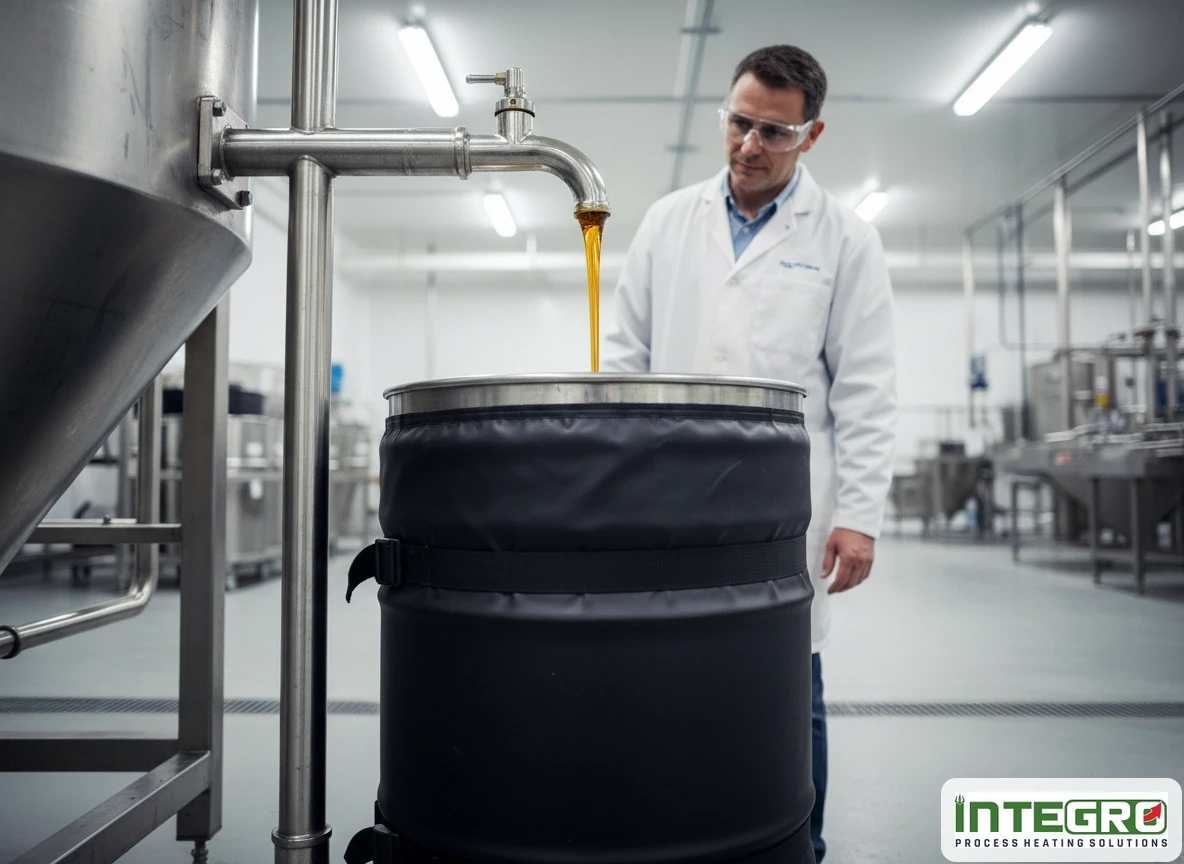
At Integro Process Heating Solutions, we see this precise failure pattern constantly during winter. To fix it, the facility replaced the rigid bands with an insulated industrial drum heater that wrapped the entire 55-gallon barrel. By distributing a lower watt density over the full surface area, the flexible heating jacket safely brought the resin to a uniform 90°F without hot spots. This gentle, even warming process completely eliminated the scorched layer. The pumps stopped cavitating, and the company eliminated thousands of dollars in wasted, charred raw materials.
A similar issue plagues food-grade facilities handling honey or corn syrup. A regional packer was using narrow bands to warm crystallization, only to end up with caramelized, unsellable honey at the bottom and cold lumps at the top. Moving to a fully insulated drum heating jacket solved the thermal gradient. While results can vary depending on the exact material chemistry, switching from localized bands to uniform heating is usually the turning point. If your plant is struggling with cold-weather fluid dynamics, investing in an engineered drum heating chamber or full-coverage jacket is the most logical step to keep your process moving.
If winter cold is stalling your fluid lines, Integro Process Heating Solutions builds custom flexible heating jackets that handle sub-zero drop-offs without burning out.
Common Questions About Drum Heaters in Cold Weather
Why do rigid band heaters burn out so quickly during winter?
They lack insulation on the barrel body, meaning up to half the generated heat escapes into the cold air. Because of this massive heat loss, internal elements run continuously at maximum capacity until they fail.
How do flexible heating jackets prevent product scorching?
They distribute a much lower watt density uniformly across the entire container wall rather than concentrating heat in one narrow strip. It's a safer approach that stops sensitive materials like honey or resin from charring near the contact zone.
Does wind chill really impact an industrial barrel heater?
It's honestly one of the biggest culprits for heater failure in unheated outdoor sheds. Cold drafts strip away surface heat instantly, forcing narrow bands to overcompensate and eventually crack or short out.
What's the best way to handle high-viscosity resins in freezing temperatures?
You'll want to switch from segmented strips to a full-wrap insulated drum blanket that covers the entire surface area. It maintains steady temperatures much more efficiently and keeps your pumps from cavitating.