- By Admin
- Integro
- The winter sugar trap: how cold weather stalls production
- Why extreme viscosity and crystallization destroy pump seals
- The chemistry of Brix: why a few degrees drop doubles the strain
- Why crude quick-fixes leave you with caramelized glucose
- Controlled thermal jackets: the safe path to optimal material pumpability
- Configuring your system: matching containers with drum heating jackets
- Securing your fluid transfer lines before temperatures nose-dive
- FAQ
The winter sugar trap: how cold weather stalls production
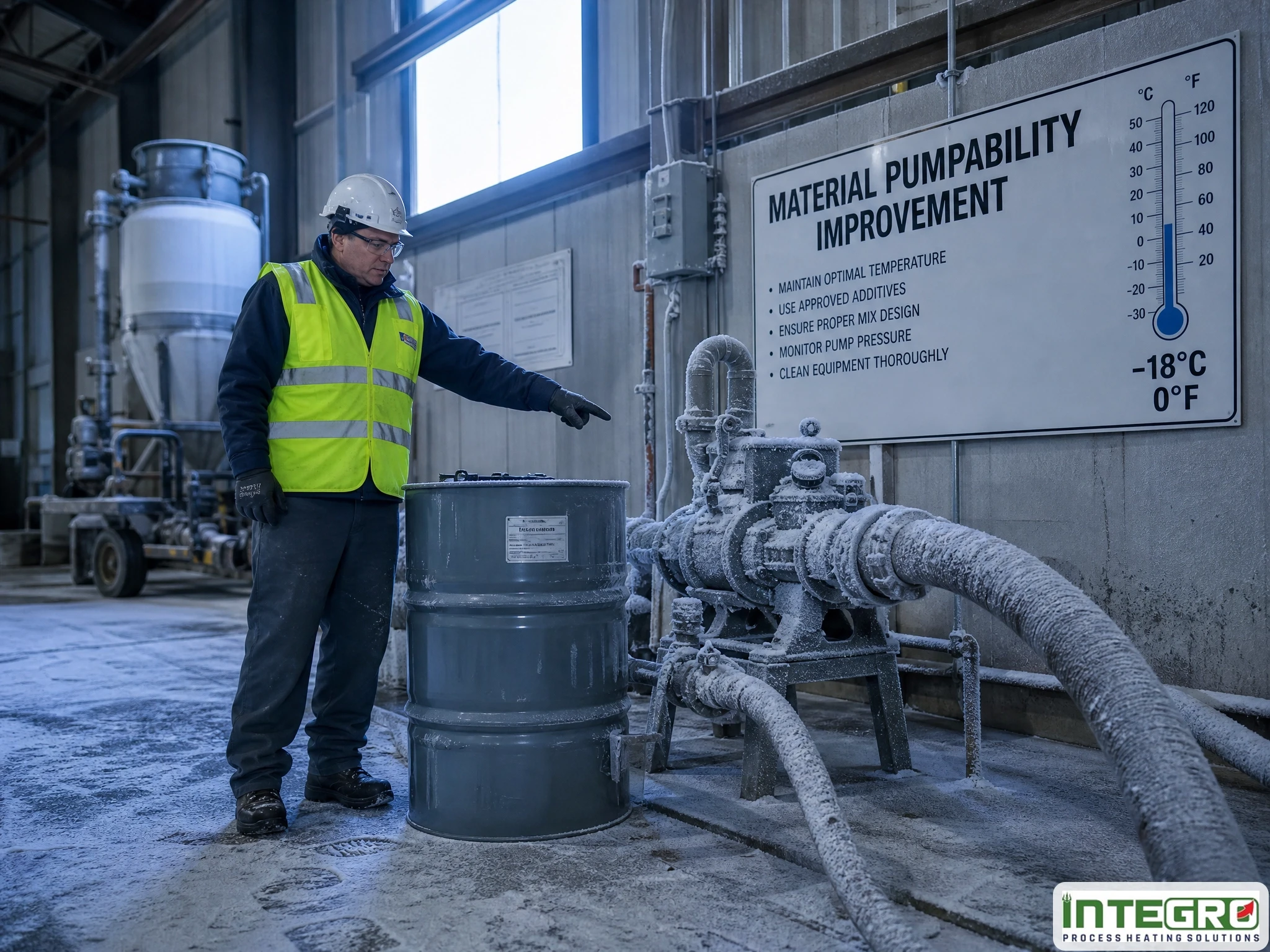
Anyone in food production knows the sheer panic of a stalled line. You walk into the plant on a freezing Tuesday morning in January, and the transfer pumps are screaming. Usually, liquid glucose is the culprit.
At room temperature, standard commercial glucose syrup is already thick, behaving a lot like cold honey. It has a high specific gravity—meaning it's about 1.4 times heavier than water—and typically ships at 80 to 82 Brix, which is just the industry scale for sugar concentration. High sugar means high viscosity. But when winter hits and temperatures drop inside an unheated warehouse, that thick syrup turns into something closer to wet concrete.
This is the winter sugar trap. When operators try to force this nearly solid block of sugar through standard transfer lines, things go downhill fast. A stalled line means stalled production, and you aren't just losing valuable time here—you're risking severe, expensive mechanical damage to your equipment.
We see this exact bottleneck all the time at Integro Process Heating Solutions. A facility will try to pump cold glucose, hoping the motor can simply muscle through the resistance. Honestly, it might not break the pump on day one. You might even get away with it for a few weeks, but the accumulated strain on your system is massive.
Without a dedicated heating strategy, you end up fighting the material instead of moving it. The syrup won't budge, motors overheat, and seals eventually blow out. Viscous liquid heating isn't some optional luxury upgrade for your plant. Using proper custom process heating is a basic requirement to keep lines moving when the weather turns cold. Ultimately, you either manage the temperature, or the temperature manages your production schedule.
Why extreme viscosity and crystallization destroy pump seals
Pumping cold liquid glucose is a battle against fluid mechanics. As temperature drops, viscosity climbs exponentially, driving up mechanical resistance. This isn't just a case of a motor working harder. The cold fundamentally alters how the fluid behaves inside the pump's internal geometry, leading to severe mechanical stress.
Cavitation damage
Consider cavitation. To draw fluid in, a pump generates low pressure at its inlet. When glucose is highly viscous, it cannot flow quickly enough to fill this low-pressure zone. The local pressure drops below the vapor pressure of the fluid, causing vapor bubbles to form.
As these bubbles move to the high-pressure discharge side, they collapse violently. These micro-implosions generate localized shockwaves that erode metal surfaces. I have seen stainless steel impellers pitted and chewed through by this process. If your pump sounds like it is chewing on gravel, cavitation is actively destroying it.
Motor overload and electrical failure
High viscosity also increases shear stress. Cold glucose clings to the casing walls, requiring massive torque to turn the drive shaft. To match this demand, the motor draws excessive current, generating internal heat that eventually degrades the winding insulation. The motor burns out.
We frequently troubleshoot these electrical failures at Integro Process Heating Solutions right after a sudden temperature drop. No motor can fight poor fluid dynamics indefinitely. The solution is thermal management: you must implement proper viscous liquid heating before the fluid reaches the pump inlet.
Seal degradation from crystallization
The most costly damage occurs at the mechanical seals. Cold glucose doesn't just thicken; it crystallizes.
These abrasive sugar crystals act like sandpaper. When trapped between the precision-flat faces of a mechanical seal, they score the surfaces. This might not cause an immediate blowout. Instead, it often starts as a slow, sticky leak that migrates into the bearing housing, washing out the lubricant over several weeks. Once scored, the seal is ruined. The result is a full pump teardown, lost product, and hours of unplanned downtime.
The chemistry of Brix: why a few degrees drop doubles the strain
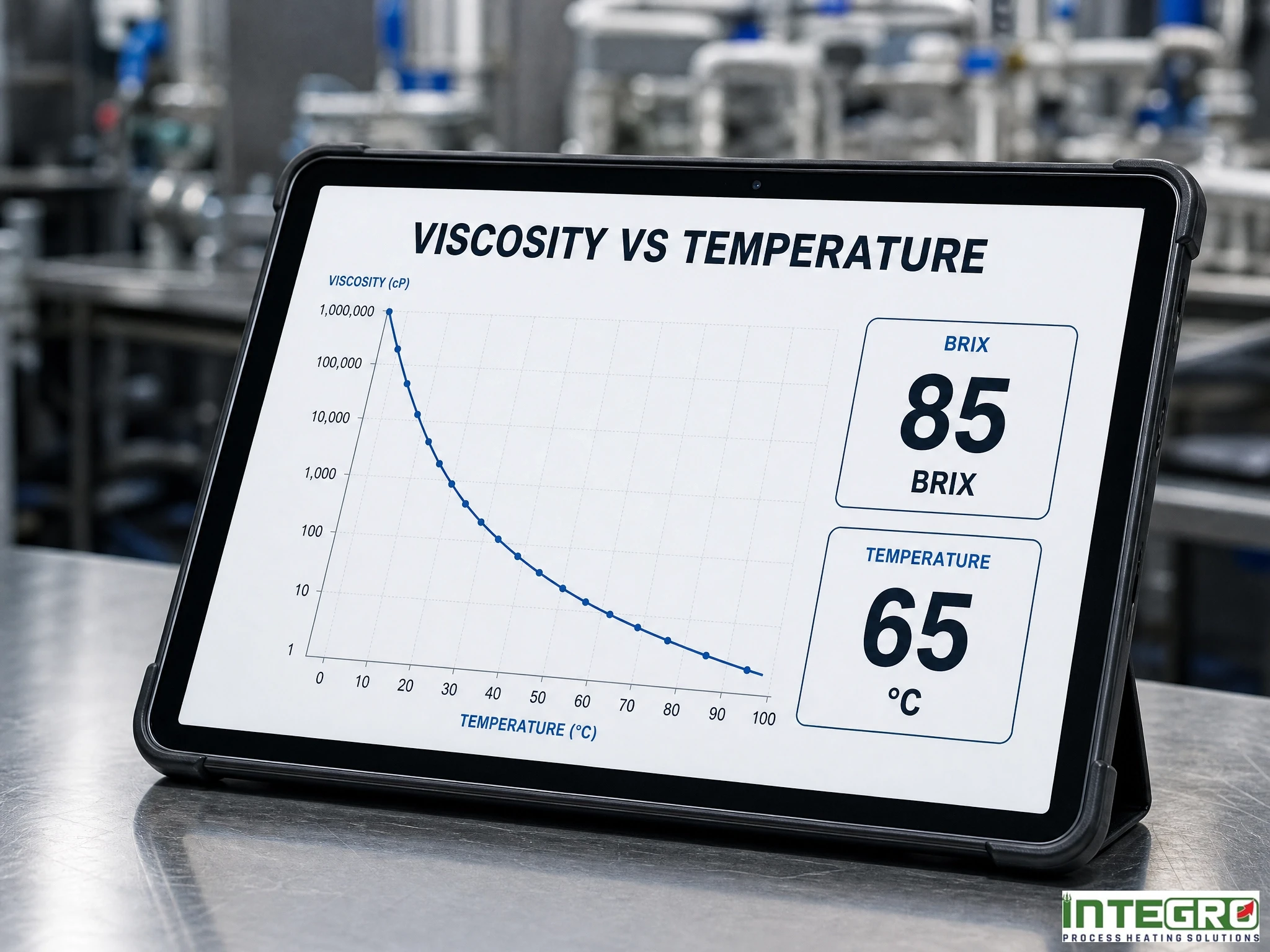
Let's look at the actual numbers. Commercial liquid glucose typically sits at 80 to 82 Brix. That means the syrup is 80% to 82% solid carbohydrates and only about 19% water. It is incredibly dense, even on a warm day.\n\nWhen warehouse temperatures drop, that tiny fraction of water cannot keep the syrup flowing. Viscosity spikes aggressively. In fact, for every 6 to 8 degree Celsius drop near room temperature, glucose viscosity roughly doubles.\n\nThink about what that does to your equipment on a cold Tuesday morning in January. A 15-degree overnight drop means your pump is suddenly fighting fluid that is four times thicker than it was yesterday afternoon. The relationship between temperature and thickness is logarithmic. The colder it gets, the faster the syrup turns into a solid block.\n\nIf your specific batch creeps above 82 Brix, the risk of crystallization in cold storage skyrockets. The exact crystallization temperature varies depending on the sugar profile of your syrup, so this isn't an absolute rule. But the physical result is always the same: sugars separate from the limited water and form hard, glass-like crystals. Once that happens, you are no longer pumping a liquid. You are trying to pump wet sand.\n\nThis is why unheated winter storage fails for high-Brix syrups. You need active, measured thermal control to keep the fluid moving safely. We see this constantly when engineering custom process heating systems for manufacturing plants. Relying on ambient warehouse air is a massive gamble that usually ends with a blown pump motor. Proper viscous liquid heating changes the math entirely. By applying gentle, consistent heat, you stop that logarithmic viscosity curve from destroying your transfer lines before the shift even begins.
Why crude quick-fixes leave you with caramelized glucose
When a pump clogs with freezing glucose, the panic reflex kicks in. Warehouse teams drag out whatever heating gear they have lying around and blast the container. It usually ends badly.
Standard silicone band heaters are the worst offenders here. They wrap around a narrow section of the barrel and dump massive amounts of heat into a very tight surface area. The goal is to melt the solid mass fast. But glucose doesn't behave like water. It's a terrible conductor of heat.
The syrup touching the hot band spikes to 100°C or more, while the center of the drum stays frozen solid. Sugar chemistry is unforgiving. Once you push glucose past 60°C, it starts to break down. It darkens, changes flavor, and essentially begins to cook. You aren't dealing with a pure ingredient anymore. You've just created a stubborn layer of burnt caramel against the inner wall.
Then there's the physical container. Steel drums might warp under localized thermal stress, but plastic HDPE drums will literally melt. I've seen operations ruin entire batches of raw materials because an unmonitored Industrial Drum Heater scorched right through the plastic sidewall. It's the exact same thermal failure we see when operators try to force-thaw sensitive chemicals. Safe Liquid Heating in Drums requires patience and surface area, not brute force.
Hot rooms are another common fallback. You roll the barrel into a 40°C room and just wait. This is certainly safer than an aggressive band heater, but the evidence on efficiency is mixed. It can easily take up to 48 hours for a dense, high-Brix syrup to fully equalize in a standard hot room. Most production schedules simply don't have two days to spare just to make a fluid flow.
When you force heat into a stubborn material, you usually destroy the product, the container, or both.
Controlled thermal jackets: the safe path to optimal material pumpability
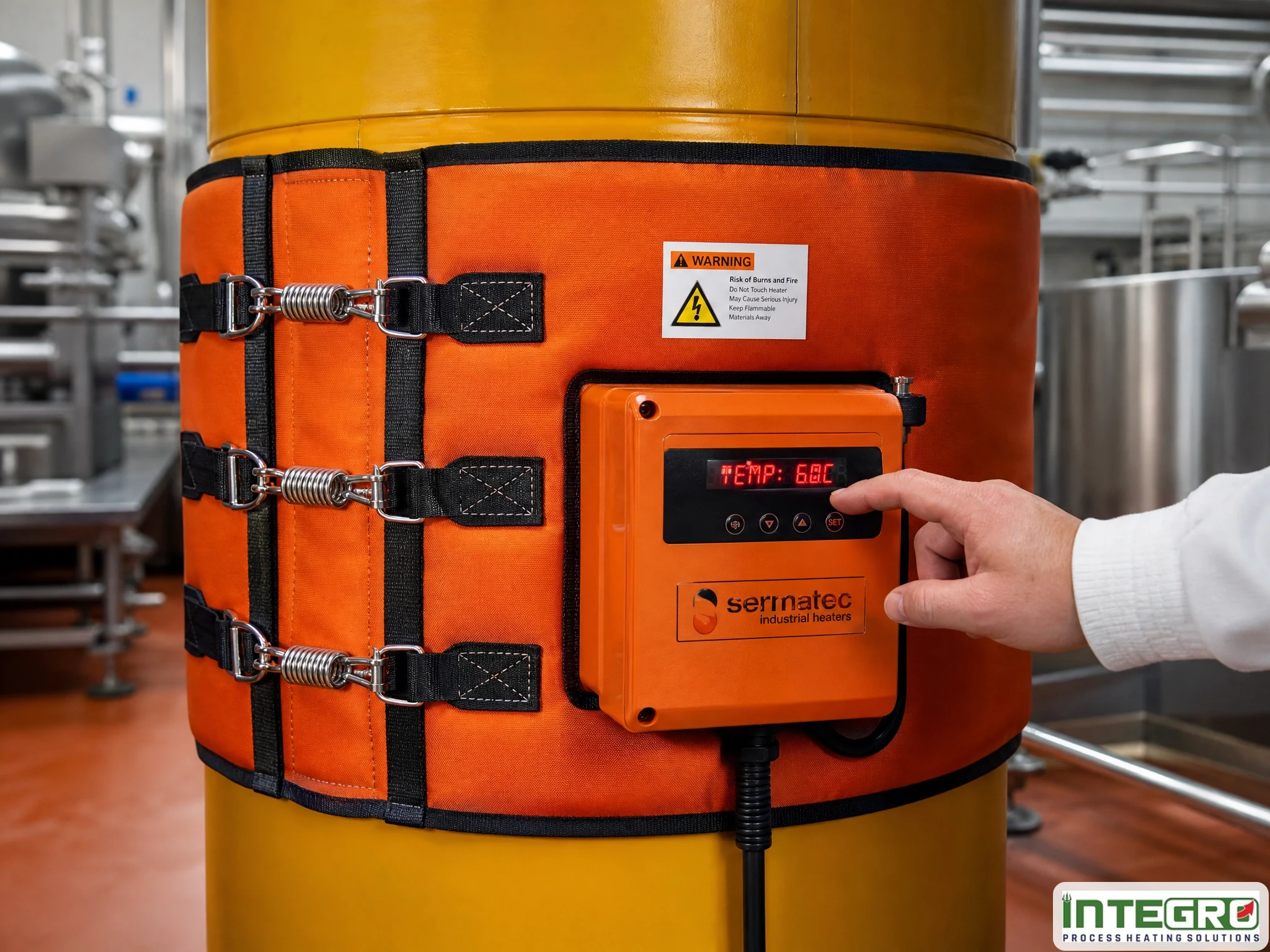
So, how do you actually get thick, cold syrup to flow without burning it? The answer is uniform surface heat. You need a method that warms the entire outside of the container gently, rather than blasting one spot with intense energy.
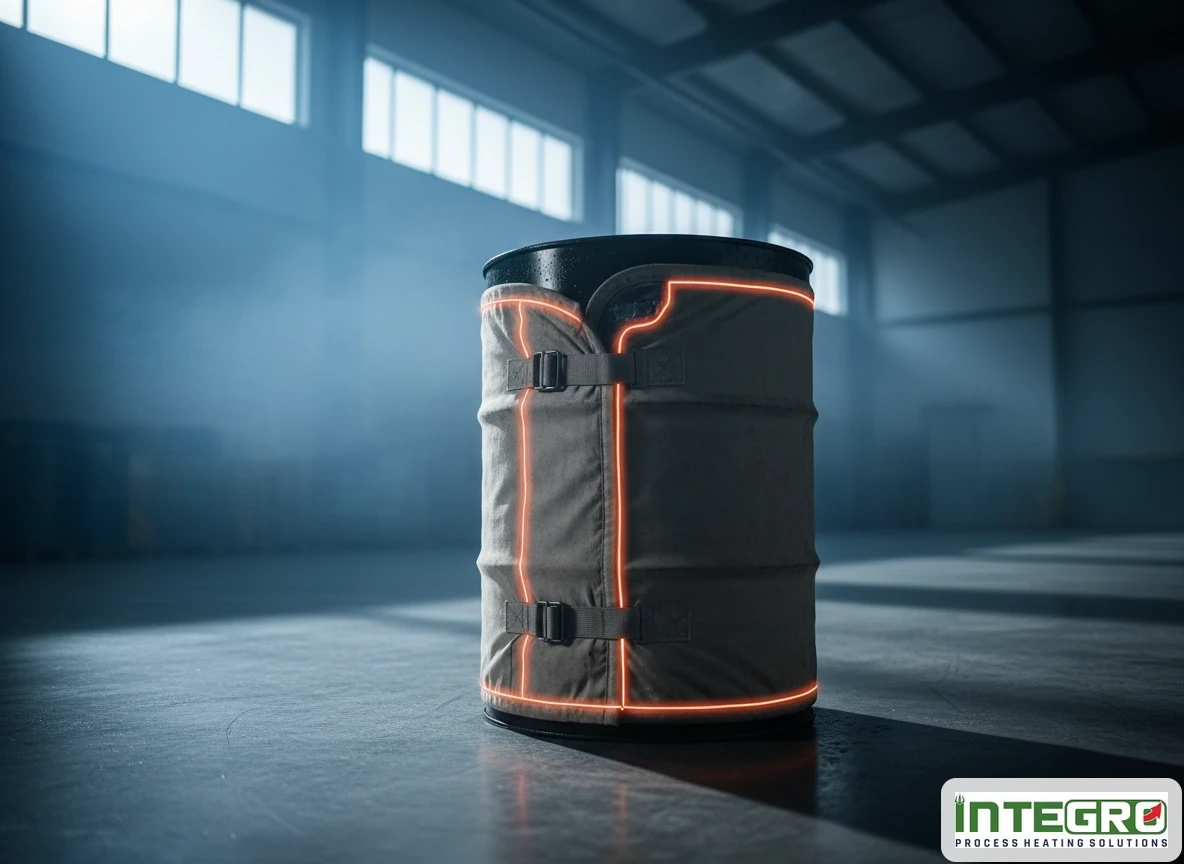
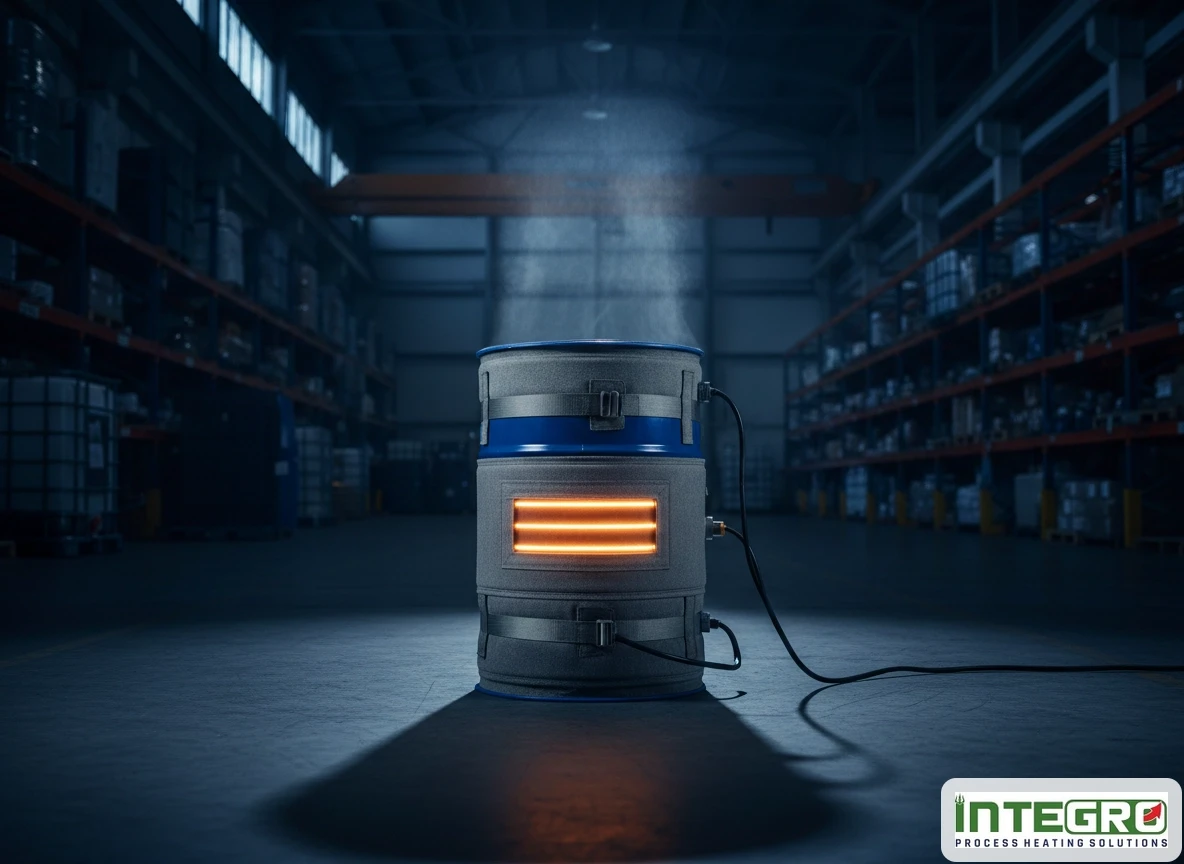
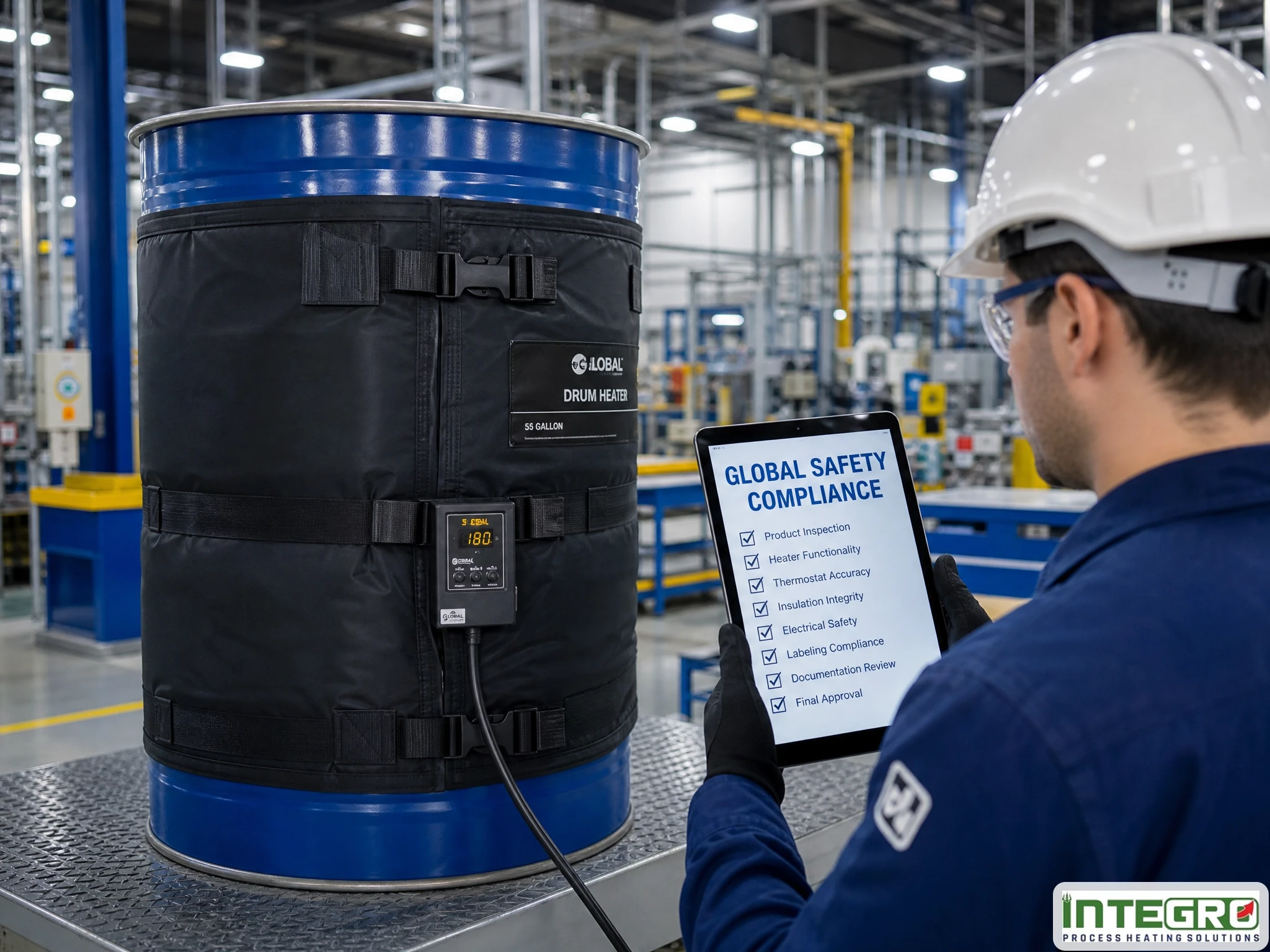
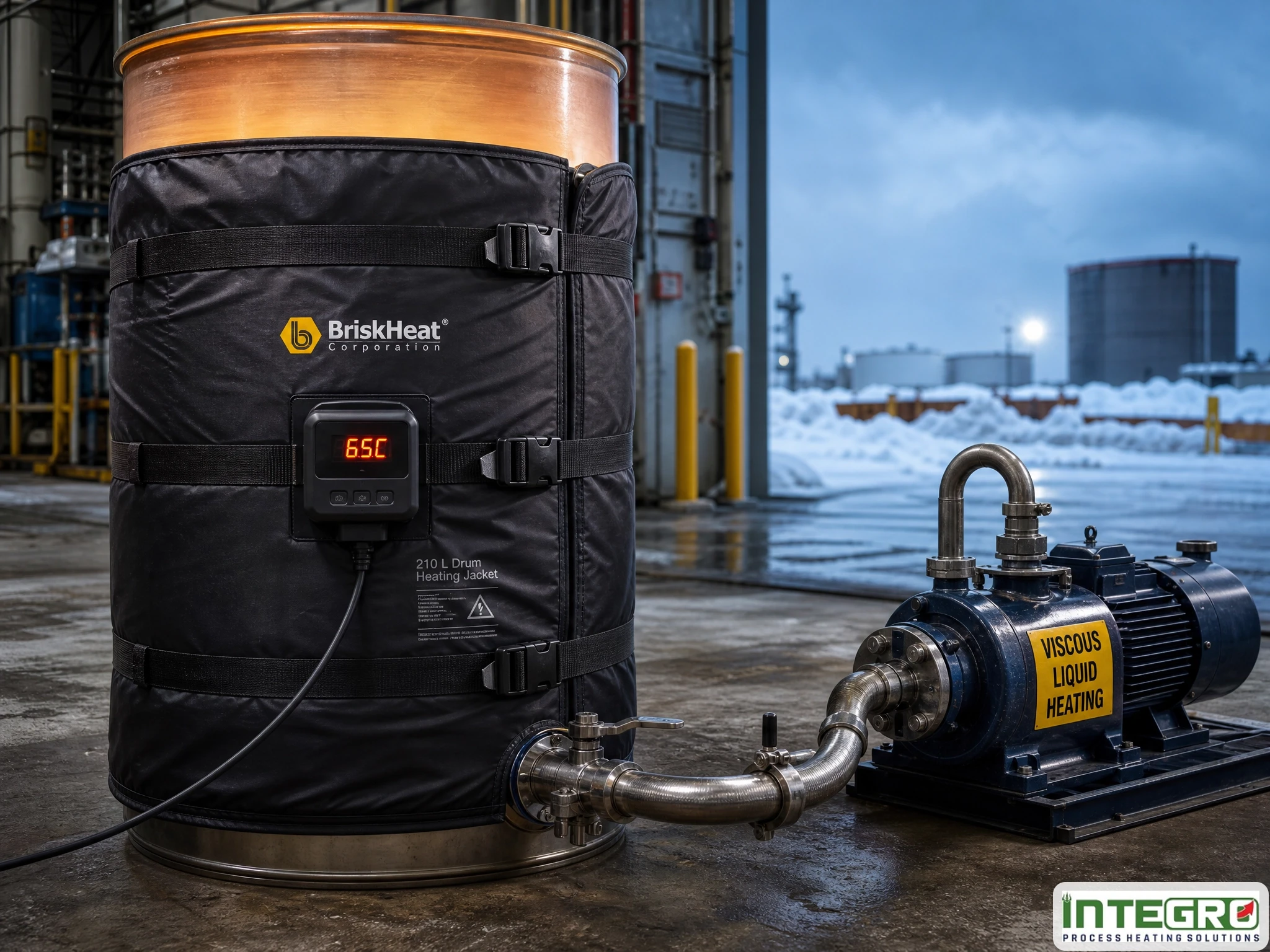
This is where a Drum Heating Jacket comes in. Instead of forcing heat from a single concentrated source, these engineered fabric wraps hug the entire barrel. They spread the thermal load across a massive surface area. Because the heat is distributed evenly, you avoid the hot spots that cause caramelization.
For liquid glucose heating, your target temperature is remarkably specific. You want to bring the material up to a range between 40 and 50 degrees Celsius. Why this exact window? Below 40 degrees, the syrup stays too thick and fights the pump. Above 50 degrees, you risk changing the chemical structure and color of the sugar. Hitting this sweet spot drops the viscosity just enough so the syrup flows like warm honey, letting your pumps operate without straining the motor or tearing the mechanical seals.
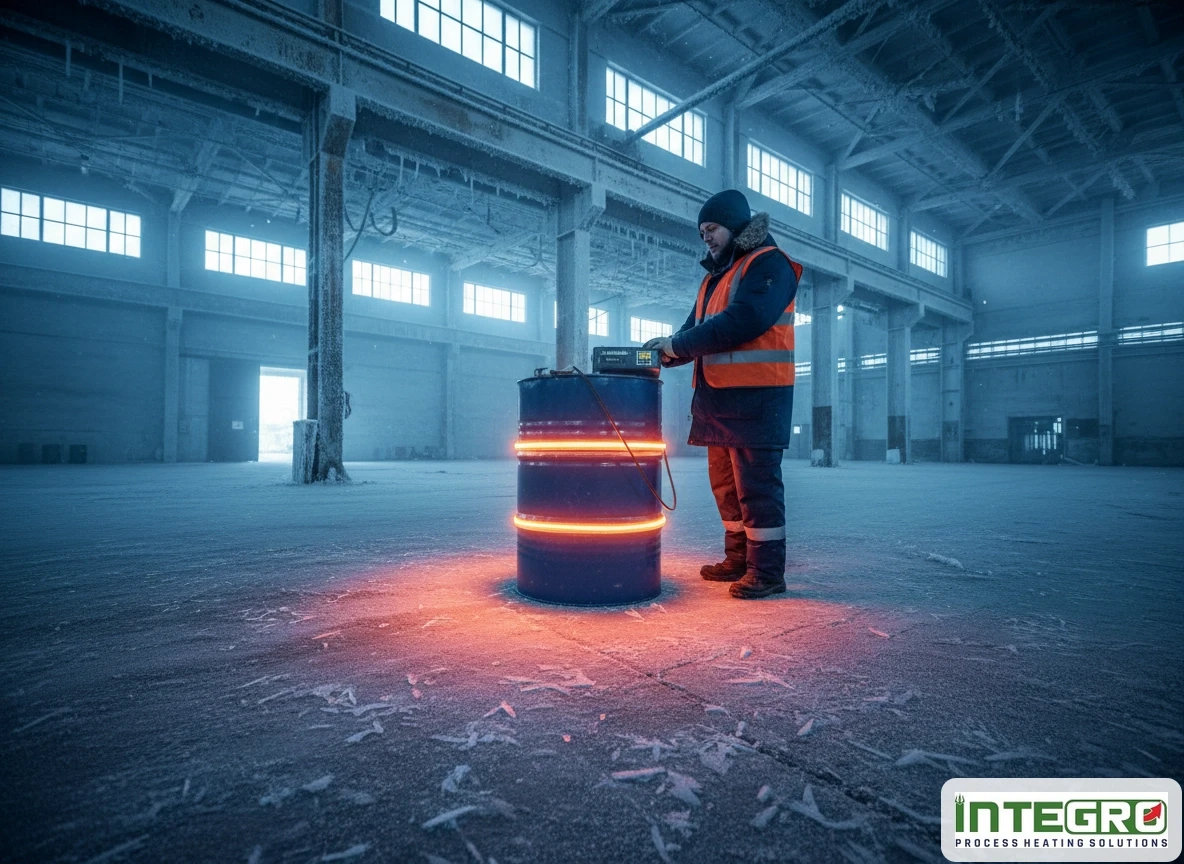
At Integro Process Heating Solutions, we frequently see operators try to guess the temperature. That rarely ends well. A proper industrial drum heater includes a built-in thermostat. You set the dial to 45 degrees, and the jacket takes over. It cycles on and off automatically, holding that exact temperature for hours or days. This precise control means you can leave a drum heating safely overnight without worrying about ruined product.
If you are dealing with standard 55-gallon barrels, using a flexible heating jacket is usually the most practical approach. The flexible material conforms tightly to the ridges of the drum. Tight contact means better heat transfer into the syrup. It also saves a massive amount of electricity because you are only heating the product, not the air in a massive warehouse.
But let's be realistic about the timeline. This method doesn't work instantly. If you pull a drum of glucose out of a freezing storage unit, a surface jacket will not melt a solid core in ten minutes. It takes several hours for gentle, controlled heat to penetrate all the way to the center of a dense liquid. You have to plan ahead and build that warming time into your production schedule.
By wrapping your containers and letting them warm up slowly, you protect both your product and your equipment. The glucose stays pure. The pumps do their job without fighting a solid block of sugar.
Configuring your system: matching containers with drum heating jackets
Not all barrels behave the same way under heat. The container holding your glucose dictates exactly how you apply thermal energy. Get this wrong, and you either melt your packaging or scorch your product.
Steel drums are highly forgiving. Because steel is an excellent thermal conductor, heat transfers rapidly from the jacket, through the metal wall, and into the syrup. In standard 200 litre / 210 litre drum heating setups, steel containers can handle aggressive, high-wattage heating without structural damage. You can push energy into them quickly to get production moving.
But high-density polyethylene (HDPE) plastic drums are a completely different story. Plastic acts as an insulator. When you apply heat to the outside of an HDPE drum, the plastic absorbs that energy before the glucose can.
This creates a serious mechanical problem. At around 60°C, HDPE begins to soften. The sheer weight of 200 litres of dense, cold glucose pushes down on the weakened plastic walls. The base of the drum bulges outward under the pressure. Plant operators call this "elephant footing." It permanently deforms the container and frequently causes catastrophic leaks on the warehouse floor.
So, your drum heating system must match your container material.
For steel drums, standard silicone band heaters or high-output jackets work well. They drive heat through the conductive metal fast. But if you use that same aggressive heat on plastic, you'll melt the drum.
HDPE requires gentle, full-surface coverage. Instead of blasting a small area with high heat, you need to wrap the entire container. This is why many facilities rely on custom-engineered Drum Heating Chambers with digital temperature controllers. These systems apply low, even heat across the entire surface area. The thermostat caps the temperature well below the plastic's softening point, usually around 45°C.
The reality is, there isn't a universal heating method. You have to audit your containers first. If you buy glucose in plastic, you must invest in low-watt-density, thermostatically controlled jackets. Otherwise, you trade a cold-flow problem for a melted plastic disaster.
Securing your fluid transfer lines before temperatures nose-dive
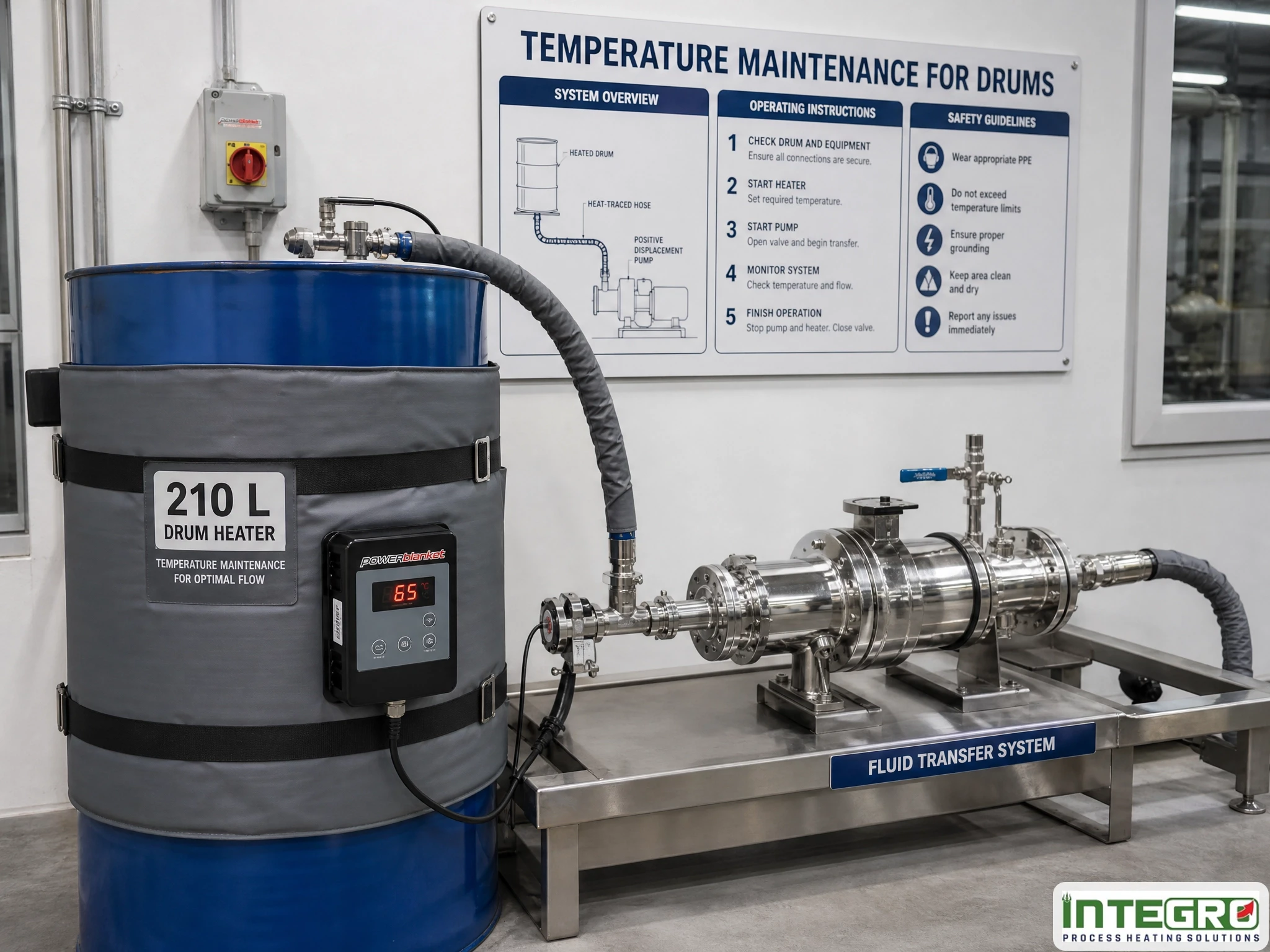
Getting the glucose warm in the drum is only half the battle. If that liquid hits a freezing pipe on its way to the mixing tank, it will thicken right back up and choke your equipment. You need to protect the entire transfer path before the first winter freeze hits.
Let's look at the mechanical side. When viscosity climbs past 100 centipoise (cP), standard pump speeds just break things. You have to drop your pump's RPM. A slow-moving positive displacement pump grabs and pushes thick liquids much better than a fast-spinning centrifugal pump.
Next, check your pipes. A standard 2-inch suction line might work perfectly in July. In January, it acts like a bottleneck. Bumping up the suction line size gives the thick syrup room to move without starving the pump. This simple mechanical change is a massive material pumpability improvement.
Of course, keeping the heat steady is the real trick. A reliable drum heating system gets the container to the right temperature safely. But you also need to wrap your transfer lines with proper insulation and electrical heat tracing. This stops cold spots from forming along the route.
Will this completely eliminate winter pumping problems? Honestly, extreme cold snaps can still test the limits of any setup. But combining controlled heat with the right mechanical adjustments gives you the best odds. Focus on slow pumping speeds, wider pipes, and steady warmth.
Tired of dealing with crystallized glucose and blown pump seals every winter? Integro Process Heating Solutions builds reliable industrial drum heating systems that keep your syrup flowing smoothly.
FAQ
Why does liquid glucose get so thick in winter?
Liquid glucose has a high Brix level that makes it extremely sensitive to temperature drops. When your warehouse gets cold, the sugar molecules slow down and start forming crystals, turning a manageable fluid into a thick, sticky mass that regular pumps simply can't handle.
Can I use standard heating bands on my glucose drums?
Honestly, that's a recipe for disaster. Crude heating bands create hot spots that easily caramelize the sugar near the drum wall while the core stays cold and solid, ruining your batch and damaging your equipment.
How do drum heating jackets prevent pump cavitation?
They warm the entire 200-litre drum evenly, bringing the glucose down to its ideal pumping viscosity. When the liquid flows smoothly into the intake, it eliminates the starvation and vacuum pockets that cause destructive pump cavitation.
What temperature should I keep my liquid glucose at?
It depends on your specific Brix level, but you generally want to maintain a steady warmth that keeps viscosity low without scorching the sugar. Most operations aim for a sweet spot where the syrup flows freely without degrading.