- By Admin
- Integro
- The quiet leak in your environmental budget
- Why paying to truck water off-site is a losing game
- Transitioning to on-site evaporation
- Choosing the right hardware for zero liquid discharge
- Where facilities miscalculate the actual payback
- Taking back control of your waste logistics
- Quick Summary
- People also ask
The quiet leak in your environmental budget
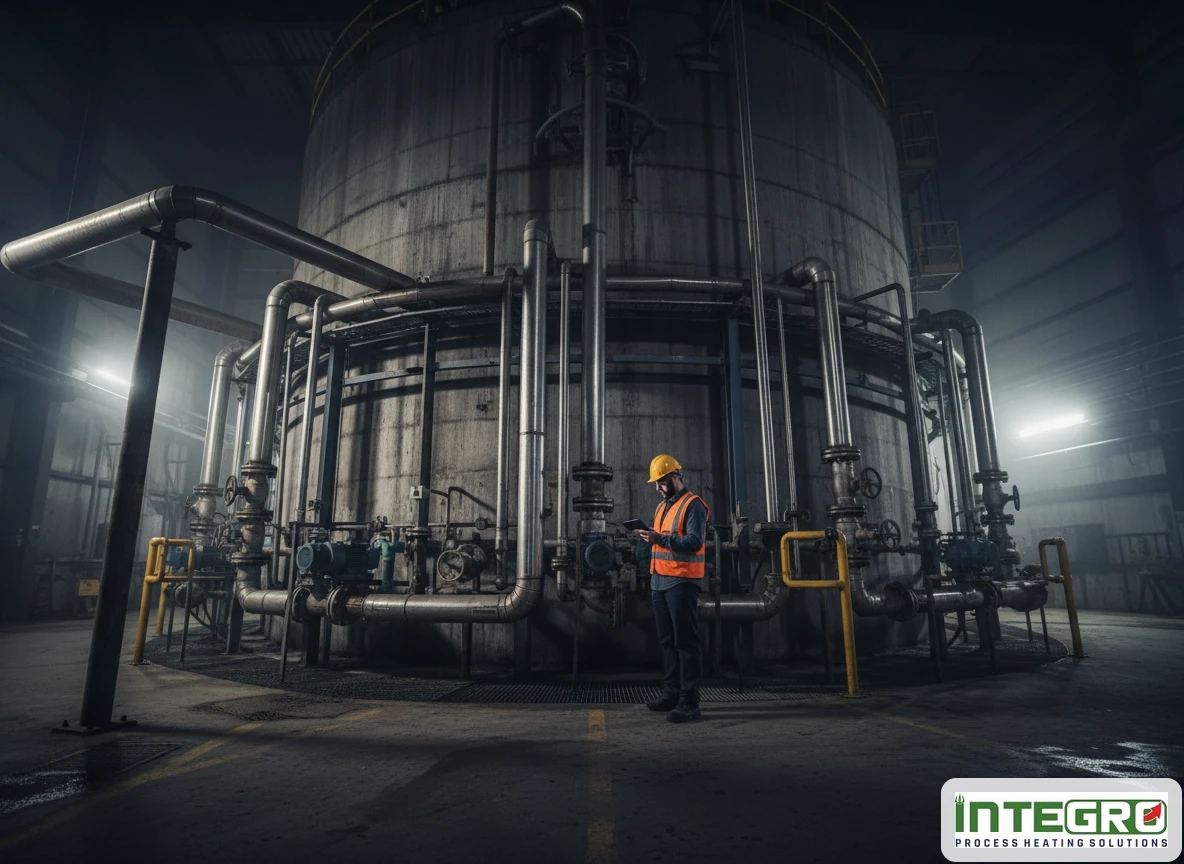
How much of your monthly budget literally goes down the drain and onto a transport truck? Look at your effluent reports. Between 70% and 95% of that heavy liquid weight is just plain water. That means you're paying third-party haulers steep volume fees, fuel surcharges, and unpredictable disposal rates just to move moisture from your facility to theirs. It's a massive financial drain that grows as your production scales. Yet, most plant managers just accept it as the cost of doing business.\n\nBut hauling is a recurring expense with zero return on investment, as this hauling wastewater vs on-site treatment cost comparison shows. When fuel prices spike, your disposal invoices spike too. If your facility deals with reverse osmosis reject streams or heavy machining coolants, you're bleeding cash every week on logistics alone.\n\nInstalling a reliable waste water evaporator changes everything. It cuts your liquid waste volume by up to 99% right on site. Instead of paying for endless truck trips, you use thermal energy to boil off the clean water, leaving only a tiny amount of concentrated sludge. You stop treating water transport like an unavoidable tax and start taking control of your operations.
Why paying to truck water off-site is a losing game
Data from typical manufacturing operations reveals that between 90% and 99% of hauled process effluent is actually pure water, meaning you are paying to transport liquid that could be easily managed on-site to reduce wastewater hauling costs. If your facility ships out 10,000 gallons of liquid waste weekly, you're paying a premium to transport up to 9,900 gallons of clean water. This baseline inefficiency is compounded by volatile fuel surcharges, driver shortages, and escalating volume-based pricing that make third-party disposal an unsustainable operational model.
And the financial drain isn't the only risk. Under environmental regulations, your company retains cradle-to-grave liability for that waste. If a third-party hauler spills your effluent or disposes of it improperly, the legal and financial consequences land squarely back on your desk. Relying on trucks means you're constantly exposed to volatile market pricing with zero return on investment, as highlighted in analysis on whether hauling industrial wastewater is the cheapest option.
The math of on-site separation
To break this cycle, you need to separate the water where it is generated. Installing an industrial wastewater evaporation system drastically reduces the volume of waste you actually have to truck off-site. By boiling off the water content, you're left with a concentrated slurry that represents only 1% to 10% of the original volume.
At Integro Process Heating Solutions, we engineer custom waste water evaporator systems designed to handle complex chemistries, including high-salinity streams. If your plant struggles with reverse osmosis reject streams, knowing when to consider evaporation is the key to stopping the financial leak. A dedicated ro reject water evaporator can isolate the dissolved solids. This leaves you with clean distillate to reuse in your process and slashes your trucking frequency by up to 99%.
But some operators hesitate because of the upfront capital cost. The reality is that continuing to pay hauling fees is a perpetual tax on your operations. Investing in a thermal evaporator typically pays for itself within 12 to 24 months by wiping out transport bills and reducing your liability profile.
Transitioning to on-site evaporation
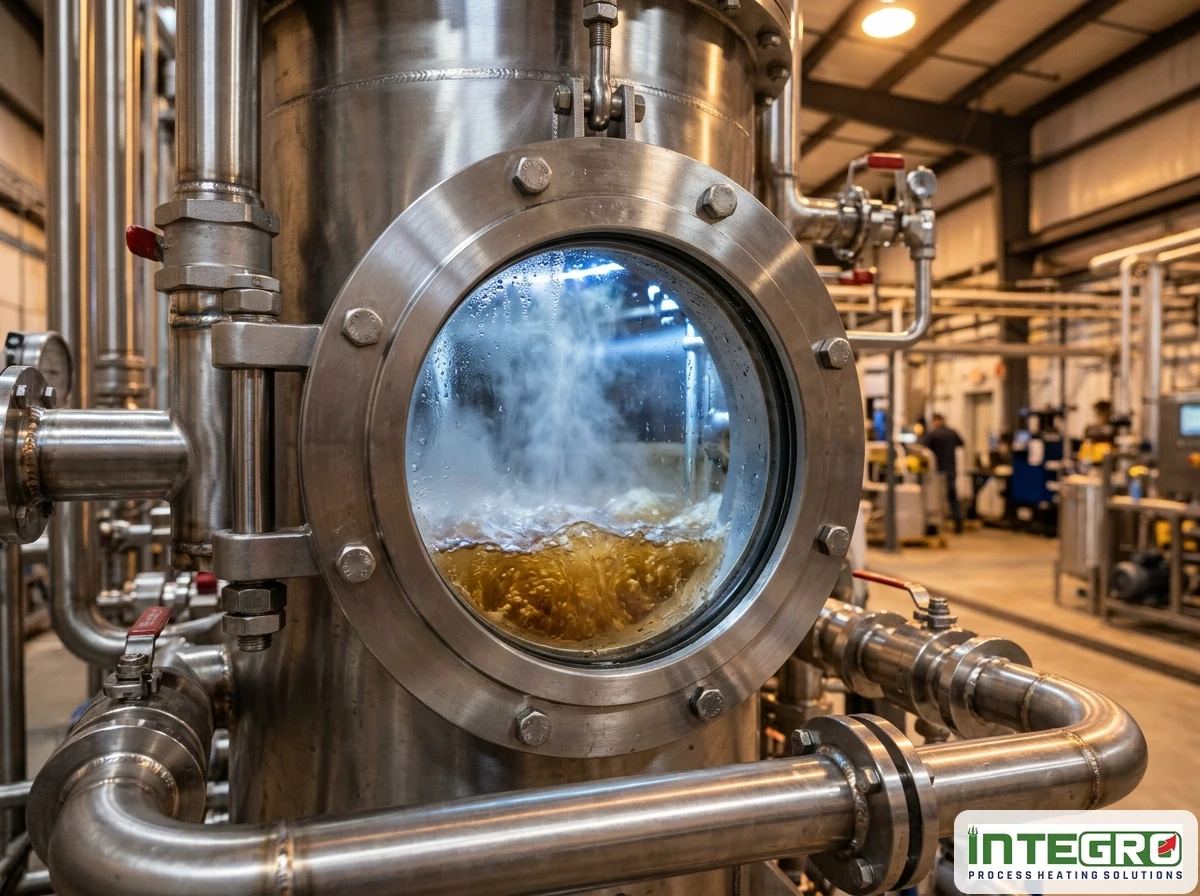
Ditching the haul trucks for on-site treatment isn't magic. It's basic physics. You're just using heat to separate water from the heavy, nasty contaminants that boil at much higher temperatures.
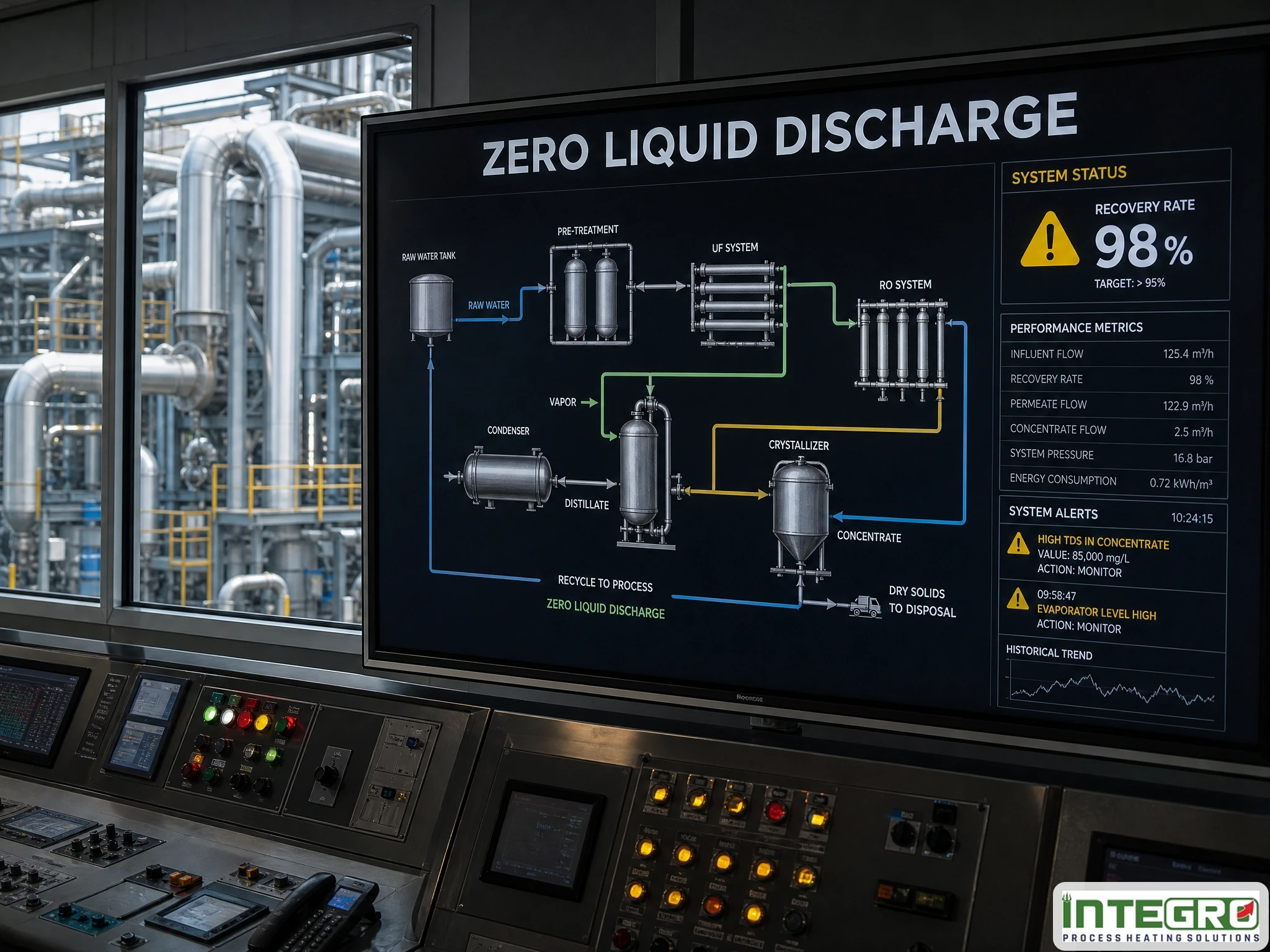
Here's how it actually works. Raw wastewater enters the industrial wastewater evaporator chamber. If your waste stream is particularly messy, a basic physical pre-filter catches the big suspended solids first. Skip this, and you'll ruin your heating elements with rapid scale buildup.
Next is the heat. Normal boiling happens at 100°C. But if you use a vacuum evaporator for wastewater, you drop that boiling point down to about 40°C. Pulling a vacuum means you need way less energy to vaporize the water. That means you can run the whole setup on cheap, low-grade steam or hot water you already have lying around.
Then comes the actual separation. As the water boils off, it leaves the heavy metals, oils, and dissolved salts behind in the chamber. The clean steam rises, hits a condenser, and cools back down into pure liquid distillate. You collect this clean water and pump it right back into your plant. No waste.
What's left is the sludge. A solid thermal evaporation system shrinks your liquid waste volume by up to 99%. You're left with a thick, concentrated slurry or solid cake that's only 1% to 5% of the original bulk. That's a tiny fraction to deal with.
Look at any evaporation vs membrane filtration comparisons. Membranes choke on high dissolved solids and clog constantly. Evaporation doesn't care. It eats dirty, mixed-chemistry streams for breakfast without failing. At Integro Process Heating Solutions, we build systems tailored to your exact waste chemistry so you don't corrode your equipment or blow your budget.
Stop storing hazardous liquid drums on your floor. Moving to on-site evaporation turns a massive, volatile logistics headache into a boring, predictable, automated utility.
Choosing the right hardware for zero liquid discharge
Transitioning from how evaporation works conceptually, selecting actual hardware requires matching your specific chemical waste profile with the correct thermal and material configurations. If you configure this incorrectly, your capital investment will quickly dissolve into repair bills.
Let's talk heating utilities. You can power an effluent evaporator using steam, electricity, or gas. Steam is highly efficient if your facility already has excess boiler capacity. If steam isn't available, direct electrical heating provides precise thermal control, though operating costs depend heavily on your local grid tariffs. Natural gas remains a reliable middle ground for high-volume thermal loads.
But heat source selection is only half the battle; metallurgy dictates the system's lifespan. Standard stainless steel often fails under the stress of highly concentrated, acidic, or saline waste streams. For milder effluents, we specify SS316L. When dealing with high-chloride reject streams or aggressive chemicals, upgrading to Titanium or Hastelloy is non-negotiable to prevent stress corrosion cracking.
We designed our QuickEvap series at Integro Process Heating Solutions to address these exact material and utility challenges. Selecting a waste water evaporator from this series means customizing the heat exchanger metallurgy to your specific chemistry. This ensures you don't overpay for exotic alloys when standard materials will suffice, or worse, under-engineer a critical component.
When you compare evaporation vs other treatment methods, the ability of a heavy-duty evaporator for wastewater treatment to handle mixed chemistry streams without membrane fouling becomes obvious. It's about matching the physical hardware to the harsh realities of your plant's daily discharge.
Where facilities miscalculate the actual payback

Imagine a metal finishing facility running three shifts, paying $15,000 monthly to haul away spent coolants and rinse water. The plant manager requests quotes for an on-site system but rejects the capital proposal because the upfront wastewater evaporator cost looks intimidating compared to a predictable monthly operating expense. This narrow focus on immediate capital expenditure versus operating expenditure is a classic trap that ignores how fast hauling fees compound.
By treating hauling as a mere cost of doing business, facilities overlook the volatile reality of transport logistics. Freight surcharges, disposal tariff hikes, and minimum load fees constantly inflate those seemingly stable invoices. When evaluating the economic viability of hauling industrial wastewater, decision-makers rarely calculate these compounding variables over a five-to-ten-year horizon.
True payback analysis must also account for regulatory risk. Under environmental laws, your facility retains cradle-to-grave liability for your waste, even after a licensed trucker drives it off your property. If the third-party processor experiences a spill or regulatory violation, you remain legally and financially exposed. Installing a high-efficiency wastewater evaporator from Integro Process Heating Solutions mitigates this risk by reducing liquid volume down to a minimal solid residue on-site, effectively keeping your liability footprint within your own walls.
Another operational blind spot is failing to plan for stream chemistry. Neglecting basic pretreatment, like pH adjustment or oil separation, leads to rapid scale build-up inside the boiling vessel. This oversight compromises thermal transfer, drives up energy use, and shortens equipment life. To prevent this, we design our industrial waste water evaporators with integrated pre-treatment protocols, ensuring the projected 24-month payback stays on track.
Taking back control of your waste logistics
How much of your operational budget is currently slipping away in those recurring hauling invoices? When you treat waste disposal as a permanent utility bill, you accept a continuous operating expense (OpEx) that scales directly with your production volume. But transitioning to on-site processing shifts this dynamic entirely, transforming an endless financial drain into a predictable capital investment (CapEx). By implementing an efficient thermal evaporation system, you swap volatile, unpredictable monthly fees for a fixed asset that pays for itself.
Think about it: every dollar spent on third-party transport is gone forever, providing zero equity or operational control. In contrast, investing in a high-efficiency industrial wastewater evaporator lets you amortize a fixed cost while immediately slashing your daily shipping fees. If you don't pull your hauling bills from the last twelve months to calculate the exact cost per gallon, you're flying blind. Comparing the numbers for hauling wastewater vs. on-site treatment often reveals that the payback period for clean technology is far shorter than your management team expects.
Are you ready to stop paying contractors to transport clean water across state lines? Running a detailed audit on your current waste logistics is the first step toward breaking free from unpredictable diesel surcharges and disposal tariffs. Once you integrate a modern wastewater evaporation system into your plant's workflow, you reclaim control of your facility's balance sheet and your long-term operational destiny.
If trucking liquid waste is draining your monthly budget, Integro Process Heating Solutions designs custom waste water evaporators that slash disposal volume by up to 99%.
Quick Summary
This post examines the hidden financial drain of industrial wastewater hauling and contrasts it with on-site thermal and vacuum evaporation. It breaks down the volume math of shipping pure water off-site, exposes common calculation errors regarding capital investment versus operational expenses, and highlights how switching to a waste water evaporator secures long-term savings.
People also ask
How does an industrial wastewater evaporator actually work?
It boils off the water content at lower temperatures using thermal energy or vacuum pressure. That leaves behind a tiny fraction of concentrated solid or semi-solid waste while the clean vapor is condensed and often reused.
Why is hauling wastewater so expensive compared to treating it on-site?
You're paying diesel fuel surcharges, driver fees, and weight tariffs to move waste that's usually 90% to 95% pure water. Once you factor in those recurring costs, trucking always ends up costing more over time than owning the equipment.
How quickly do companies usually see a return on investment?
Most facilities hit full financial payback within 12 to 24 months. Eliminating third-party hauling invoices and minimum load fees adds up fast.
Can these systems handle reverse osmosis reject water?
Yes, an RO reject water evaporator deals with high-salinity streams easily without getting bogged down by membrane fouling issues.