- By Admin
- Integro
The endless cycle of blinded filters
How many times this week has your maintenance team pulled a blinded mesh strainer or replaced a fouled membrane? When you are dealing with heavy effluent containing high total dissolved solids (TDS) up to 300,000 ppm, physical filters simply can't keep pace. The reality is that sticky organic binders, silica, and precipitated calcium salts form an impermeable cake layer almost immediately.
Manual backwashing and constant filter media replacements are exhausting workarounds that fail to solve the core issue. They only delay the inevitable pump cavitation and system pressure spikes. But shifting your strategy from physical filtration to thermal separation bypasses these physical bottlenecks entirely. By heating the stream rather than straining it, you can reduce liquid waste volumes by up to 99 percent, leaving behind only manageable dry residuals.
At Integro Process Heating Solutions, we design thermal systems that handle these high-solids streams natively. Transitioning to an industrial waste water evaporator allows you to process heavy, complex streams without constantly replacing delicate media. Of course, thermal systems require careful control to prevent internal scaling, but they eliminate the daily maintenance headache of physical filtration.
Implementing a dedicated wastewater evaporation system means you're no longer fighting a losing battle against physical particle sizes. Instead, you use phase changes to separate clean distillate from concentrated waste. So, rather than spending hours cleaning filters, you can shift your focus to optimizing actual production. If you want to stop the endless cycle of filter blinding, exploring a specialized waste water evaporator is the most logical path forward.
Why heavy effluent chokes physical media
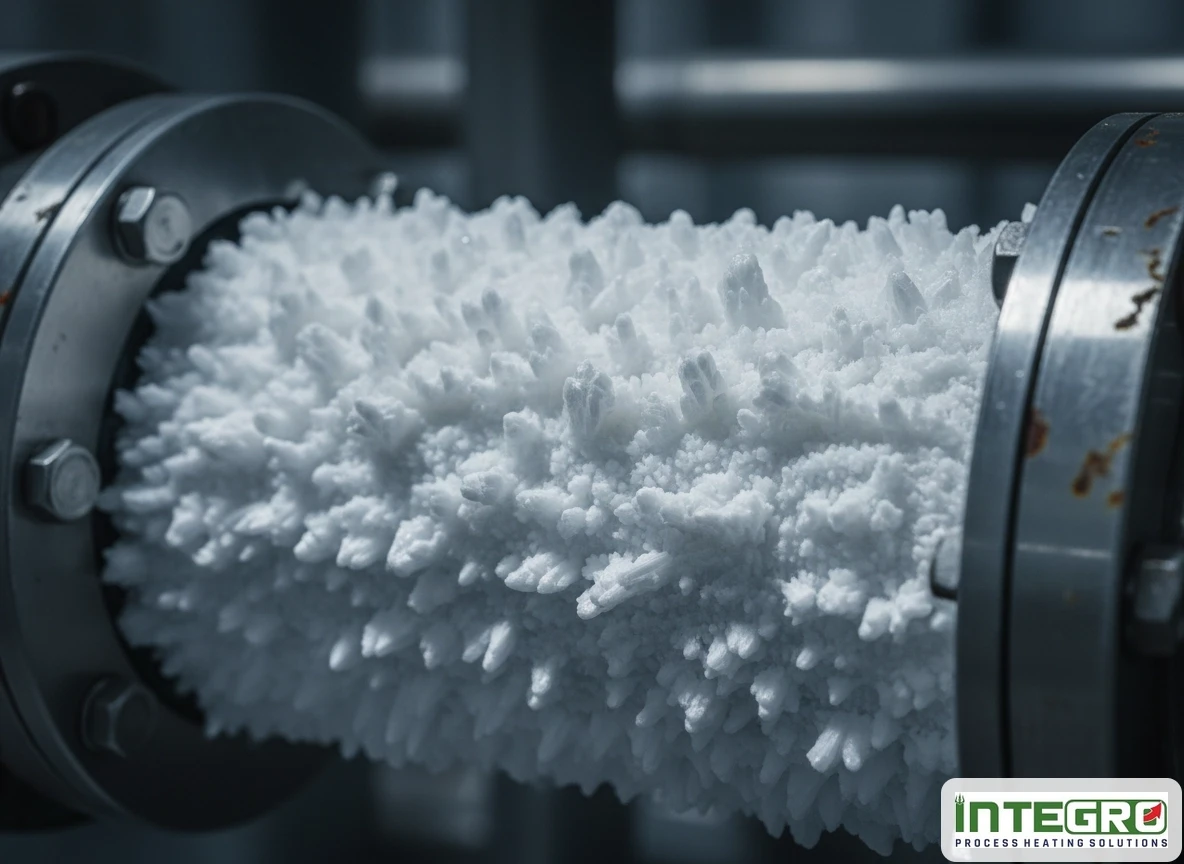
High-TDS concentrations of 250,000 to 300,000 ppm destroy standard physical filters and membranes within hours. It's a simple chemistry problem. When dissolved salts like calcium sulfate and silica exceed their saturation limits, they precipitate. The high pressure of physical filtration forces this crystallization to happen directly inside the microscopic pores of your media.
This rapid crystallization creates a solid, impermeable barrier. Differential pressure spikes instantly, starving downstream processes and ruining pump seals. Backwashing cannot dislodge these chemically bonded scale layers. Operators end up replacing expensive filter elements daily. It is a costly, unsustainable loop.
At Integro Process Heating Solutions, we look at the thermal-fluid dynamics. Forcing high-solids streams through fine mesh is a losing battle. Instead, routing these heavy streams directly to a waste water evaporator bypasses physical barriers entirely. This shift stops the severe pump cavitation that occurs when pressure drops spike across clogged membranes.
Shifting the separation mechanism from size exclusion to phase change eliminates media blinding entirely. Systems like a vacuum evaporator for wastewater operate under vacuum. This lowers the boiling point and controls precipitation. Because thermal systems handle high solids natively, they bypass the mechanical bottlenecks of traditional filtration.
Moving to industrial wastewater evaporators makes the process predictable and automated. We regularly see plants cut liquid waste volumes by up to 99 percent while reclaiming clean distillate. It is a practical approach to handling heavy effluent. While results depend on your exact chemical composition, the physics of thermal separation do not lie.
Bypassing the mesh entirely with thermal separation
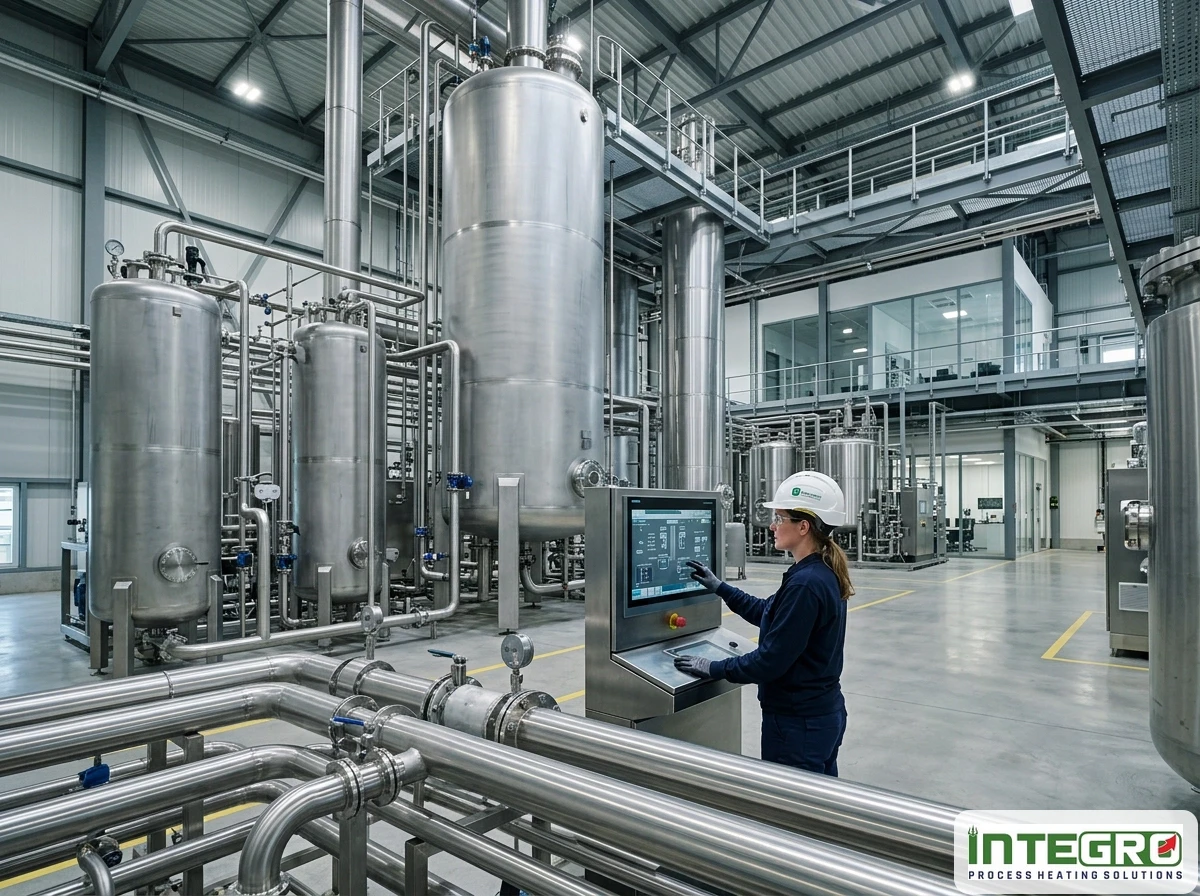
When suspended solids and dissolved salts reach extreme concentrations, physical barriers stop making sense. Instead of forcing a highly concentrated 300,000 ppm slurry through a delicate mesh, we bypass physical filtration entirely. We route this heavy effluent straight into a thermal separation loop. This eliminates the high-pressure drops and constant backwashing cycles that cripple standard operations.
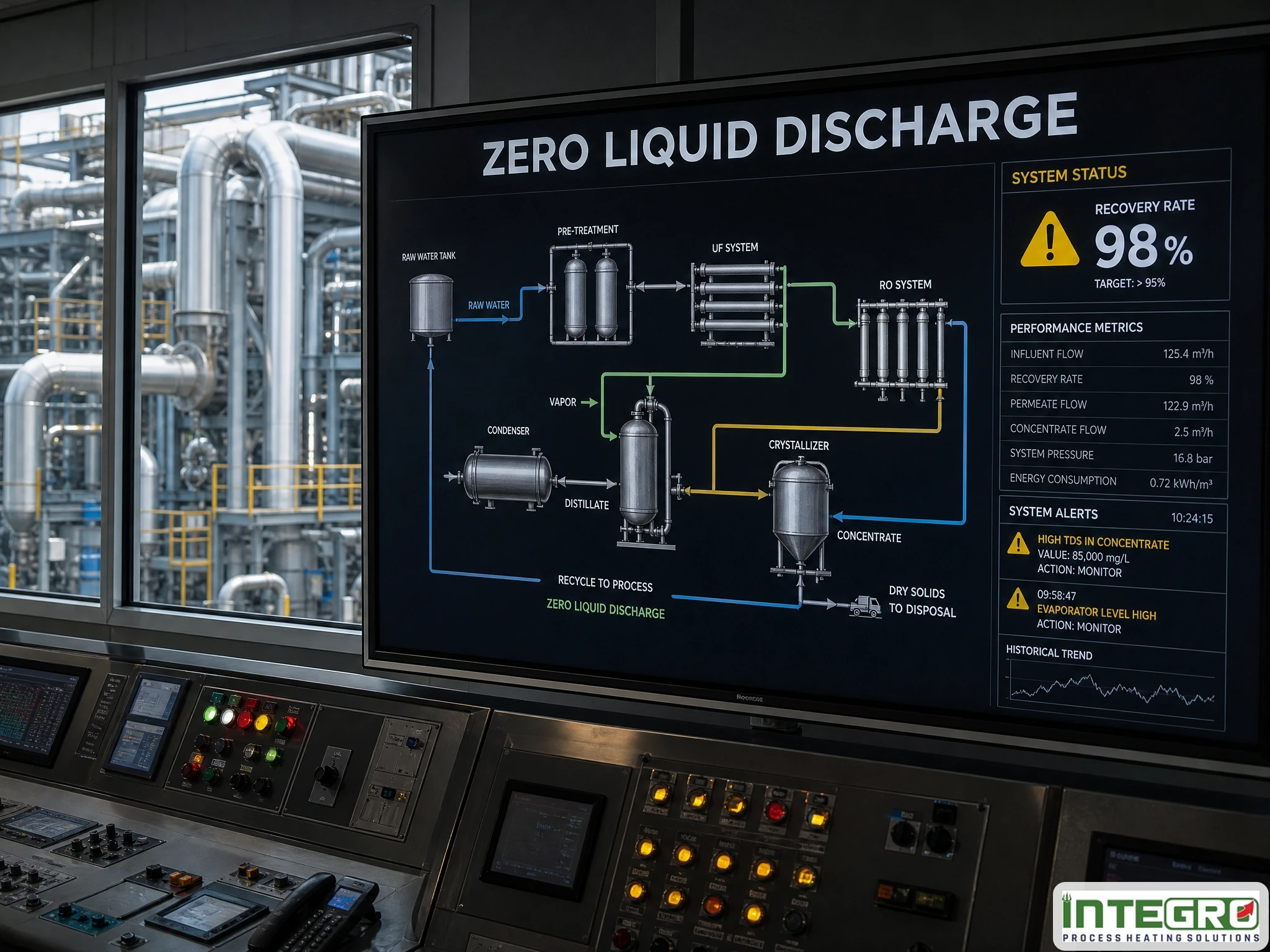
At Integro Process Heating Solutions, we design systems that handle these waste streams by converting the liquid phase into vapor rather than straining out solids. By feeding raw, unfiltered effluent straight into a wastewater evaporator plant, the system bypasses mechanical bottlenecks that cause pump cavitation. A heavy-duty evaporator for wastewater treatment operates by boiling off the water, leaving a concentrated sludge that is far easier to manage.
Mechanical routing and thermal dynamics
The mechanical layout of a bypass system is straightforward, but it requires precise thermal control. Raw wastewater flows into a specialized feed tank equipped with agitation to keep heavy particulates in suspension. From there, a progressive cavity pump transfers the slurry directly into a waste water evaporation machine or a series of industrial vacuum evaporators designed to handle high-density scaling. Because we aren't restricting flow with physical screens, the system maintains a steady pressure profile.
Managing the phase change
Inside the thermal chamber, the high-solids stream undergoes rapid phase separation. We use high-velocity forced circulation loops to keep the turbulent fluid moving across heat transfer surfaces. This velocity prevents solids from settling out and baking onto the tubes. While this process requires more initial energy than physical filtration, reduced downtime and the elimination of consumable filter media quickly offset operating costs.
This thermal approach introduces specific challenges, particularly regarding boiling point elevation. As water evaporates, the remaining fluid requires progressively more thermal energy to boil, which can lead to localized baking if heat flux isn't carefully managed. Thermal separation doesn't eliminate maintenance entirely; instead, it shifts the operational focus to predictable, automated clean-in-place cycles. Implementing targeted industrial water treatment solutions alongside these thermal systems keeps scaling under control, allowing plants to achieve up to a 99 percent volume reduction without ever touching a physical filter.
Choosing your hardware: MVR, multiple-effect, and atomization
Bypassing physical filters requires selecting a thermal system that matches your specific waste profile. Mechanical Vapor Recompression (MVR) systems use a centrifugal compressor to recycle latent heat, driving down utility consumption. But they fail completely when handling highly corrosive or crystalline slurries that destroy compressor blades. For these aggressive streams, a multiple effect evaporator wastewater treatment setup is the superior choice.
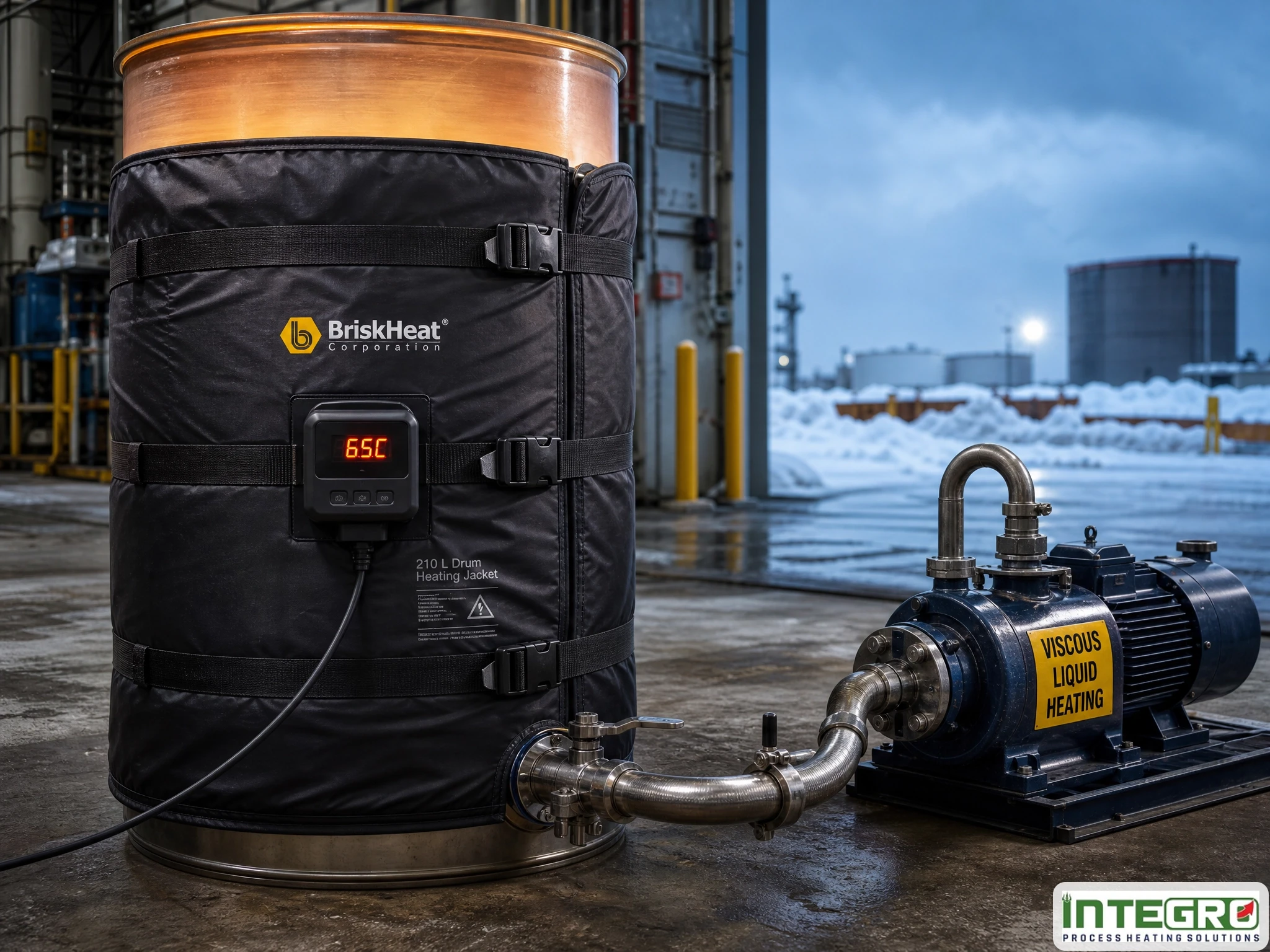
Multiple-effect evaporators work by cascading steam through successive vessels, boiling the wastewater at progressively lower pressures. It's a reliable, brute-force method for high-boiling-point liquids, though the initial wastewater evaporator cost can be high. If your facility produces high-viscosity sludge, you must combine these systems with targeted thermal management, similar to how operators improve the pumpability of viscous materials in cold climates. Without proper heat application, heavy wastewater solids settle and bake onto heat exchanger tubes. This creates a hard scale layer that ruins thermal efficiency. You must choose forced circulation over falling film designs when solids exceed five percent, as falling film tubes dry out and clog instantly.
Wastewater atomizers offer a different, low-cost approach by spraying fine droplets into the air for natural evaporation. While cheap to install, they are environmentally risky. Wind drift can carry hazardous chemicals onto surrounding soil, and they do not recover clean water. They are a bad choice for plants near residential zones or those with strict zero-liquid discharge requirements.
At Integro Process Heating Solutions, we manufacture custom industrial waste water evaporators to eliminate these operational risks. We analyze your total dissolved solids (TDS) levels and chemical composition before proposing a system. Relying on generic, off-the-shelf equipment is a major mistake. A mismatched evaporator will scale up and shut your line down within a week, forcing you back to the manual filter-cleaning cycle you wanted to escape.
Where operations teams trip up on high-TDS streams
Imagine a chemical plant operator watching steam production drop on a Monday morning while the system's energy consumption spikes. The culprit isn't a mechanical breakdown, but an invisible shift in boiling point elevation that occurred as the waste stream concentrated past 200,000 ppm. But treating high-TDS water like pure water means the team inadvertently starved the thermal system of its driving force.
This shift happens because dissolved salts chemically bind with water molecules, requiring significantly more thermal energy to liberate steam. If the control loop on your effluent evaporator does not dynamically adjust pressure and temperature setpoints, the heat transfer rate stalls.
Another frequent operational oversight is failing to neutralize pH upstream. When acidic or highly alkaline feeds enter a wastewater evaporation system, dissolved silica and calcium carbonate rapidly precipitate out of solution.
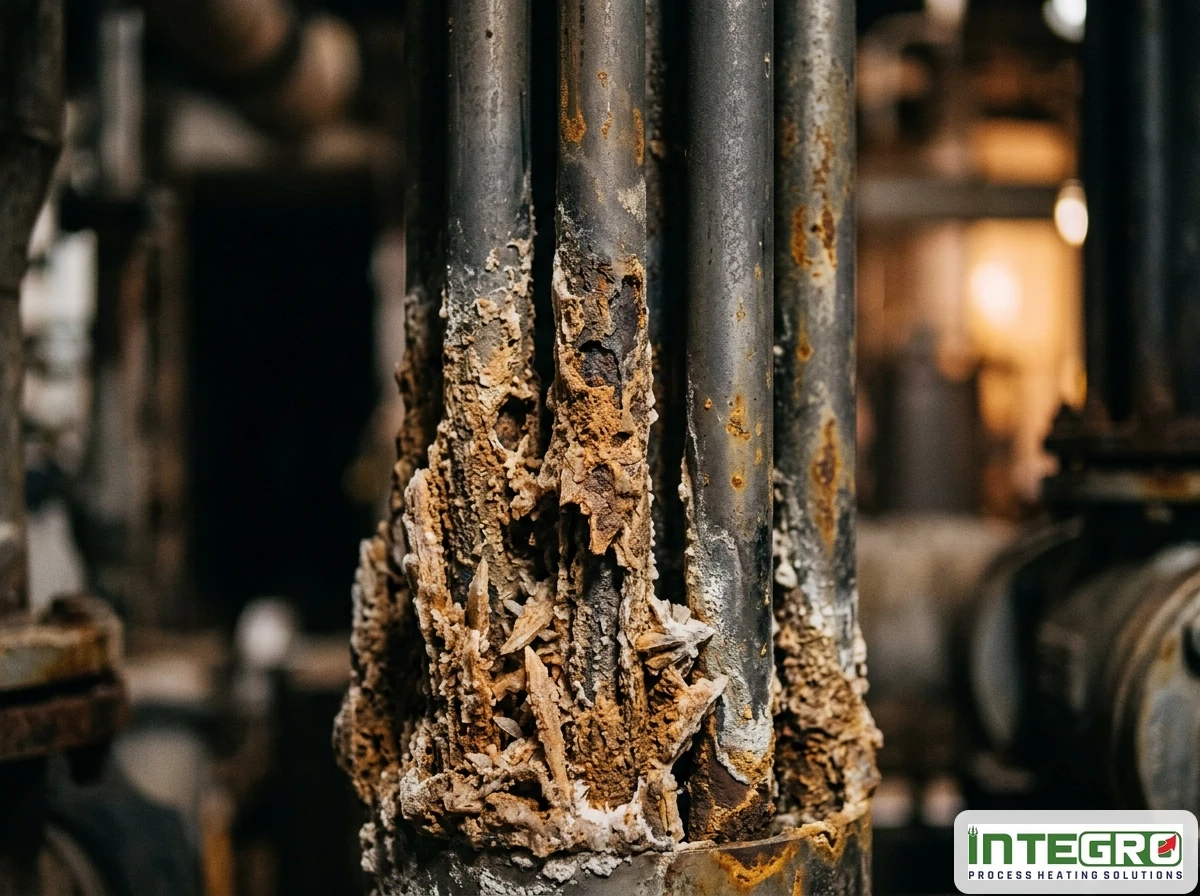
These minerals bake onto hot metallic surfaces, forming a dense, insulative scale barrier. This scale forces the system to consume more power while producing less distillate, eventually leading to localized tube failures. While we build thermal evaporators with scale-mitigating geometries, this protection only goes so far; neglecting chemistry guarantees eventual fouling.
To prevent these bottlenecks, plants must implement real-time density monitoring. Relying on manual sampling often means reacting only after the heat-transfer tubes are already fouled.
And when using a multi-stage cascade design for thermal separation, a single fouled stage bottlenecks the entire process. Balancing the chemical equilibrium and thermal gradients across every vessel is the only way to sustain continuous, high-volume reduction without unplanned shutdowns.
Stop fighting the filters and change your process
Constantly backwashing or replacing blinded filters on high-TDS streams is a losing battle. It's a classic mistake. You are trying to force a physical solution onto what is actually a chemical and thermodynamic problem. Instead of throwing money at increasingly expensive filters that will still clog, you need to change the process itself.
Switching to a dedicated industrial waste water evaporator bypasses these physical limits entirely. These systems are built to handle high solids. They boil off pure water vapor and leave behind concentrated residuals, which can shrink your liquid waste volume by up to 99 percent.
Yes, the upfront cost for a thermal evaporation system is higher than a pallet of replacement filters. But the long-term math works in your favor. You stop buying endless filter media. You cut down on haul-away volumes. Best of all, you stop the constant maintenance downtime. For plants dealing with heavy effluent, this shift fundamentally lowers your total cost of ownership.
To get these savings, your team has to stop playing defense. Stop cleaning filters. Start looking at your mass balance and heat cycles instead. If you don't break this cycle of constant maintenance, your operating costs will keep climbing. It is time to design a process that actually fits your waste stream.
If constant filter blinding is eating up your maintenance budget, Integro Process Heating Solutions designs custom thermal evaporation systems that handle high-TDS streams without the headache.
FAQ
Why do standard filters clog so fast on high-TDS wastewater?
When total dissolved solids push past 250,000 ppm, salts and particulates precipitate instantly. They form a dense, sticky cake that blinds physical media within hours, no matter how often you backwash.
Can I use reverse osmosis for wastewater with high total dissolved solids?
Not really. RO membranes can't handle extreme TDS levels because osmotic pressure gets too high, leading to rapid membrane destruction and constant system failures.
How does an effluent evaporator handle heavy solids without plugging?
Evaporators boil off the liquid phase instead of forcing water through a tight physical barrier. They leave the heavy solids behind as a concentrated slurry or dry crystal, completely eliminating pressure drops caused by media blinding.
What maintenance headaches should I watch out for with thermal evaporators?
Scaling is the big one. If you don't manage boiling point elevation and upstream pH properly, heat-transfer surfaces will scale up fast, which forces unscheduled CIP cleanings.