- By Admin
- Integro
- The silent threat of sub-zero temperatures on industrial inventory
- Assess your container and fluid profile before plugging anything in
- How to properly wrap and secure your heating jacket
- Dialing in the thermostat without scorching your product
- Where most operators lose heat: the uninsulated top and other critical errors
- What to do when the fluid isn't warming up fast enough
- Keeping your production running while the temperature drops outside
- FAQ
The silent threat of sub-zero temperatures on industrial inventory
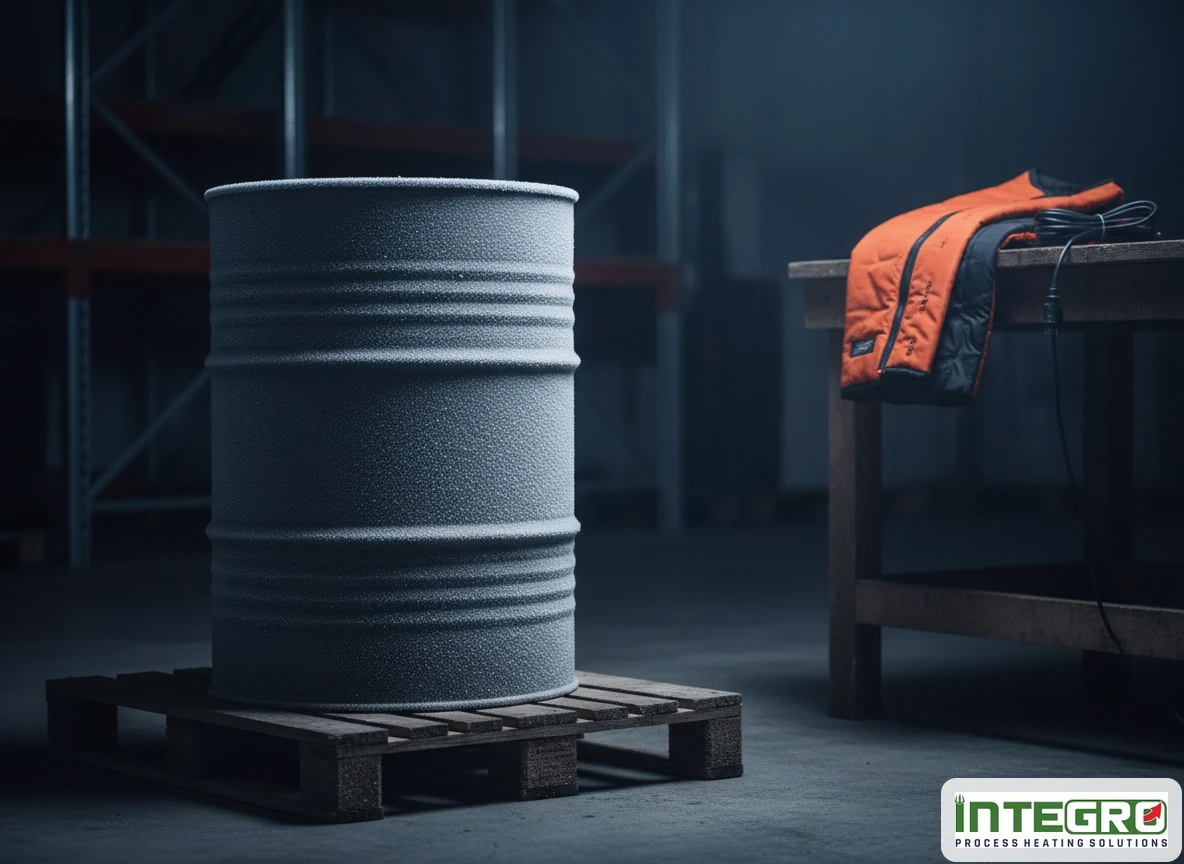
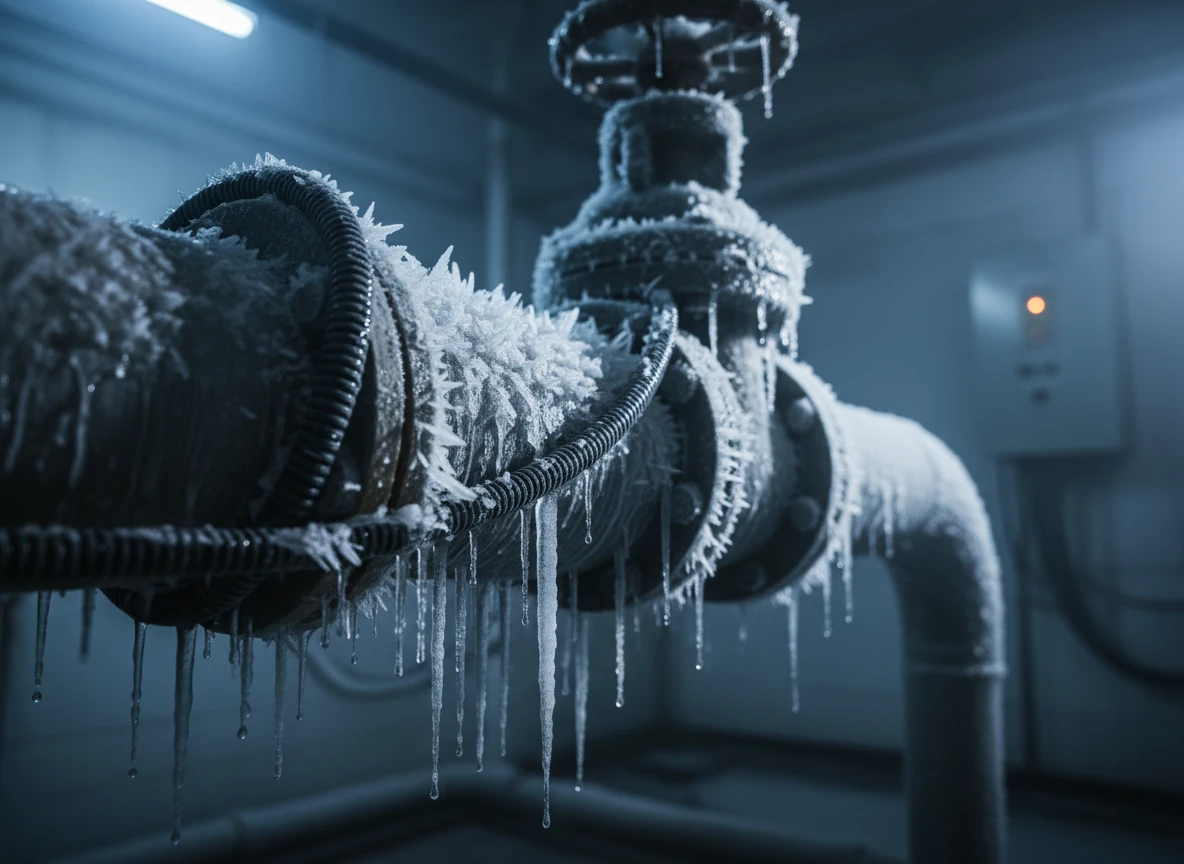
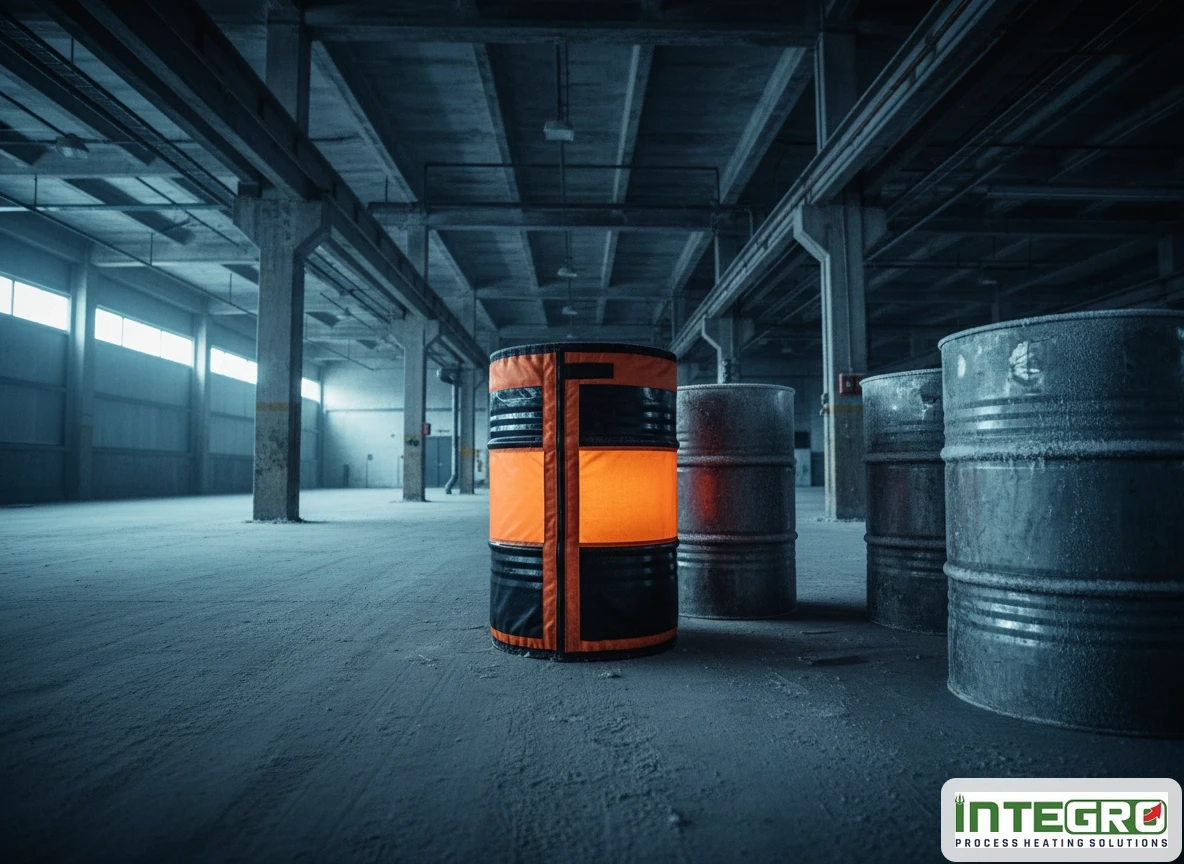
Ever tried pouring cold molasses on a freezing morning? It is painfully slow. But when you scale that up to a 55-gallon barrel of industrial resin, adhesive, or heavy lubricant sitting in a sub-zero warehouse, it is not just slow. It is a complete operational disaster.
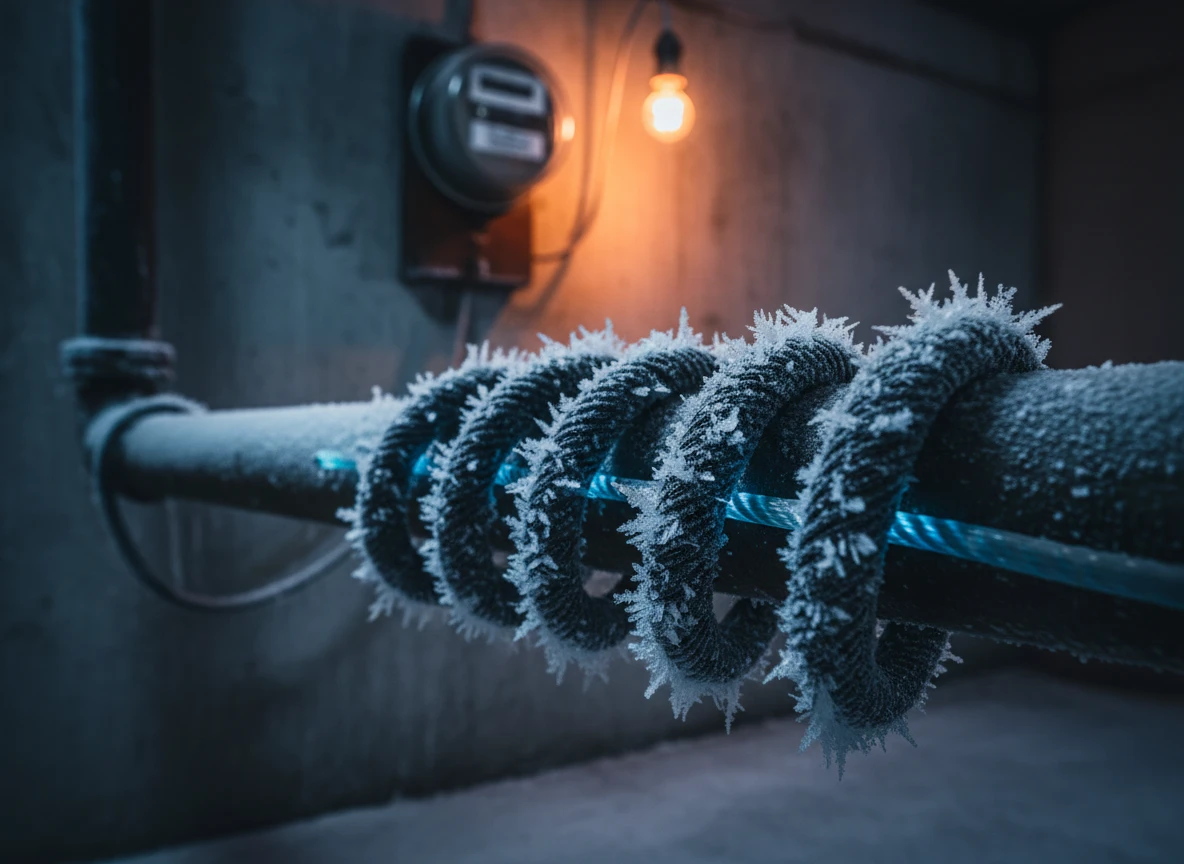
When things get cold, molecules slow down. Viscosity shoots up. This cold-weather thickening can easily stall your production lines, ruin sensitive chemical mixtures, or burn out expensive transfer pumps. You can read more about what happens to viscous liquids in cold warehouses to see how severe these viscosity spikes actually get.
Your first instinct might be to crank up the facility's thermostat. Don't do it. Heating thousands of cubic feet of high-ceilinged warehouse space just to keep a few dozen barrels warm is a massive waste of energy. Most of that expensive hot air just rises straight to the rafters and escapes, making it a classic operational money pit.
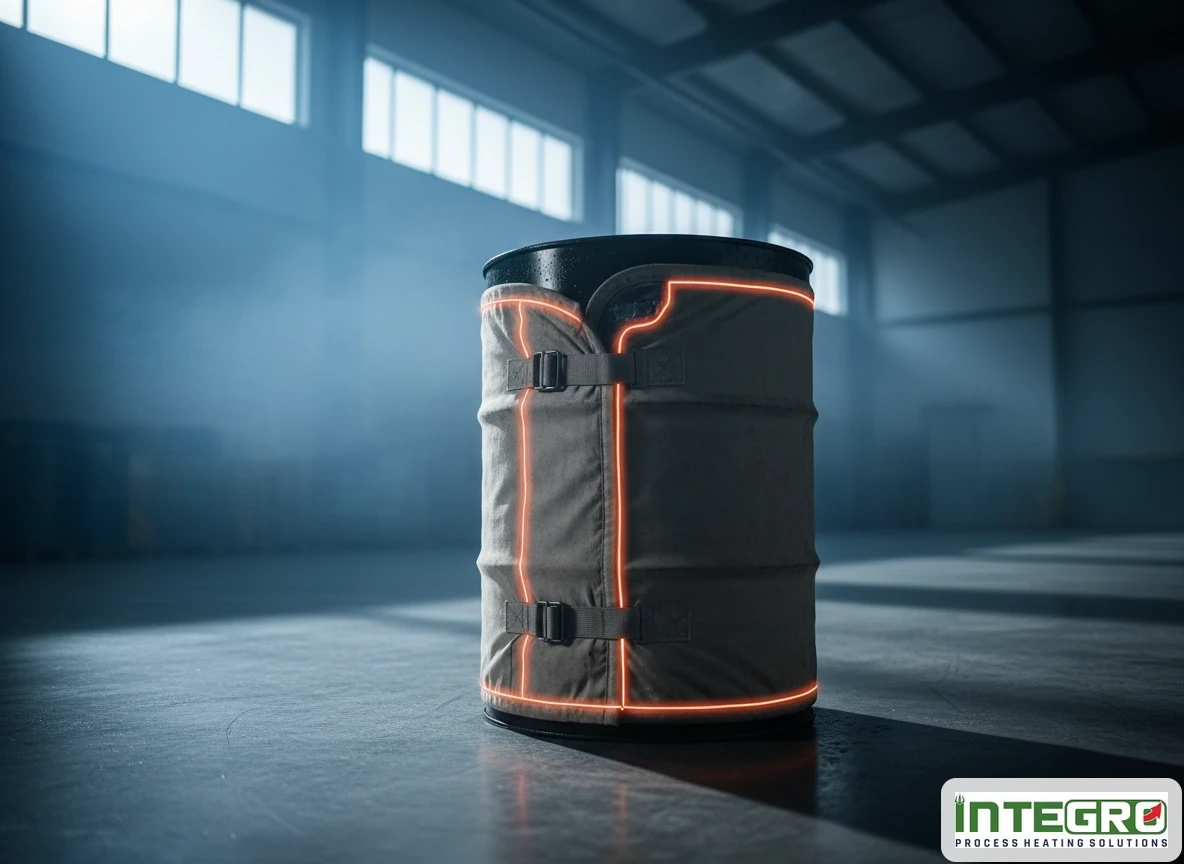
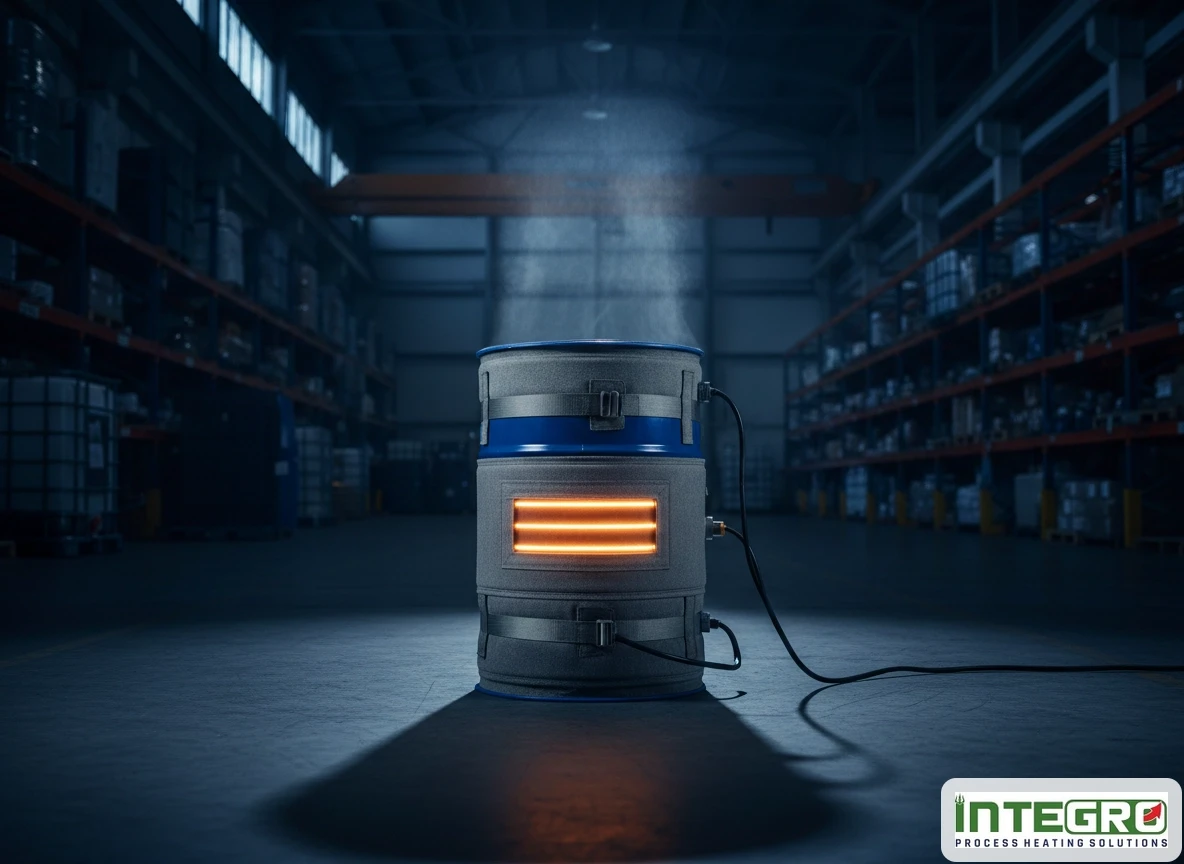
At Integro Process Heating Solutions, we prefer a more focused approach. Instead of warming the air, we target the container. Wrapping your barrels with specialized drum heating jackets is far more sensible. If you've ever wondered why rigid band heaters fail on cold days, it usually comes down to wind chill and poor surface contact. Our flexible industrial drum heater systems hug the entire surface. This transfers heat directly and evenly to the product. Getting the right drum heating equipment stops materials from crystallizing and keeps your production schedules on track. It is a simple, highly efficient way to keep your inventory flowing without sending your utility bills through the roof.
Assess your container and fluid profile before plugging anything in
Don't plug in any heating element until you know the thermal limits of both your vessel and what's inside it. I've seen too many plants melt expensive high-density polyethylene (HDPE) drums. They treat every 55-gallon barrel exactly the same and end up ruining sensitive chemical batches. The math is simple. If you mismatch your thermal setup, you'll end up with a containment breach or a ruined batch of product.
Container material dictates your thermal limits
Look at the physical vessel first. Wrapping a standard steel drum gives you plenty of leeway. You can safely run a high-wattage metal drum heater to ramp up temperatures fast because steel handles heat beautifully. Plastic is different. Standard HDPE drums degrade quickly if they get hotter than 140°F. For plastic, we at Integro Process Heating Solutions always recommend low-watt-density flexible heating jackets. These jackets spread energy across a large surface area. If you wrap a high-wattage silicone drum heater directly around bare polyethylene without a digital thermostat, you will melt the plastic wall.
Fluid chemistry and wattage selection
Your fluid's physical properties determine your actual power requirements. Viscous oils, resins, and food-grade syrups need precise thermal management. Don't assume high wattage is the fastest way to lower viscosity. With heat-sensitive adhesives, rapid heating scorches the product right at the drum wall. This creates an insulating layer of burnt material that actually slows down overall heat transfer.
To figure out your requirements, check the specific heat capacity of your fluid. Water-based fluids heat up slowly because of their high specific heat, but they rarely scorch. An industrial-grade 200L drum heating blanket works well here to deliver even heat transfer. Heavy lubricants are the opposite. They have lower specific heat capacities and heat up fast, but they degrade quickly if they get too hot. At Integro Process Heating Solutions, we match the heater's watt density to the fluid's thermal sensitivity. Don't just buy the highest wattage you can find. Sometimes, a larger drum heating chamber works better than a direct contact band, though results depend on your ambient warehouse temperatures. Using high-quality drum heaters with built-in thermostats is the only reliable way to prevent localized hot spots.
How to properly wrap and secure your heating jacket
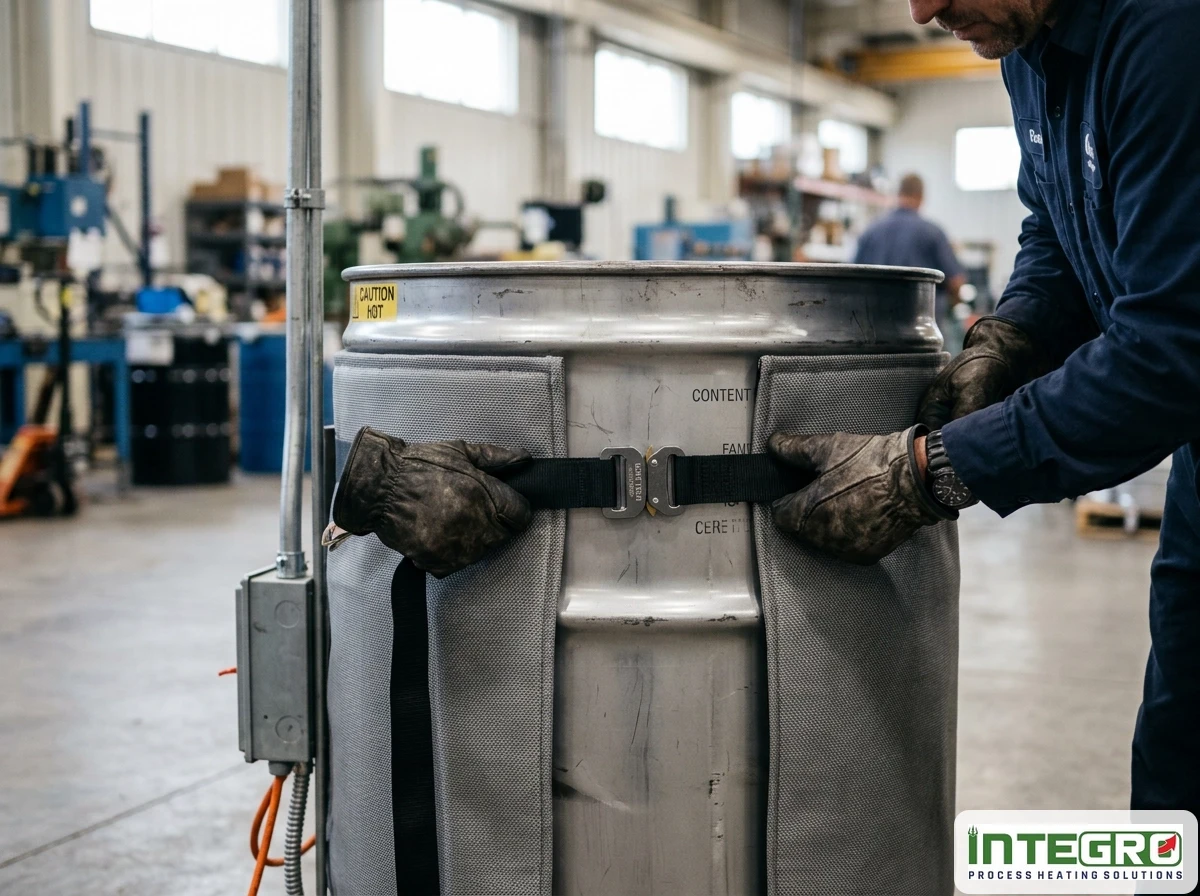
Once you match the correct wattage to your drum type, the physical installation begins. Don't just throw the blanket on and plug it in. Poor installation ruins equipment, wastes energy, and damages your inventory.
Prep the drum surface first
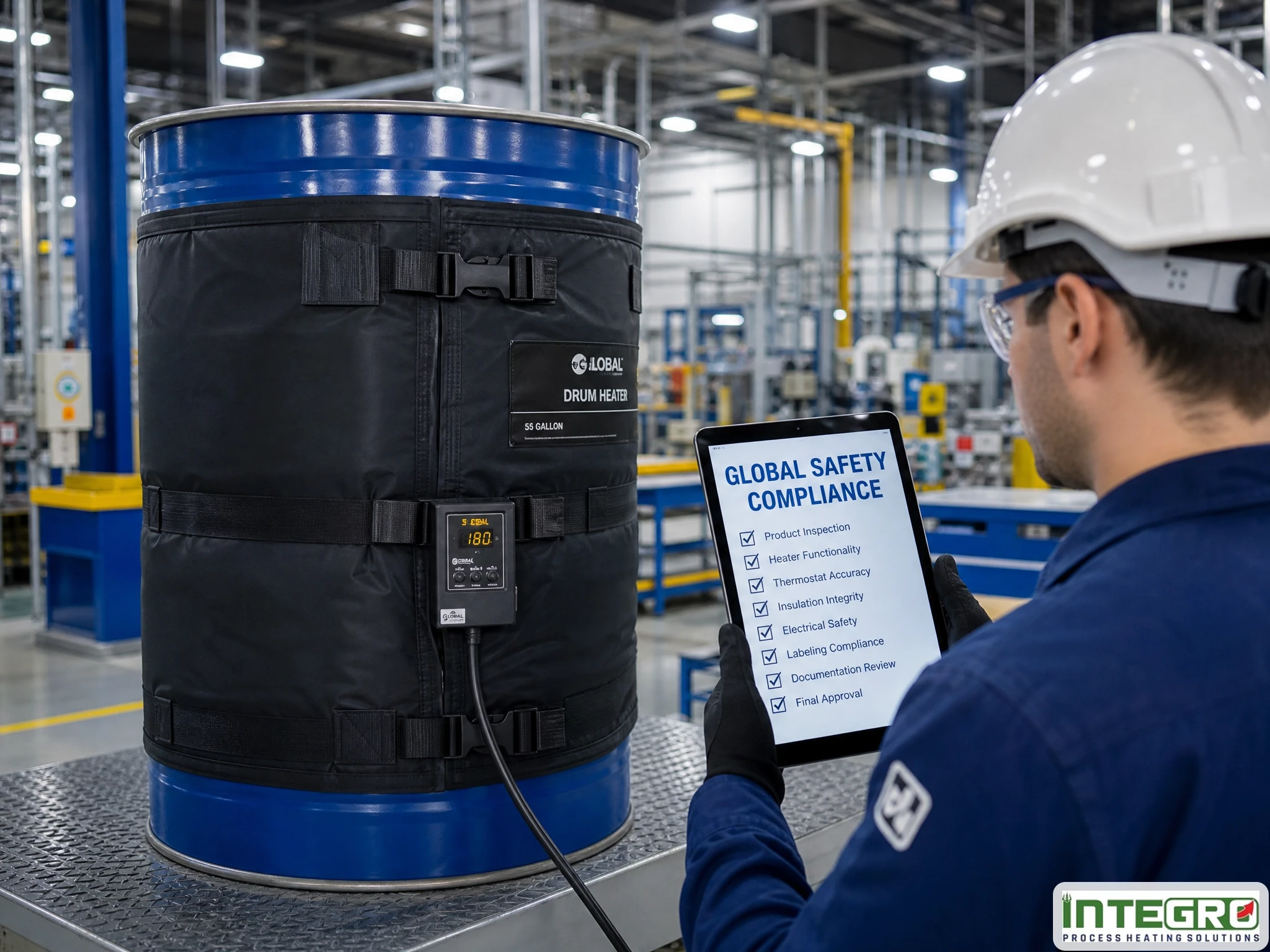
Before touching your 55 gallon drum heating blanket, inspect the barrel. Clean the outer wall thoroughly. Any grease, moisture, or chemical residue acts as a thermal barrier. Worse, trapped liquids can vaporize under heat, damaging the flexible heating jacket or causing a fire. Grab a clean rag. Wipe the barrel down until it's dry and bare. If you skip this step, you risk scorching residue directly onto your container.
Wrap for zero air gaps
Position the barrel heater blanket around the drum. It needs to fit like a second skin. Pull the ends toward each other. Air gaps are your enemy here. If the blanket hangs loose, heat can't transfer efficiently. Instead, the heat builds up in the element itself, causing localized burnout.
As seasoned technical pros at Integro Process Heating Solutions, we see this mistake constantly in cold warehouses. Operators drape the jacket loosely, expecting the heat to radiate. It doesn't work that way. Conduction requires direct contact. Press the jacket firmly against the drum wall as you wrap it. If you're sourced from certified drum heater exporters, you know high-quality materials depend entirely on tight thermal coupling.
Secure the buckles without overlapping
Pull the straps tight. Most drum heating jackets use spring-loaded buckles or heavy-duty velcro. Tighten them systematically from top to bottom. Once the drum heats up, metals and plastics expand. Check the tension again after thirty minutes of operation. A jacket that was tight when cold might sag once the drum expands, creating new air gaps.
But here's the golden rule: never overlap the heating edges. If the heating zones overlap, they heat each other. This causes rapid thermal failure and destroys the internal elements. If your jacket is too large for the container, don't use it. Get a properly sized industrial drum heater from reputable industrial drum heaters manufacturers instead.
If you're heating larger vessels, the same rules apply to an IBC jacket heater. Secure every strap. Keep the fabric flat. Ensure the thermostat sensor rests flat against the container surface for accurate readings. A floating sensor reads ambient air, tricks the system, and overheats your valuable fluids.
Dialing in the thermostat without scorching your product
Now that you've got the jacket wrapped tight, you're probably tempted to crank the thermostat up. Don't do that. It is the fastest way to ruin a batch of expensive resin.\n\n### Master the slow ramp\n\nThink of drum heating blankets like a slow cooker, not a microwave. You want a steady, uniform rise in temperature. When we design custom thermal solutions at Integro Process Heating Solutions, we always emphasize that thermal transfer takes time. If you blast a cold drum of adhesive with maximum heat, the fluid right next to the drum wall will scorch before the core even begins to soften.\n\nHow do you avoid this? It starts with setting conservative temperature limits on your electric drum heater. If your target temperature is 110°F, set the thermostat to 90°F first and let the heat distribute. At Integro Process Heating Solutions, our flexible jacket drum heaters feature built-in capillary or digital thermostats that monitor the heating element's surface temperature directly. This prevents localized hot spots. But remember, the thermostat reading shows the jacket's temperature, not necessarily the exact core temperature of your fluid.\n\n### Trust your safety limits\n\nTo get things right, you need to monitor how the heat transfers through the container wall. While an industrial waste water evaporator relies on intense boiling points, drum heating is a game of patience. For thick syrups, using an external infrared thermometer to check the top, middle, and bottom of the drum helps verify even heat distribution. Sometimes, results vary depending on whether you're using a plastic or metal container, so don't expect identical heat-up times every single run.\n\nAnd what about those integrated sensors? They act as your safety net. If thermal transfer stalls,say, because of an air gap you missed,the internal sensors detect the heat buildup and throttle the power. It's a similar principle to how modern underfloor heating systems manage thermal expansion to stay safe. So, trust the sensors, keep your initial settings moderate, and let conduction do the heavy lifting.
Where most operators lose heat: the uninsulated top and other critical errors
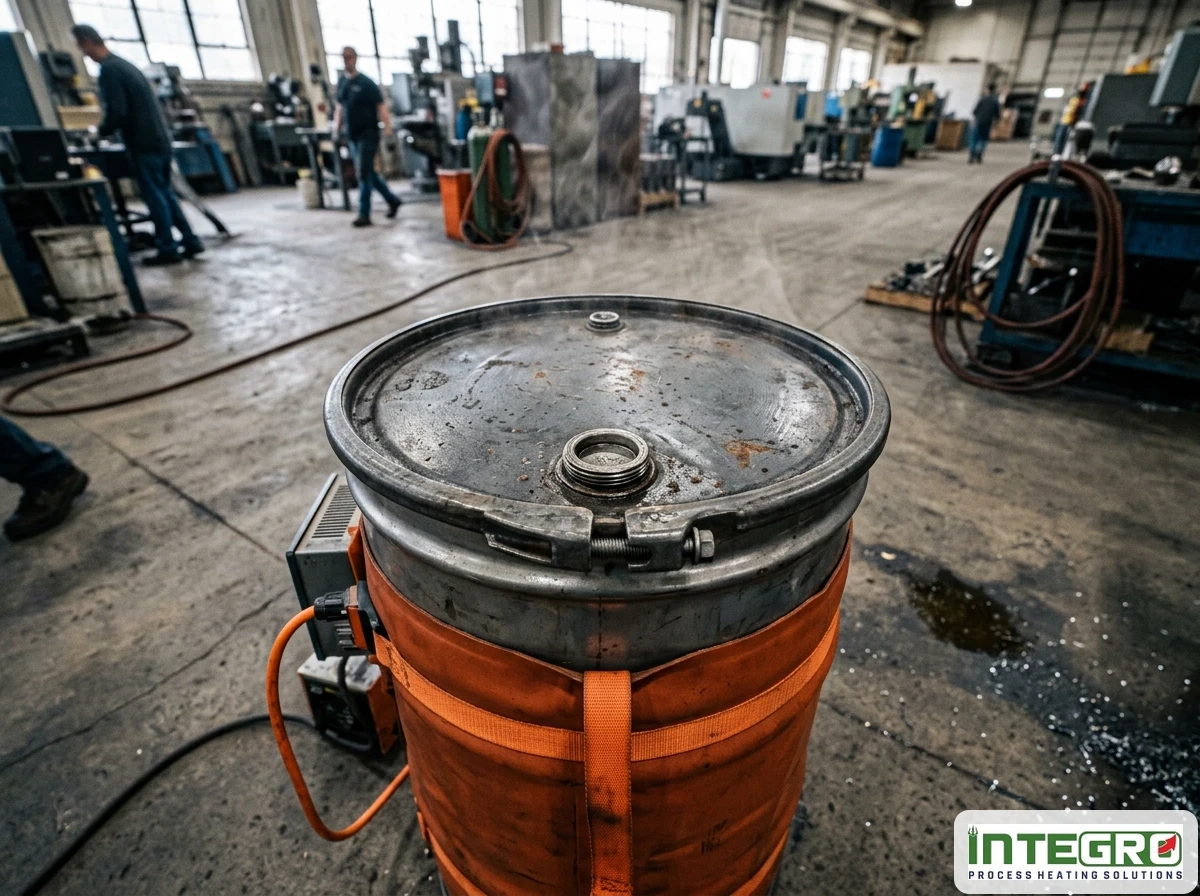
Thermal imaging shows that an uninsulated drum lid can lose up to 35% of its total heat energy to the surrounding air, even when the sides are fully wrapped. When you dial in your thermostat, you might assume that heat stays trapped inside. But without an insulated lid, you're essentially pouring expensive energy straight into a cold warehouse. At Integro Process Heating Solutions, we frequently see operators crank up their 55 gallon drum heating blanket to compensate for this overhead loss, which only risks scorching the product near the heating elements.
Because hot fluids naturally rise, convective currents within the barrel continuously carry the warmest product to the top. If that top lid is uninsulated, it acts as a giant radiator, releasing heat as fast as the jacket can generate it. This thermal cycle wastes power and creates severe temperature gradients inside the container, leaving the bottom layer cold and highly viscous. Adding an insulated top cover is a simple fix that slashes recovery times and reduces energy draw.
But heat loss isn't the only operational trap. Another dangerous, yet common mistake is folding or overlapping the jacket. When you overlap drum heating equipment during operation, the heating elements face each other directly. This creates localized hot spots that can quickly exceed 200°F, melting the outer fabric or permanently damaging the internal wiring.
Applying heat to a dirty drum surface is equally problematic. Grease, water, or chemical residue on the drum exterior acts as a thermal barrier, forcing the jacket to work harder and risking chemical combustion. It's best to wipe down the barrel completely before securing the straps. While results vary depending on ambient temperatures and fluid viscosity, keeping the drum clean and fully capped ensures you get the exact thermal performance you are paying for.
What to do when the fluid isn't warming up fast enough
Even after you've capped the drum lid and wiped the container clean, you might still find yourself staring at a temperature readout that refuses to budge. When your fluid isn't warming up at the expected rate, the issue usually boils down to a quiet battle between your heater's thermal output and the surrounding environment.
First, look down. If your drum sits directly on a cold concrete warehouse floor, that slab acts as a massive heat sink, drawing energy away faster than your industrial drum heater can supply it. Elevating the drum onto an insulated pallet or using a dedicated base heater can break this thermal bridge. But sometimes the issue is purely mechanical. I always recommend checking the thermostat sensor placement; if the sensor isn't making direct, tight contact with the drum wall, it will read ambient air temperatures and cycle off prematurely.
troubleshooting thermal lag
If you've verified contact and the drum is still cold, you might be dealing with a low-voltage scenario. Running high-wattage flexible heating jackets on long, thin extension cords drops the voltage, which drastically reduces your overall heat output. Ensure you're plugged directly into a rated outlet.
And don't rule out the fluid's physical properties. Highly viscous materials like resins or heavy lubricants have a high thermal inertia. They simply require more time than water-based fluids to show progress. To confirm if the jacket is actually functioning, use an infrared thermometer to scan the outer surface of the jacket itself. If the jacket is hot but the fluid is cold, the heat is transferring,it's just a matter of waiting for the thermal mass to catch up.
Keeping your production running while the temperature drops outside
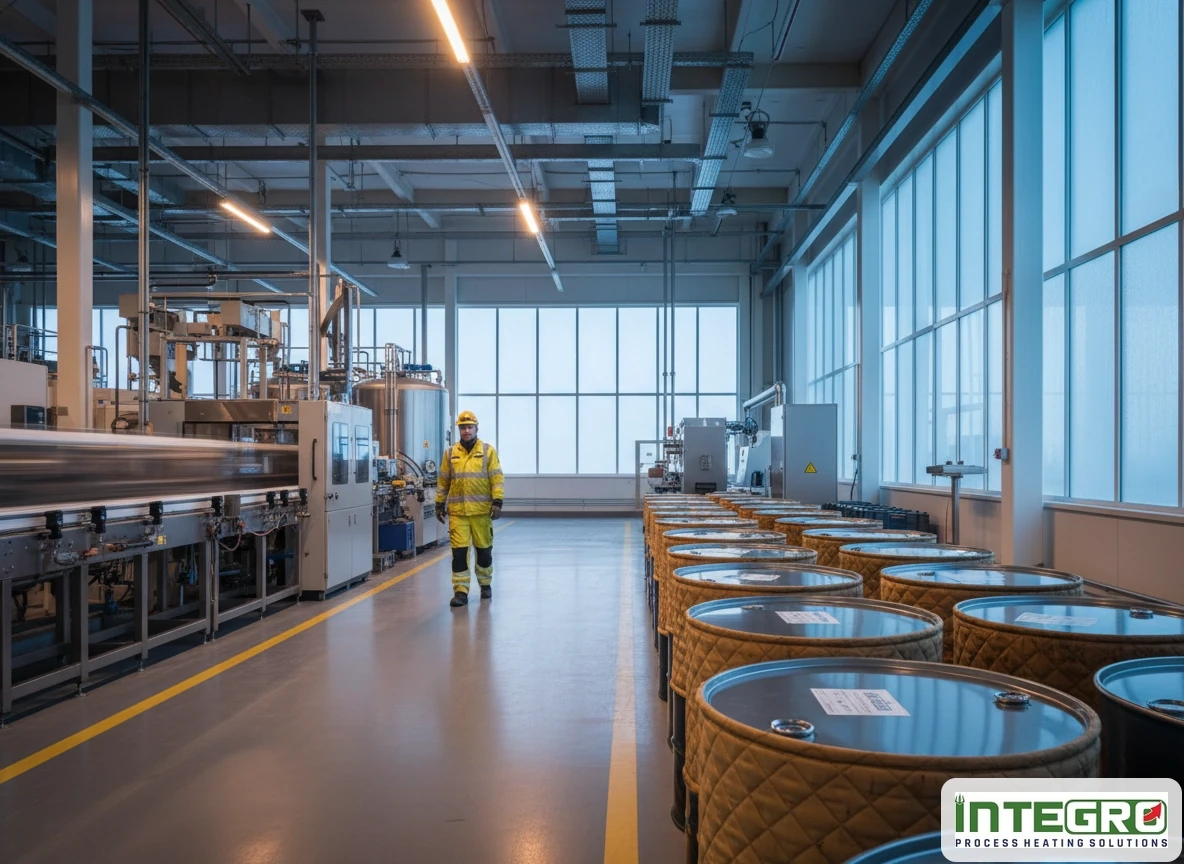
Imagine stepping onto the plant floor at six in the morning when a biting frost has settled outside, only to find last night's batch of high-viscosity adhesive flowing smoothly from the barrel instead of sitting like a solid brick. That immediate operational continuity is what proactive thermal management buys you. If you wait for a deep freeze to completely lock up your inventory, you lose hours of precious shift time, risk damaging container walls with brute-force thawing, and waste massive amounts of energy trying to heat an entire freezing warehouse. You'll find that outfitting your storage area with an electric drum heater changes everything about winter logistics. Instead of fighting the elements, targeted surface heating keeps your raw materials at the exact sweet spot required for immediate processing. And when you pair these wraps with reliable drum heating blankets, the payback shows up almost instantly on your next utility bill because you are only heating the fluid you actually need to pump. It's a straightforward mechanical fix for a problem that routinely halts production lines across the manufacturing sector. Taking care of this before the first severe cold snap hits isn't just about keeping materials workable. It protects your bottom line from unexpected downtime and keeps your facility running smoothly through the worst winter weather. What preventative steps are you taking in your facility before temperatures plummet this week?
If winter weather is already messing with your fluid lines, Integro Process Heating Solutions provides custom engineered heating equipment to keep your inventory flowing.
FAQ
Can I use the same heating jacket on plastic and metal drums?
No, you'll need to check the specs first. Plastic poly drums can't handle the same high wattages as metal drums, and using the wrong blanket can melt the container. Always match your jacket's rating to your drum material.
What happens if I overlap the edges of my heating blanket?
Overlapping creates dangerous hot spots that can scorch your product or ruin the heating elements. Make sure you wrap it snugly around the barrel wall without folding any section over itself.
Do I really need a top cover for my 55-gallon drum?
Honestly, leaving the top uninsulated lets a ton of heat escape into the air. Adding an insulated lid cover keeps the warmth inside and makes the whole setup way more energy-efficient.
How do I stop my resin or syrup from scorching?
Keep an eye on your thermostat limits and match the temperature setting to your fluid's specific viscosity needs. Integrated digital sensors help prevent runaway heat so your product stays safe.