- By Admin
- Integro
- The hidden risk in sourcing industrial heating equipment
- Which international safety certifications must an Indian drum heater carry?
- Decoding the difference: ATEX, IECEx, and standard IP ratings
- How does a drum heater prevent catastrophic thermal runaway?
- Why container materials shift the rules of thermal safety
- A practical checklist for auditing an Indian manufacturer's facility
- Securing your global supply chain with certified hardware
- FAQ
Which international safety certifications must an Indian drum heater carry?
What specific standards should you demand from an Indian manufacturer?
When you buy an electric drum heater, you aren't just buying metal and heating elements. You're buying a safety system. If your facility operates in North America, Europe, or regulated zones in Asia, standard domestic clearances won't cut it. You need verified international certifications. Without them, you risk failing safety codes and voiding your insurance.
Why is ATEX non-negotiable for European installations?
Are you operating in environments with flammable gases, mists, or dusts? If so, an ATEX-certified explosion proof drum heater is mandatory across Europe. ATEX is a regional directive. It ensures the equipment won't become an ignition source. When you evaluate an Indian exporter, ask for their ATEX certificate of conformity. This document proves the design has undergone rigorous testing against spark and surface temperature limits.
Why does the IECEx standard matter for global supply chains?
What if your operations span multiple continents? That is where IECEx comes in. Unlike ATEX, which is European, IECEx is a global standard for explosive atmospheres. It harmonizes testing across participating countries, making it easier to verify compliance. Many high-quality manufacturers of engineered heating solutions build to IECEx standards to ensure their equipment can be deployed globally without local testing delays.
Do you need UL/CSA or CE markings for routine compliance?
Yes, depending on where your factory floor is located.
- UL and CSA: These are essential for North American markets. They certify that the electrical components of your heater won't cause electrical fires or shocks under load.
- CE Mark: This is a declaration indicating conformity with health, safety, and environmental protection standards for products sold within the European Economic Area.
Without these marks, local inspectors can shut down your line. Make sure the manufacturer provides the actual registration numbers, not just a logo on a datasheet.
Decoding the difference: ATEX, IECEx, and standard IP ratings
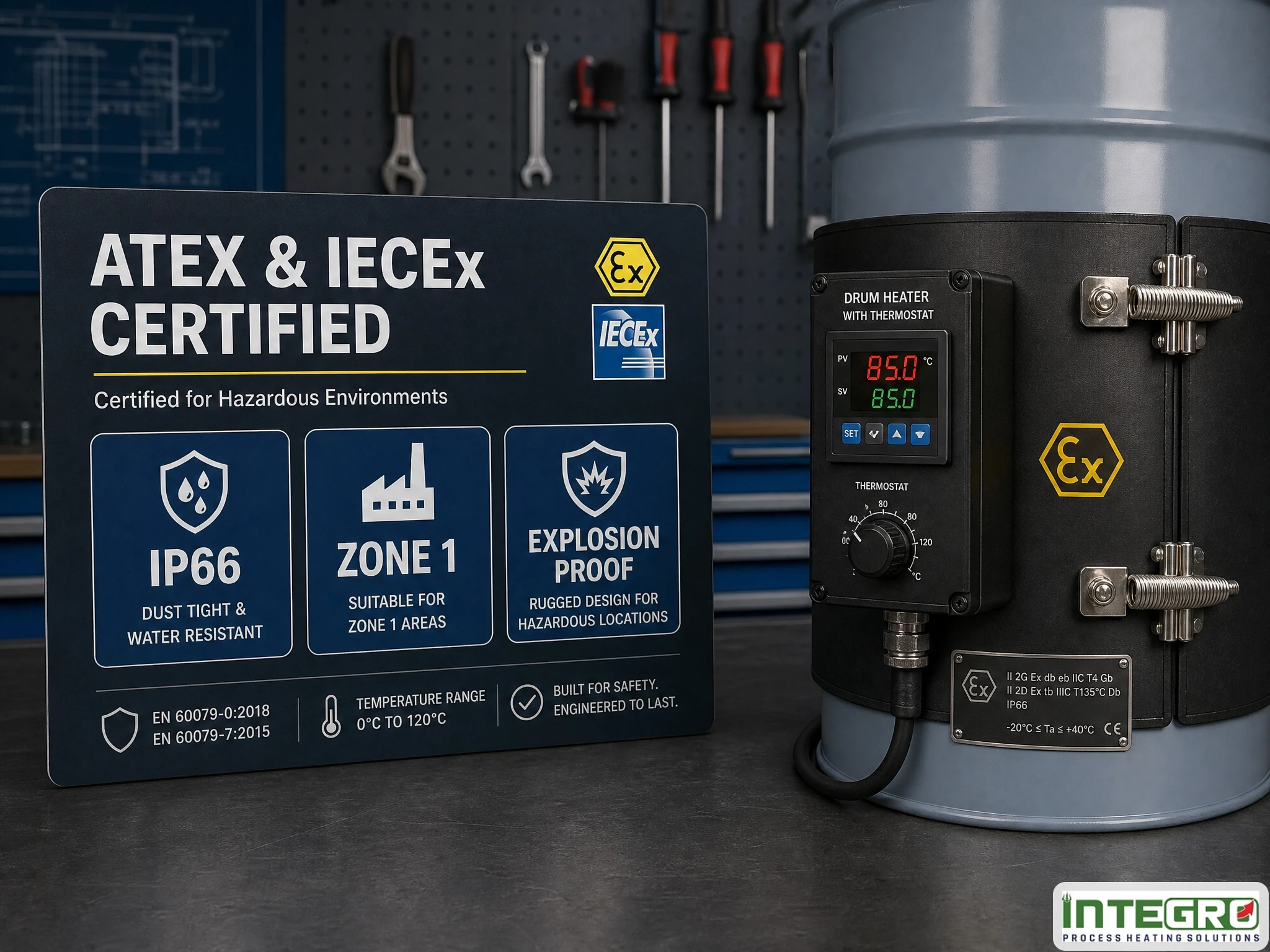
Many buyers confuse a high Ingress Protection (IP) rating with actual explosion-proof capability. Let's clear this up. An IP65 or IP66 rating simply means the physical enclosure blocks dust and water jets. It has absolutely nothing to do with preventing an electrical spark from igniting volatile chemical vapors in the air. For that level of protection, you must look for specialized ATEX or IECEx certifications.
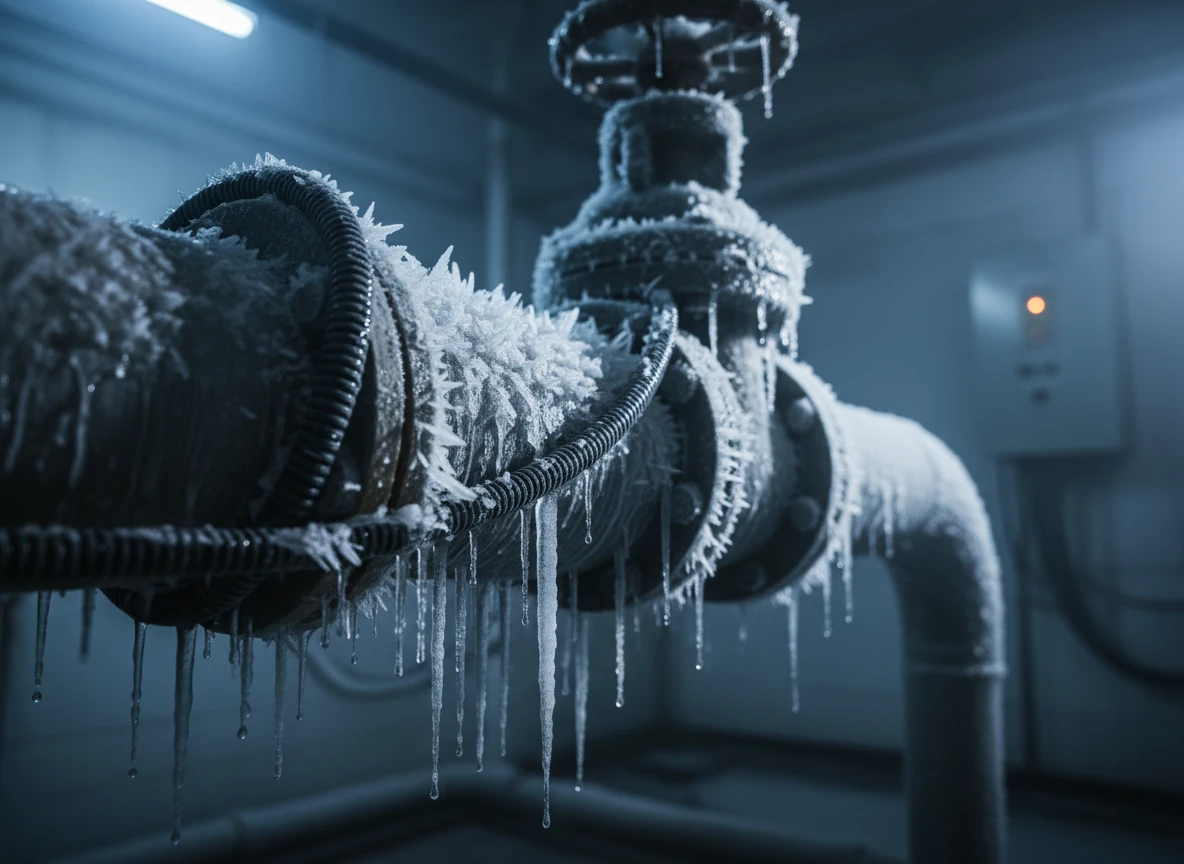
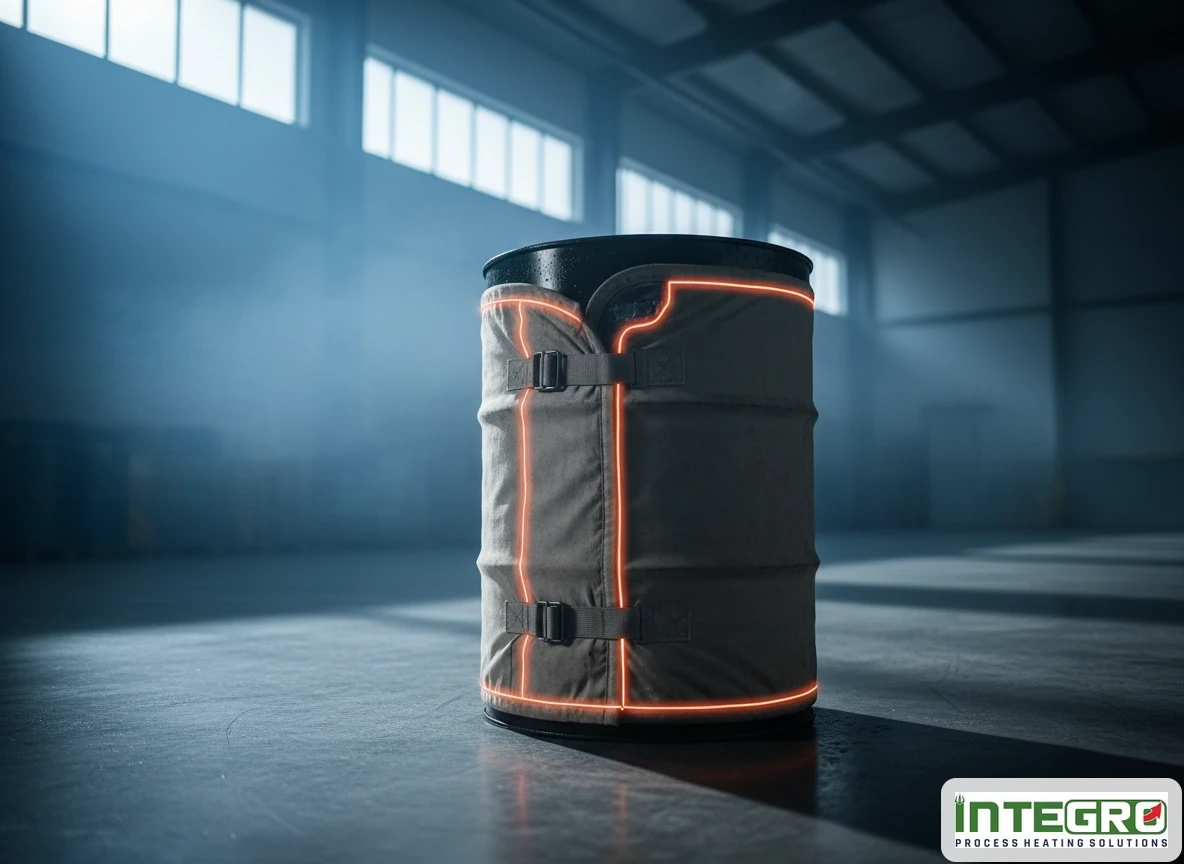
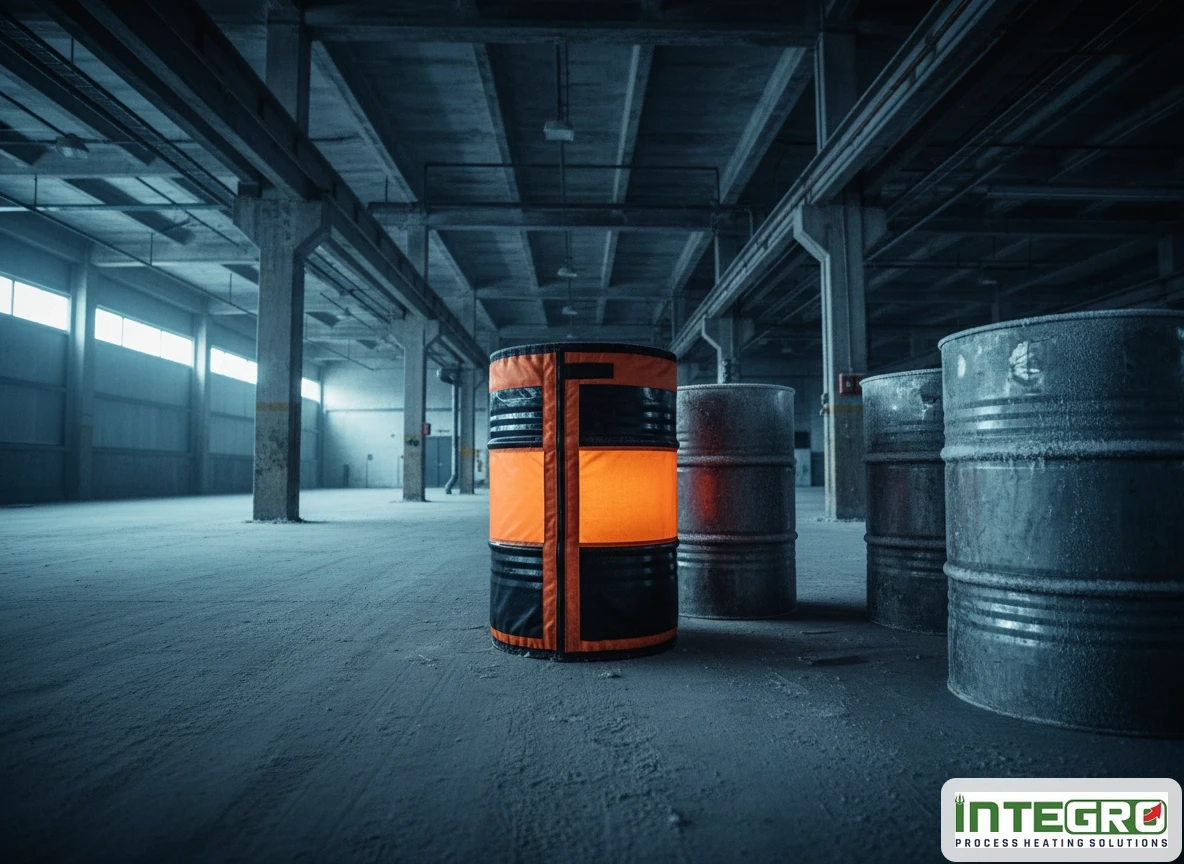
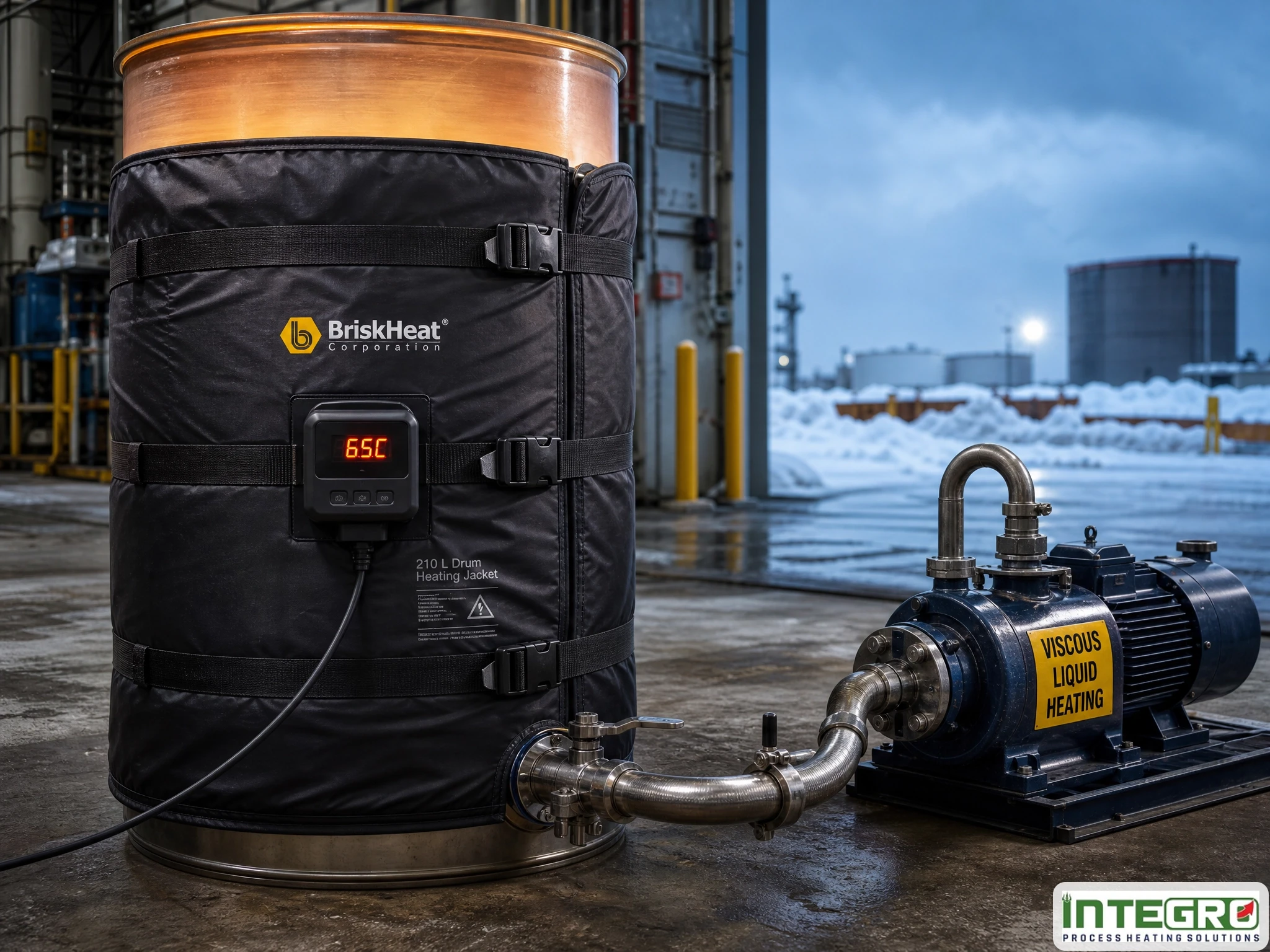
When you deploy a flexible heating jacket to prevent freezing in a volatile environment, the hardware must strictly control its surface temperature to stay below the auto-ignition point of surrounding gases. This is where T-class ratings (T1 to T6) are critical. A certified barrel heater blanket designed for Zone 1 or Zone 2 hazardous areas uses self-limiting heating elements and intrinsically safe thermostats. This setup ensures it never exceeds its rated T-class, even during a system fault.
Conversely, standard drum heating blankets built only for IP65 moisture resistance lack these critical spark-containment and thermal-limiting designs. If a nearby solvent drum leaks volatile organic compounds (VOCs), a non-hazardous rated blanket's thermostat could easily arc and trigger an explosion.
The difference between Zone 1 and Zone 2 environments also dictates your hardware choice. Zone 1 areas expect explosive atmospheres to exist during normal operations, requiring highly resilient containment designs. Zone 2 areas only expect these hazards during abnormal conditions, but they still require equipment that won't become an ignition source if a leak occurs.
Certified hazardous-area jackets also feature anti-static outer layers. Standard materials can build up static charge through friction, creating a spark risk when operators pull the jacket off the drum. By choosing hardware that carries both the correct IP rating for environmental protection and the appropriate ATEX/IECEx zone certification, you secure both the internal electronics and the wider facility footprint.
How does a drum heater prevent catastrophic thermal runaway?
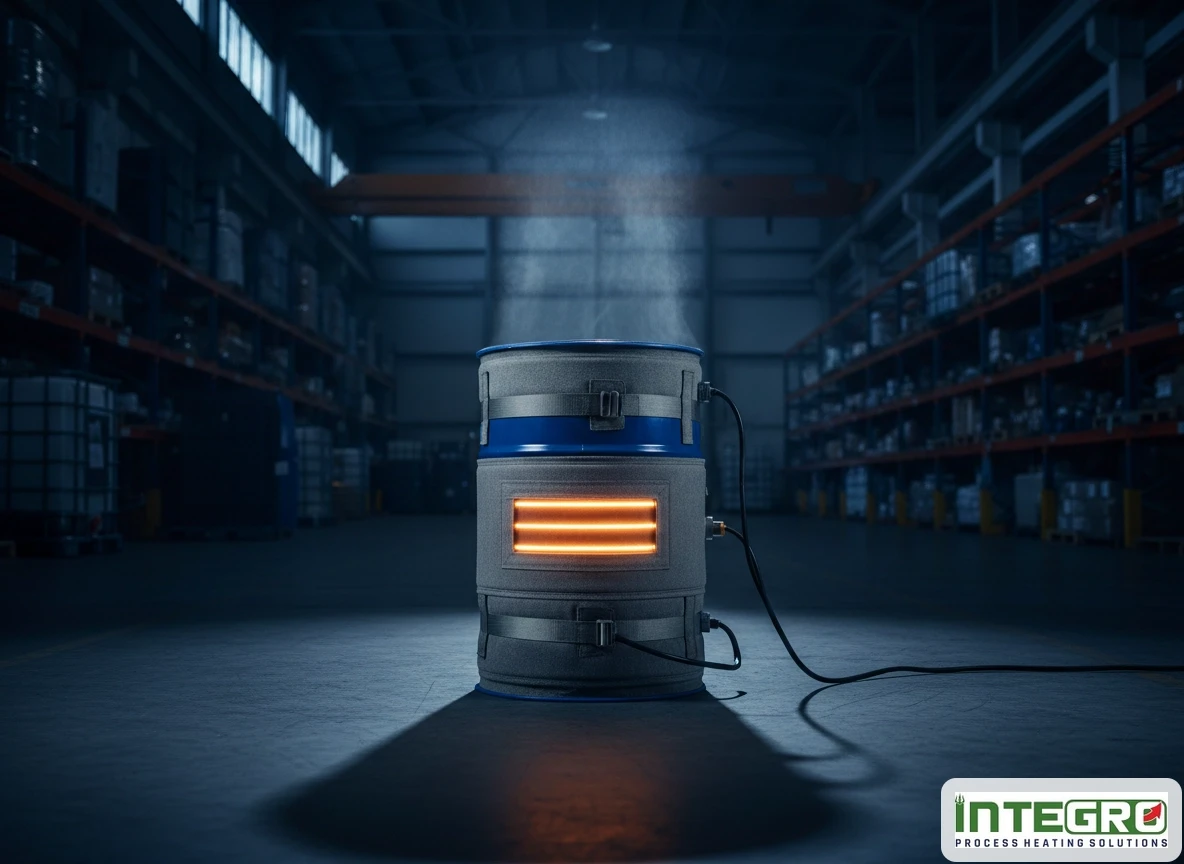
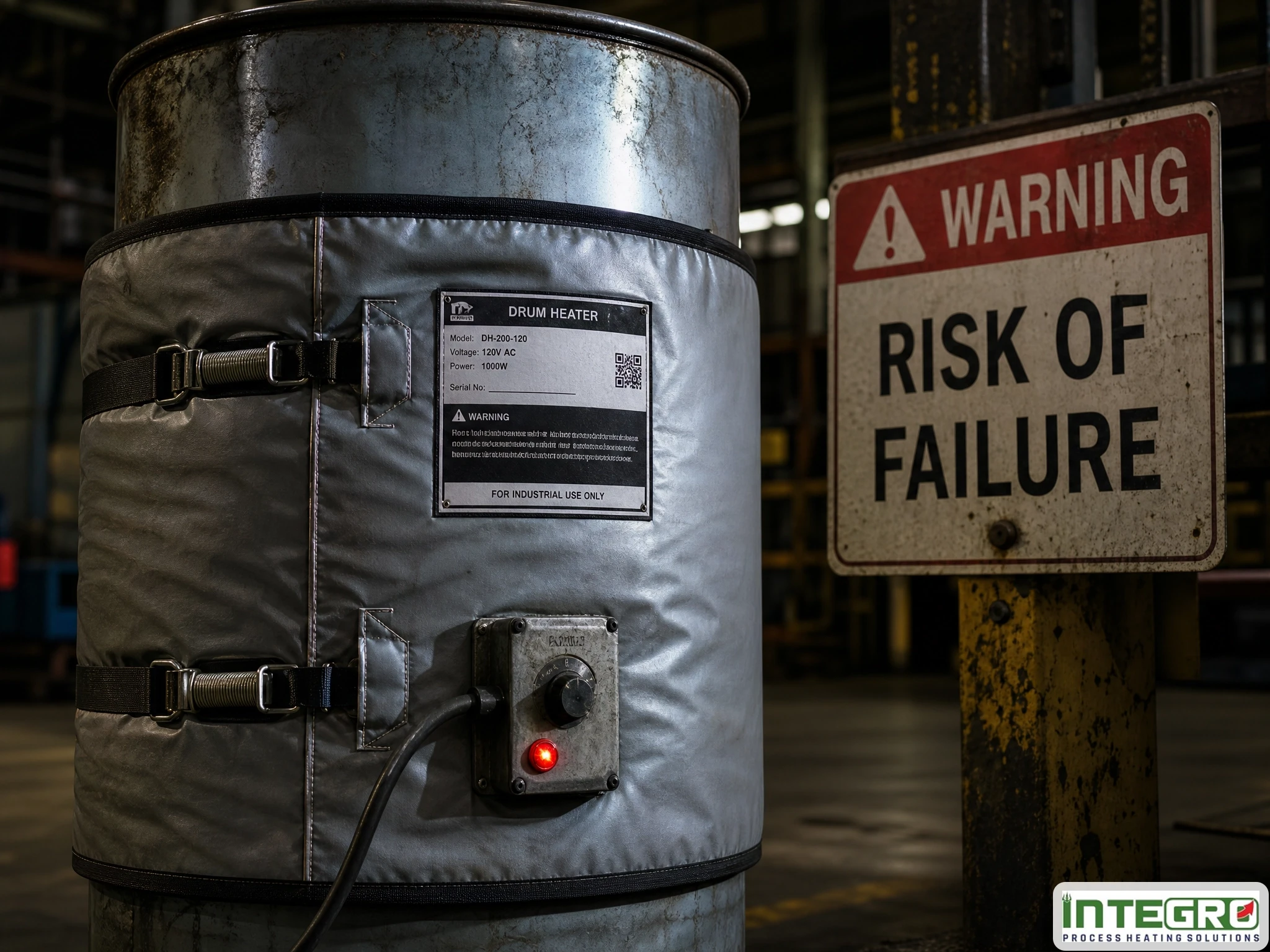
When you wrap a 55 gallon drum heater around a barrel of raw chemicals, you are essentially introducing a massive thermal engine to a highly sensitive environment. Without precise control, that heat doesn't just melt your product; it can trigger a runaway thermal reaction that destroys the chemical structure or, worse, ruptures the container.
How do quality manufacturers prevent this? It comes down to a comparative look at control philosophy: single-point monitoring versus multi-layered redundant safety systems.
| Feature | Basic Heating Band | Engineered Drum Heater |
|---|---|---|
| Primary Regulation | Manual dial or simple bi-metal switch | Digital drum heater with thermostat (RTD/Thermocouple) |
| Over-temperature Protection | None (relies on operator vigilance) | Independent backup thermal cut-off switch |
| Heat Distribution | Concentrated high-wattage hot spots | Uniform low-watt-density heating elements |
A basic heating jacket often relies on a rudimentary bi-metal thermostat that measures temperature at only one physical point on the band. If that specific spot is insulated or loses contact with the drum, the controller thinks the system is cold and keeps pumping power. The rest of the band spikes in temperature.
In contrast, a high-spec drum heater with thermostat utilizes a primary sensor to actively monitor the jacket temperature while a secondary, completely independent safety switch acts as a hard stop. If the primary controller fails in the "on" position,a common failure mode for mechanical relays,the secondary manual-reset thermal switch cuts physical power to the heating elements once a pre-set limit is breached.
This level of engineering is critical when handling materials prone to thermal degradation. For instance, if you are heating sensitive surfactants, you can read about what happens when you overheat SLES drums to understand how quickly a lack of thermal safeguards ruins an entire batch.
Ultimately, relying on a single thermostat is a gamble. True thermal safety requires separate, physical layers of protection that operate independently of the main controller.
Why container materials shift the rules of thermal safety
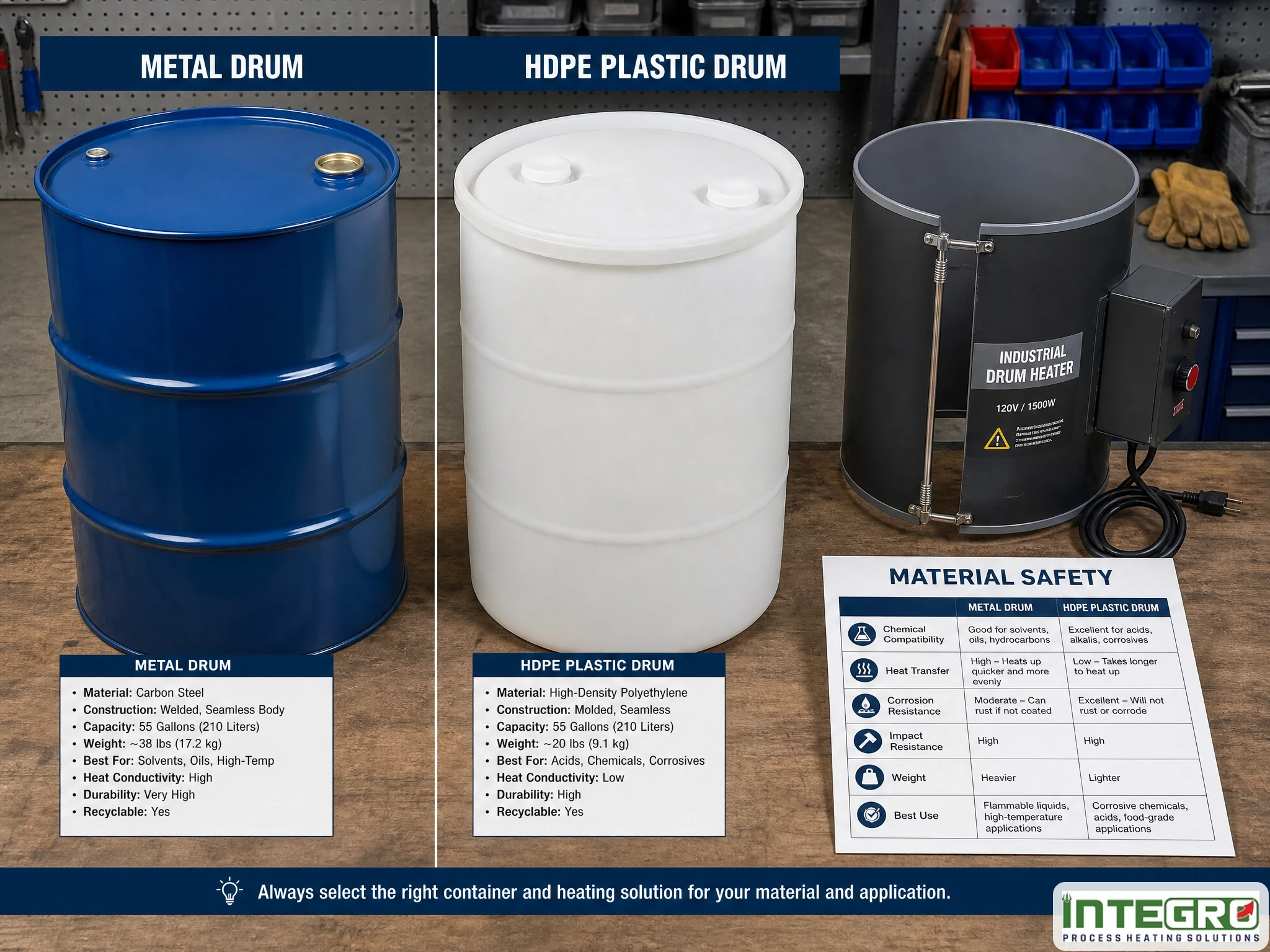
You can't heat a plastic drum the same way you heat steel. It sounds obvious, but you'd be surprised how often this detail gets overlooked in procurement. If you are sourcing from an Indian manufacturer, you must verify that their heating systems are engineered specifically for the container material you use. A mismatch here doesn't just ruin your batch; it can compromise your entire facility's safety.
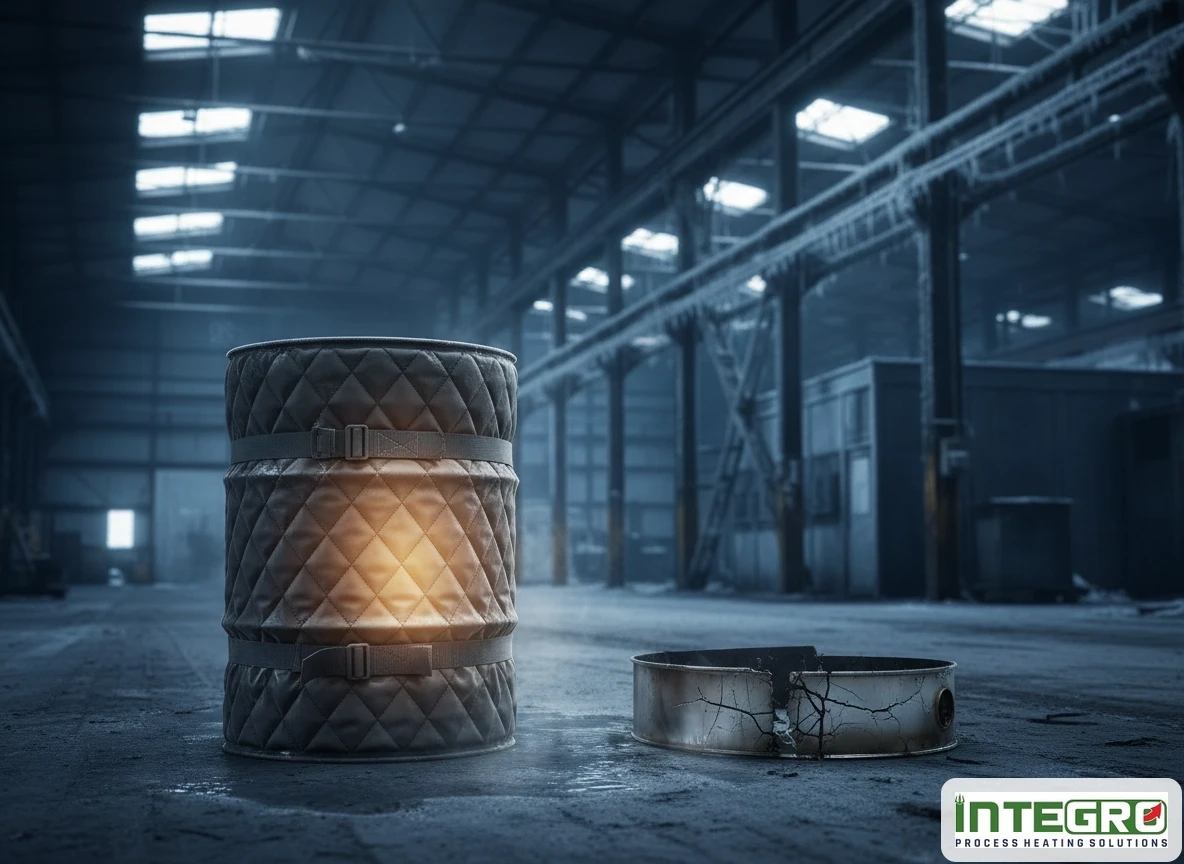
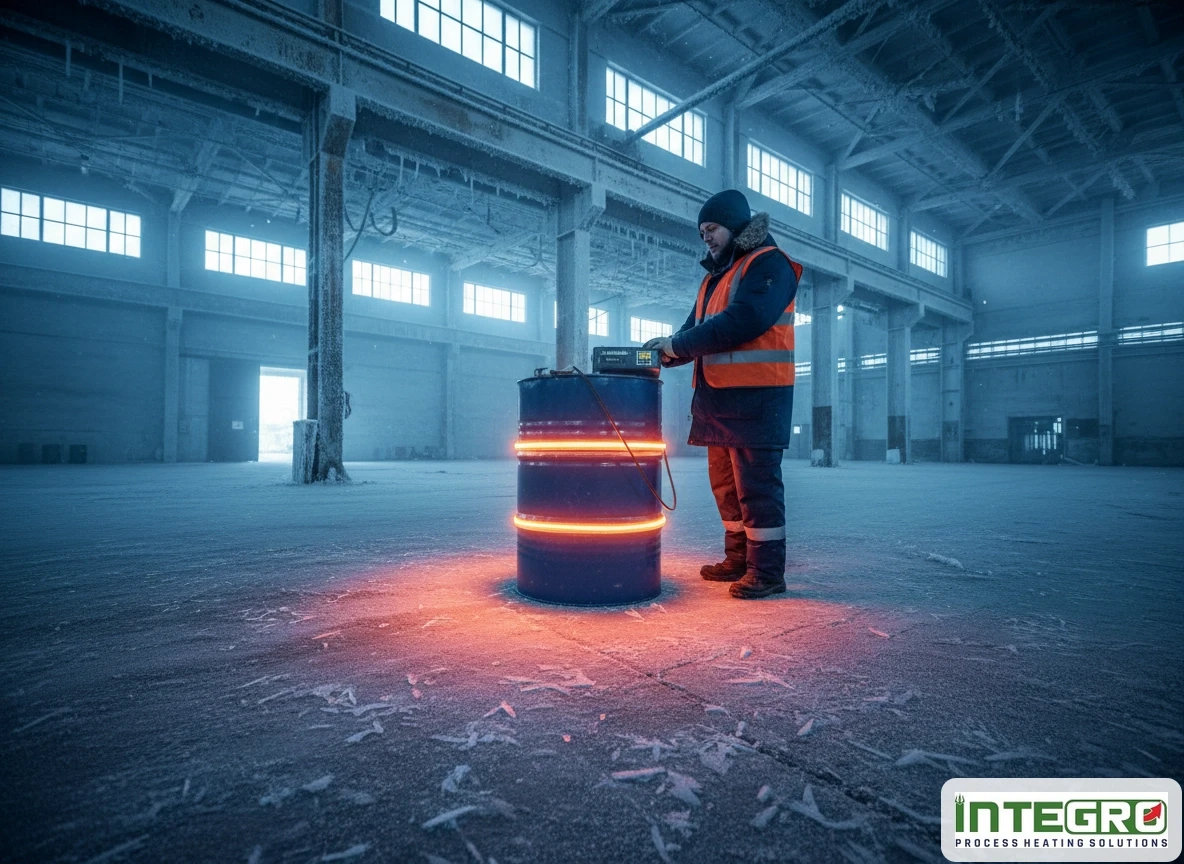
Steel is incredibly forgiving. A metal drum heater can run at high temperatures because steel distributes heat rapidly and won't melt under typical industrial processes. But high-density polyethylene (HDPE) is a completely different story. Plastic has poor thermal conductivity and a low melting point. If you blast an HDPE drum with the same thermal output used for steel, you risk warping the container, ruining your product, or starting a chemical fire.
To prevent this, a plastic drum heater needs a much larger surface area and a tightly controlled, lower watt-density. It spreads the heat gently rather than dumping it into a concentrated zone. When we design these systems, we ensure the heating elements never exceed the safe thermal limits of the plastic, which usually tops out around 40°C to 60°C for continuous exposure. The physical limits of the container dictate the engineering of the heating jacket.
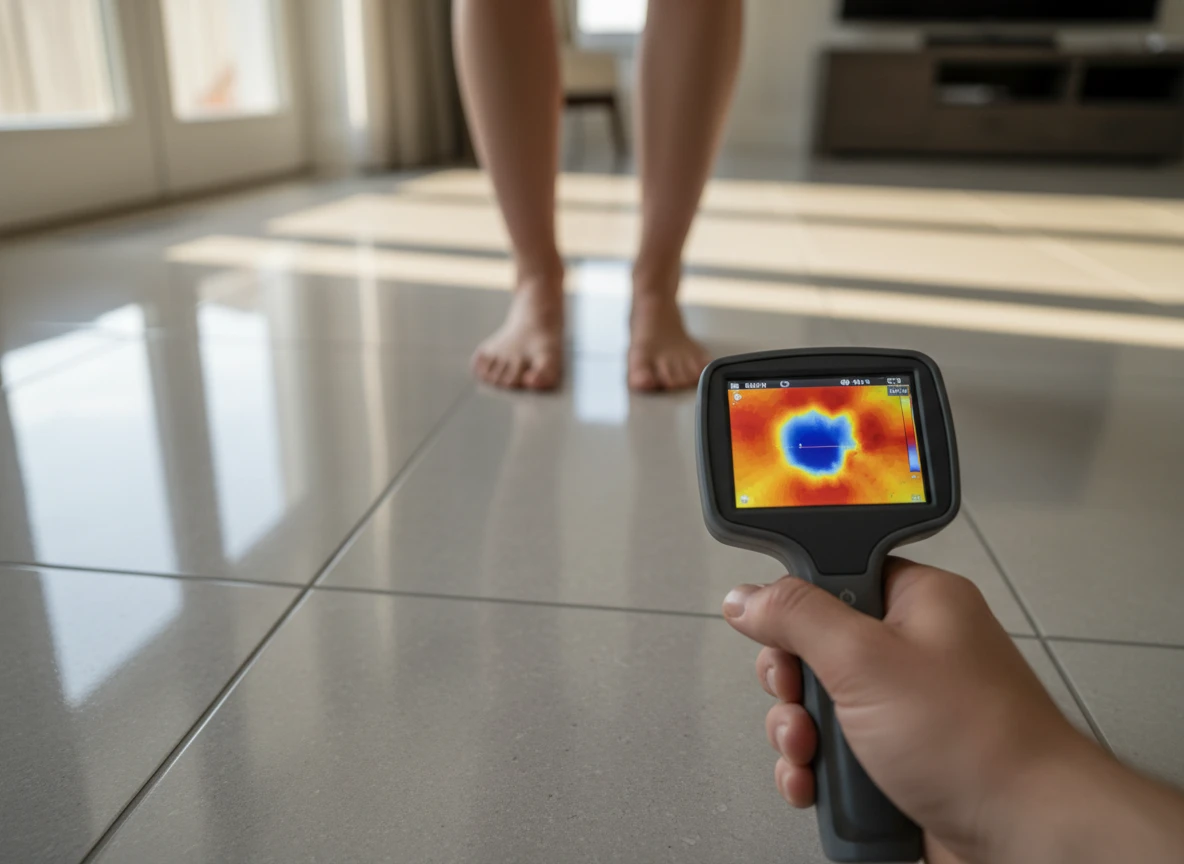
So, when you are auditing a manufacturer, ask to see their thermal imaging reports for both material types. Do they use the same heating jacket design for both? If they do, that's a massive red flag. A reliable partner will show you distinct designs: high-output systems for metal, and self-regulating or low-wattage, insulated jackets for plastic. They should also provide details on how they prevent localized hot spots on plastic surfaces. Getting this right is the difference between smooth operations and a costly warehouse disaster.
A practical checklist for auditing an Indian manufacturer's facility
When you are sourcing an industrial drum heater from overseas, you cannot rely on self-declarations or simple paperwork. Many buyers mistake a standard ISO 9001 quality management certificate for a safety certification. It isn't. ISO 9001 only means they follow their own documented processes; it does not prove their hardware won't ignite a volatile solvent vapor.
Here is how you actually verify a drum heater manufacturer in India before signing the purchase order.
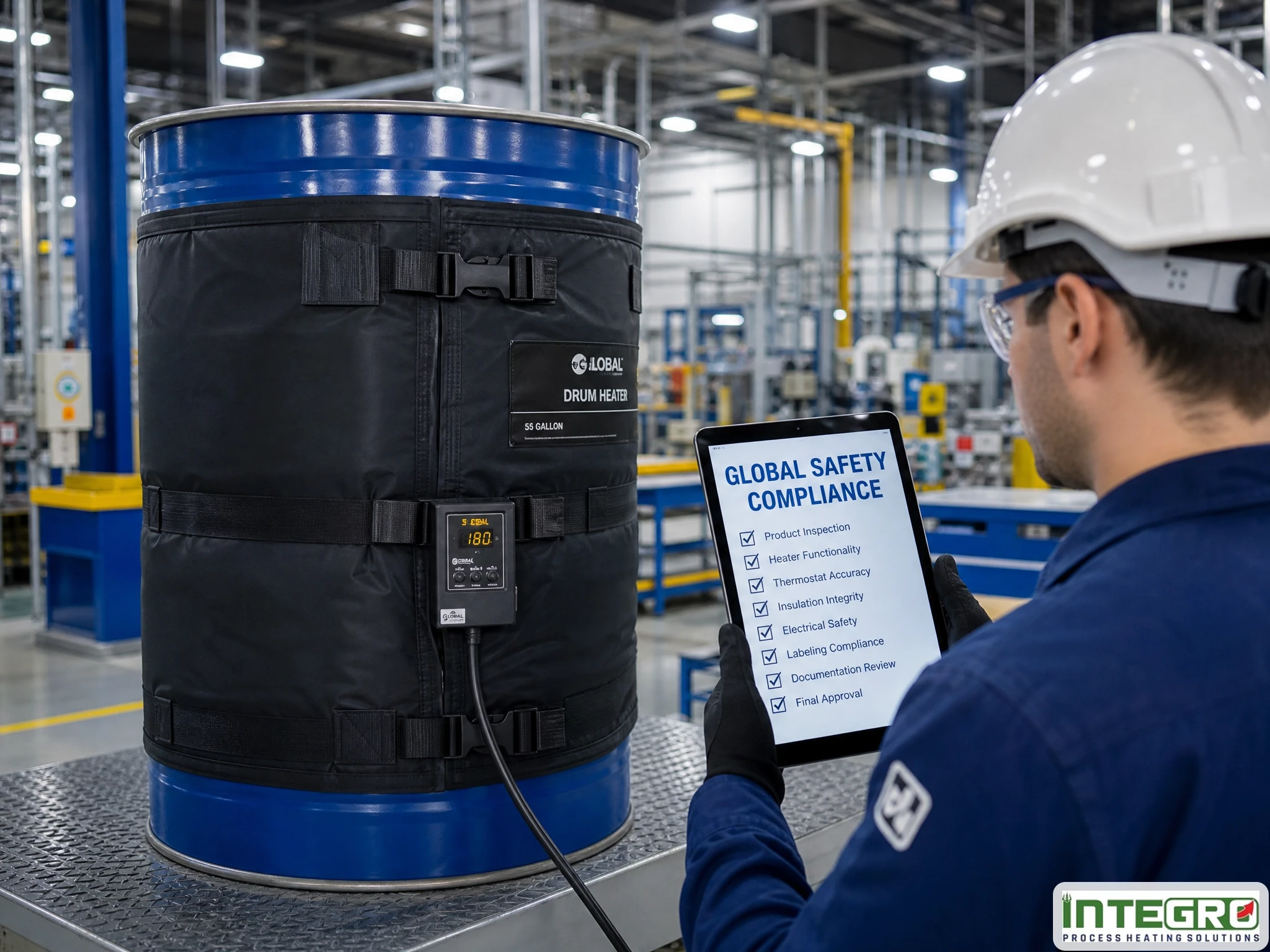
Key steps for your compliance audit
1. Request direct third-party test reports
Do not just look at a logo on a product datasheet. Ask for the full test reports issued by recognized global bodies like TÜV, SGS, or Intertek. A reputable drum heater manufacturer in india will readily share these files. If they hesitate or offer only a self-signed CE declaration of conformity, treat that as a major red flag.
2. Validate the certificate numbers online
Once you have the certificate, go to the issuing body's online portal (such as the IECEx certificate database or UL Product iQ). Type in the registration number. You need to confirm that the certificate is active, matches the exact model number of the industrial drum heater you are buying, and covers the correct hazardous zone classifications.
3. Audit the production line virtually
If you cannot visit the facility, set up a live video walkthrough. Focus on these specific areas:
- The testing station: Do they have a dedicated high-voltage (hipot) testing rig and insulation resistance meters? Every single unit must undergo these tests before packaging.
- Material traceability: Ask how they track heating element batches. Can they trace a failure back to a specific raw material lot?
- Calibration records: Look at the stickers on their testing equipment. Are the calibration dates current?
This methodical verification ensures you receive certified systems that protect your facility instead of introducing unnecessary operational risk.
Securing your global supply chain with certified hardware
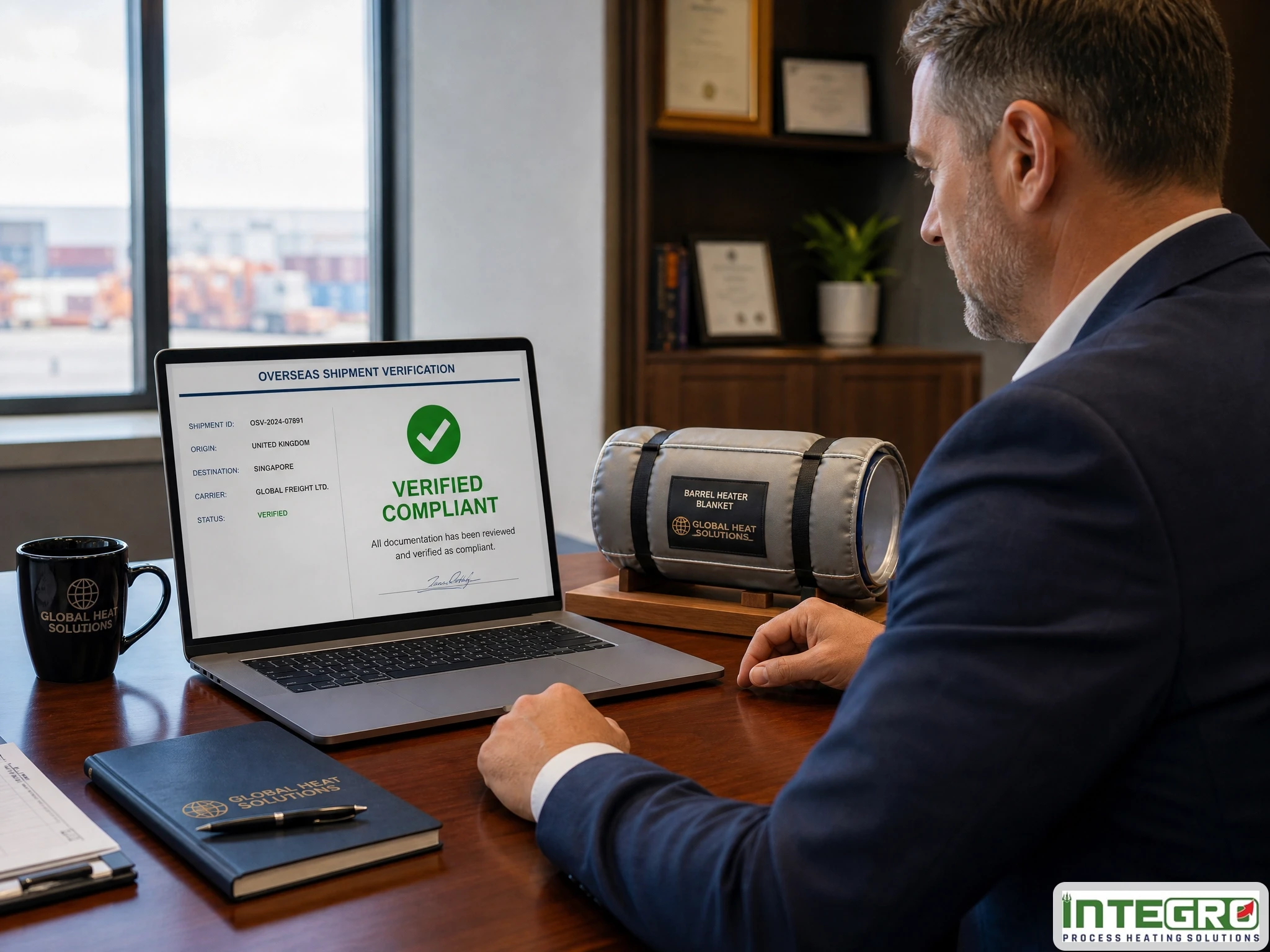
Sourcing process heating equipment from international markets isn't about finding the lowest price; it's about managing operational risk. If you install an uncertified electric drum heater in a volatile environment, you aren't just risking a ruined batch of chemical raw materials. You're risking a catastrophic facility fire, regulatory fines, and massive liability. A cheap, non-compliant heater is a liability masquerading as a cost saving.
When dealing with hazardous areas, relying on a manufacturer's self-declaration of safety is a critical mistake. You need third-party verified hardware. A certified explosion proof drum heater undergoes rigorous testing to prove it cannot become an ignition source, even under fault conditions. This level of safety engineering is what separates reliable operations from disastrous failures.
At Integro Process Heating Solutions, we design engineered heating solutions that prioritize these global safety protocols from day one. We know that real-world industrial environments are harsh, unpredictable, and unforgiving of sub-standard equipment. Verifying international certifications like ATEX, IECEx, or UL isn't a bureaucratic exercise. It is the only reliable way to ensure your hardware won't fail when the stakes are highest.
Ultimately, your supply chain is only as strong as its weakest component. By auditing your Indian manufacturing partners and demanding verifiable proof of compliance, you protect your workers, your facility, and your bottom line. Do not accept excuses or delayed documentation. If a manufacturer cannot produce valid, searchable certificate numbers for their heating equipment or Drum Heating Chambers immediately, walk away. The risk of catastrophic failure is simply too high to justify the marginal savings of uncertified hardware.
If you're tired of second-guessing overseas specs, Integro Process Heating Solutions builds certified custom heating equipment that actually meets global safety standards.
FAQ
Why do standard IP ratings fail to prove an explosion-proof drum heater is safe?
IP ratings only tell you if water and dust can get inside the enclosure. They don't measure whether internal sparks can ignite surrounding explosive gases, which is why you need specific ATEX or IECEx ratings.
Can I use the same drum heater blanket for both plastic and metal barrels?
Honestly, that's a quick way to melt a plastic drum. Plastic containers have much lower maximum temperature thresholds than steel, so you'll need thermostats and power densities dialed in specifically for the material.
How do I check if an Indian manufacturer's certifications are actually valid?
Don't just trust a PDF copy of a certificate sent over email. You'll want to check the issuing body's online database using the certificate number provided to confirm it hasn't expired or covered a different product line.
What actually stops a 55 gallon drum heater from causing thermal runaway?
Quality units use redundant safety features like backup mechanical thermal fuses and precise digital thermostats. If the primary controller fails, these fail-safes cut power before the barrel overheats.