- By Admin
- Integro
- Why container temperature stability is a quiet production killer
- Two different approaches to barrel heating: blankets vs band heaters
- Looking at the specs: coverage, insulation, and power draw
- The trade-offs of localized heat versus full-wrap insulation
- Matching the heater to your container material and contents
- Real-world scenarios: how plants handle glucose, grease, and chemicals
- Deciding on the right thermal strategy for your facility
- Frequently Asked Questions
Why container temperature stability is a quiet production killer
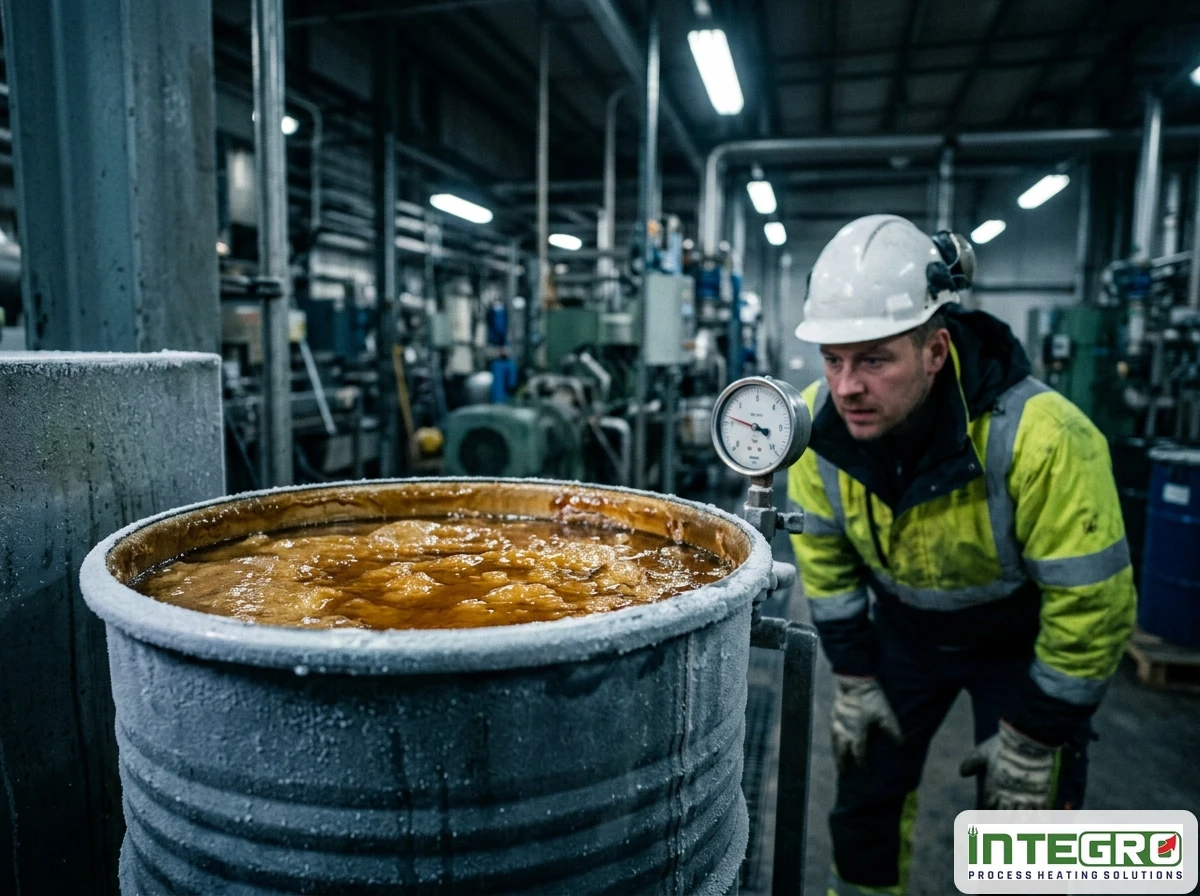
Ever watched a pump struggle to draw cold honey, heavy epoxy, or industrial adhesive? It sounds like a coffee grinder chewing on gravel. That agonizing noise is pump cavitation, and it's usually the first warning sign that your container temperature has slipped.
When high-viscosity fluids cool down, they don't just thicken; they practically lock up. If you try to force them through your production line, you risk blowing expensive pump seals, throwing off your mixing ratios, or scorching entire batches of raw material. At Integro Process Heating Solutions, we see this scenario play out every winter. Operators scramble to throw any drum heater they can find onto the problem, hoping for a quick fix.
But arbitrary heating is often worse than no heating.
If you wrap a high-wattage band around a plastic barrel, you risk melting the container wall. On the other hand, if you heat a heat-sensitive glucose batch too aggressively, you end up with caramelized, ruined product near the edges while the core remains frozen solid. Achieving true thermal stability requires matching your heating method to your specific fluid and container.
To make the right choice, you have to weigh the trade-offs of localized high-wattage heat versus full-surface insulation. Many teams consult a detailed drum heater blanket vs band comparison to understand these dynamics. Whether you need a basic drum warmer for freeze protection or specialized drum heating jackets for precise control, the decision directly impacts your daily yield.
Let's break down how flexible jackets and rigid bands stack up when the pressure is on.
Two different approaches to barrel heating: blankets vs band heaters
Cold weather spikes viscosity and kills throughput. To stop it, you need the right physical interface. Your choices boil down to two designs: full-coverage blankets or narrow, high-wattage bands.
The full-wrap flexible heating jacket
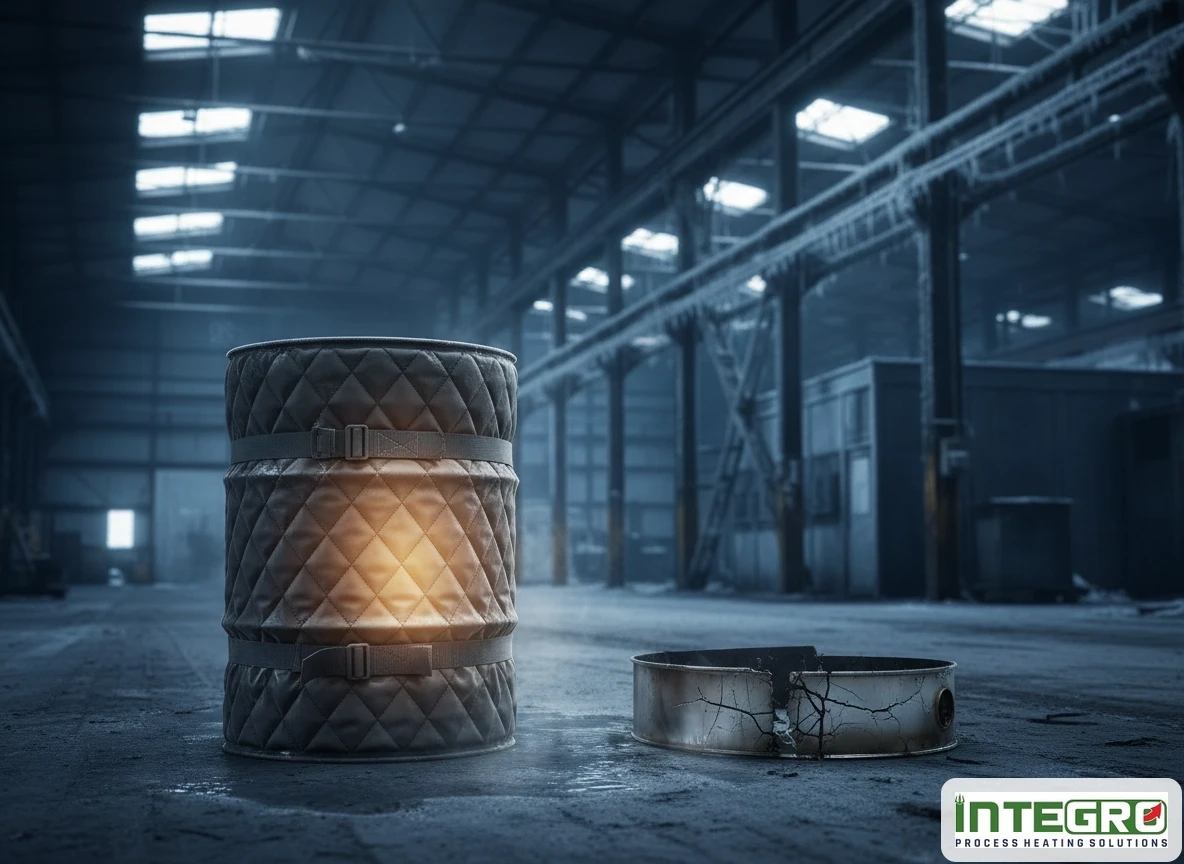
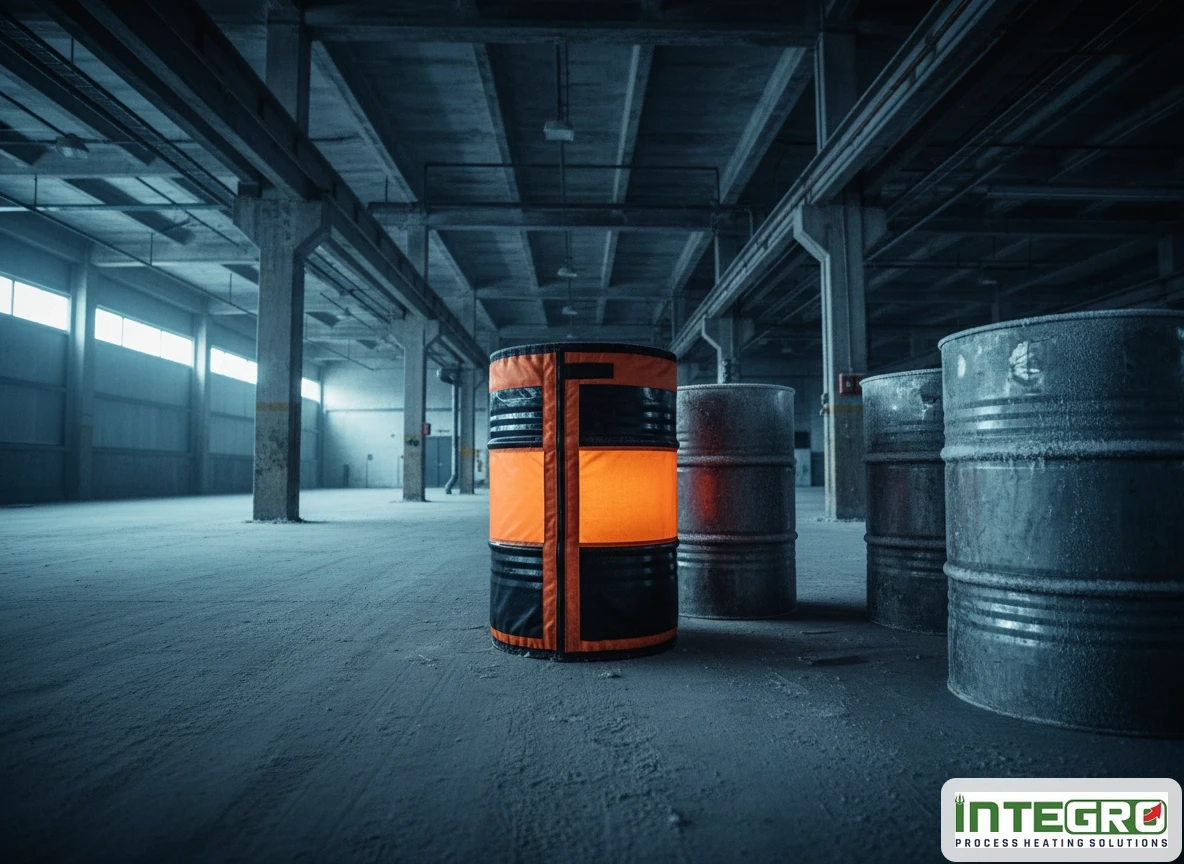
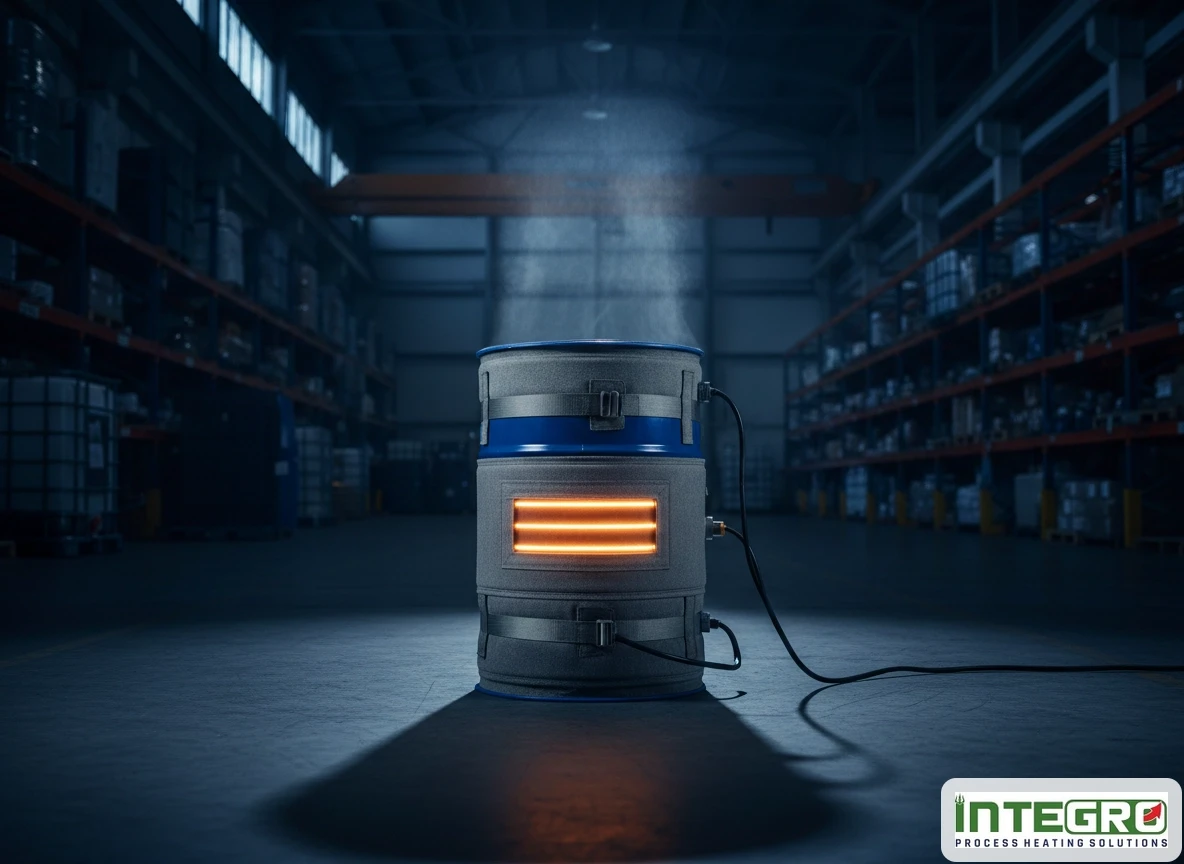
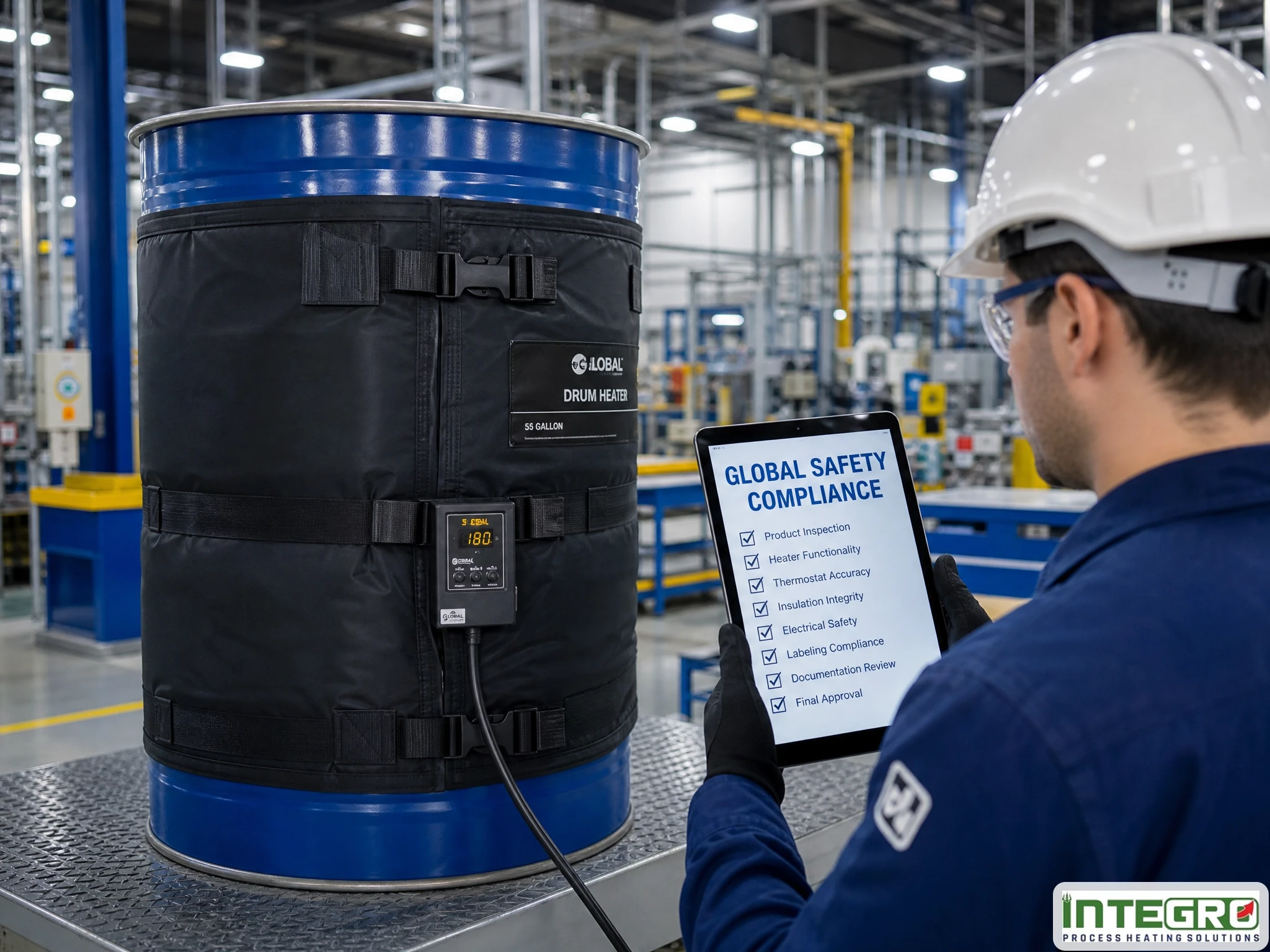
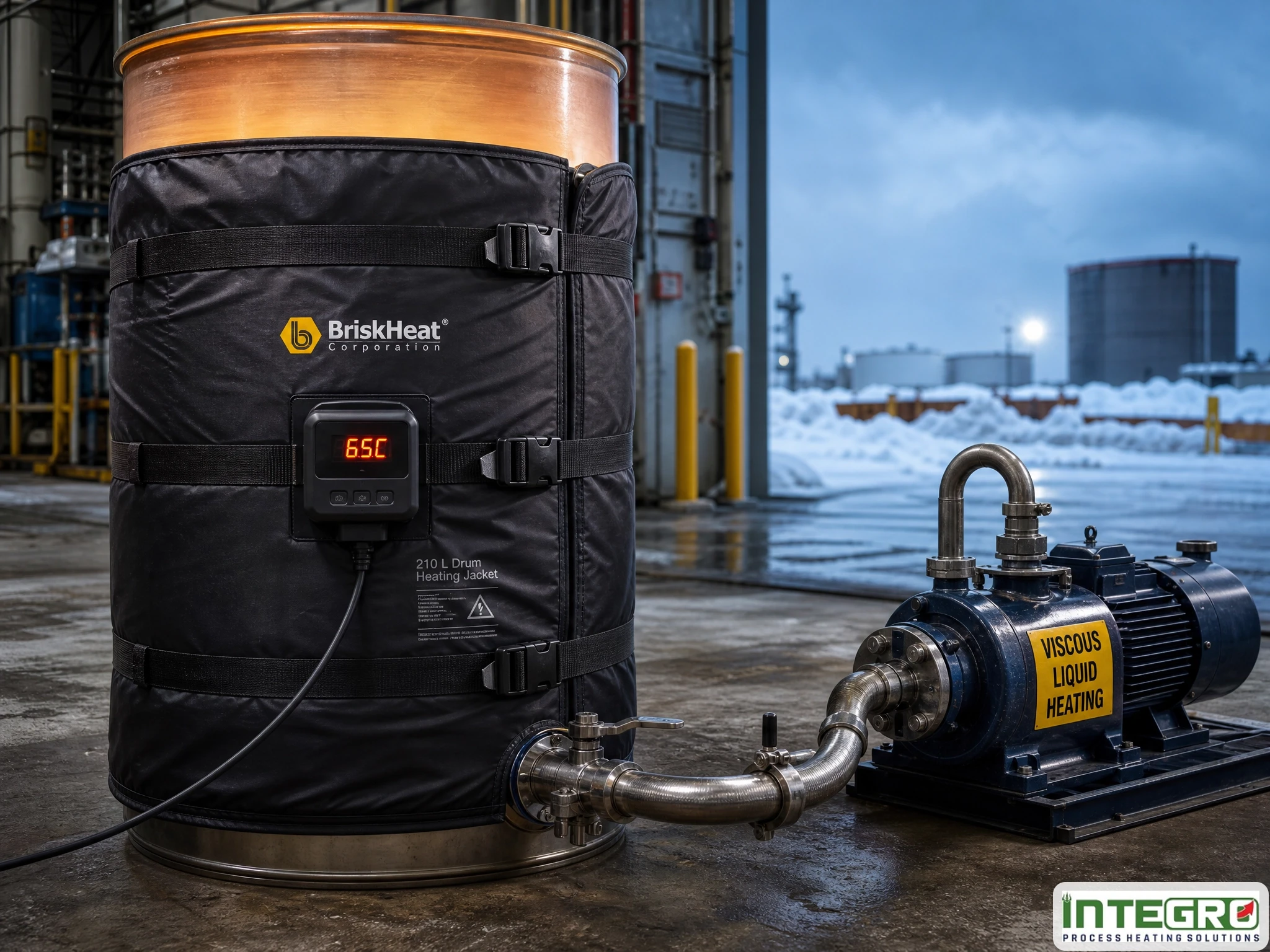
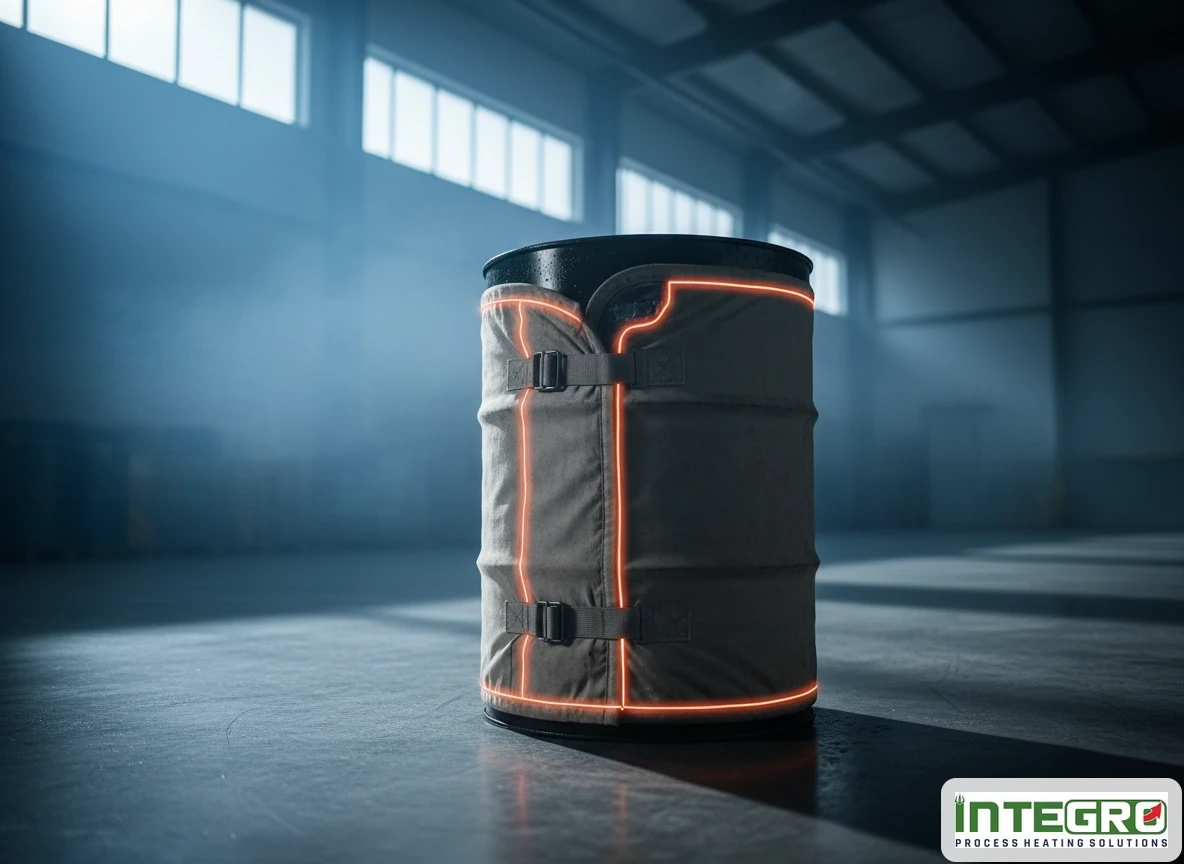
Think of a flexible heating jacket as a heavy, insulated winter coat for your barrel. It wraps the entire vertical surface of a 55-gallon drum, strapped on tight with buckles. At Integro Process Heating Solutions, we build these with multi-layered fabrics and pack resistive heating elements inside high-density insulation. That insulation is what matters. It forces heat inward into your product instead of letting it escape into a freezing warehouse. Because it covers almost 1,100 square inches of surface area, you get low, even warmth across the whole container. No hot spots. Just a gentle, uniform thermal profile.
The concentrated silicone drum heater
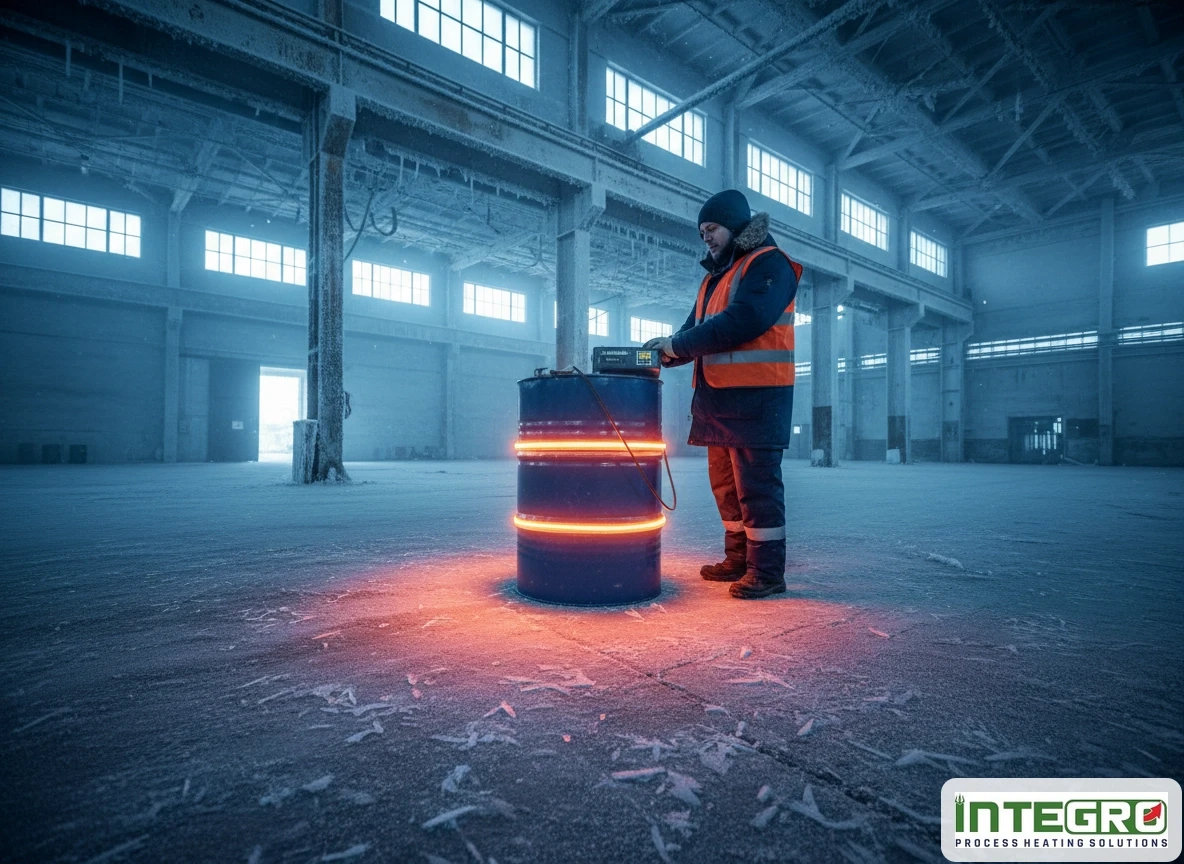
If jackets are coats, a silicone drum heater is a localized blowtorch. It is just a narrow strip of fiberglass-reinforced silicone rubber—usually three or four inches wide—with an embedded resistance wire. You clamp it to the barrel using heavy spring assemblies. Since there is no built-in insulation, these bands dump a massive amount of heat outward into the room. Yes, they are a burn hazard. But they blast high watt densities directly into a tiny strip of the barrel wall. Use them on steel drums with stable, tough fluids that need fast, aggressive melting.
Comparing the physical footprints
The real difference is surface area contact. A standard blanket covers about 90% of the barrel. A single band heater covers less than 15%. Try melting a solid block of wax with one band, and you will end up with a cold, solid core at the top and bottom. It is brute force, and we have seen it scorch product during testing. If you are dealing with sensitive materials, insulated drum heater jackets prevent those hot spots by spreading the heat. But if you just need to thin out stable gear oil in a steel drum, a few stacked bands get the job done with a simple, modular footprint.
Looking at the specs: coverage, insulation, and power draw
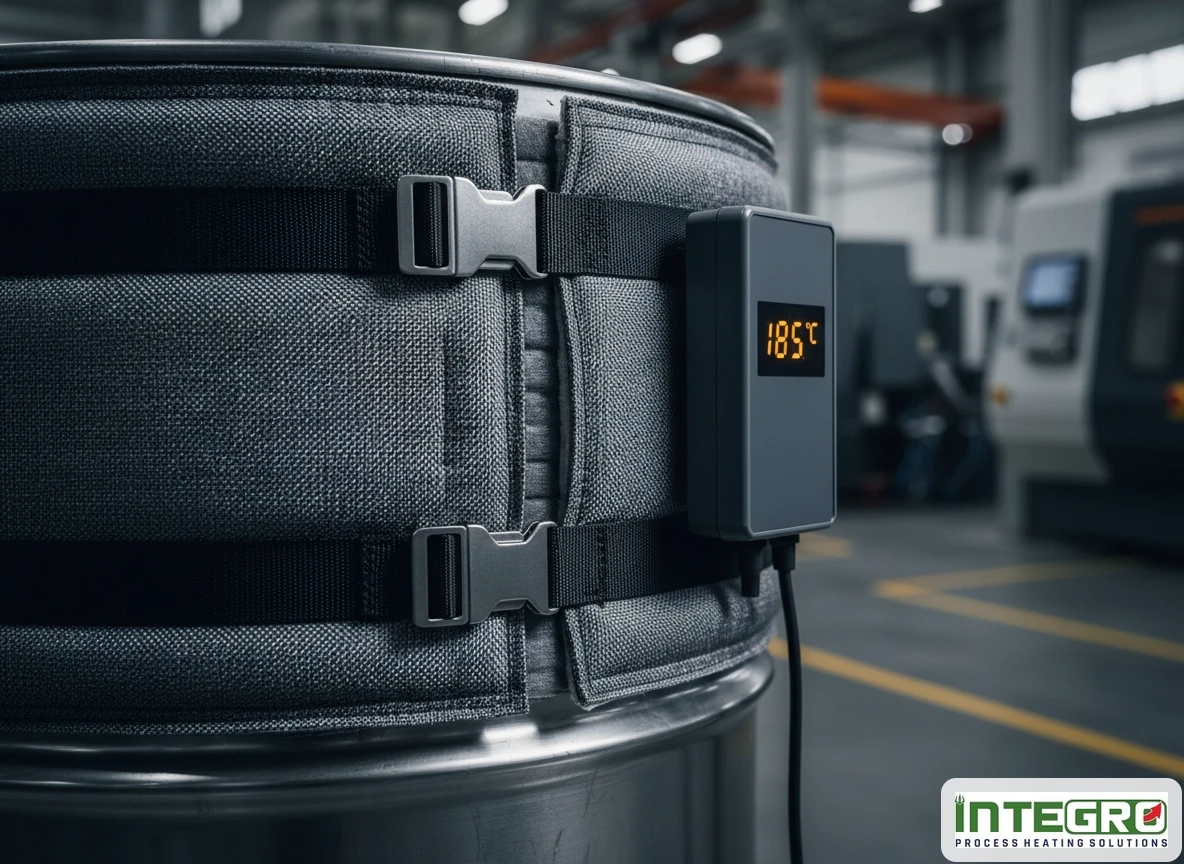
Let’s look at the numbers because that’s where the real differences show up. A standard drum heating pad or silicone band heater concentrates high watt density into a tiny strip,often around two to four inches wide. This localized approach delivers aggressive thermal energy directly to a small fraction of the drum’s steel shell. It works fast, but it relies entirely on the fluid’s natural thermal convection to distribute that heat upward. If you’re dealing with thick, viscous glucose or heavy grease, that heat isn’t moving anywhere fast, risking localized scorching right at the band site.
Conversely, flexible jacket drum heaters take the opposite approach by spreading a lower watt density across the entire surface area of the vessel. By wrapping the drum from top to bottom, these drum heating blankets maximize contact area while keeping the peak temperature at any single point much safer. This design is particularly vital for plastic polyethylene drums, which melt easily if subjected to the high-density output of a bare metal band. In fact, on plastic containers, we usually recommend keeping watt densities strictly below 0.6 W/cm² to prevent structural softening.
Then there’s the massive issue of standby heat loss. A bare silicone band heater has zero insulation on its outer face. It radiates heat inward, sure, but it also dumps a massive amount of energy directly into the surrounding ambient air. In a cold winter warehouse, this makes the heater incredibly inefficient. On the other hand, high-quality insulated drum heater jackets feature integrated insulation layers like high-density batting or closed-cell foam. This layer acts as a thermal barrier, trapping the heat where it belongs and reducing standby thermal loss to a fraction of what a bare band loses.
At Integro Process Heating Solutions, we often analyze these thermal dynamics for industrial clients trying to optimize their power draw. While a band heater might seem like the low-power choice because of its small size, it often runs continuously to make up for the heat escaping into the room. But a fully insulated blanket reaches its target temperature and cycles off, saving significant energy over a 24-hour shift. This doesn't mean blankets are always the perfect choice,sometimes you just need a cheap, quick fix for a steel drum of non-sensitive oil,but for precise thermal control, the math usually favors the insulated jacket.
The trade-offs of localized heat versus full-wrap insulation
Thermal imaging trials show that uninsulated band heaters lose up to 50% of their heat directly to the air. That is a massive waste. In contrast, an insulated flexible jacket drum heater keeps over 90% of its thermal energy, sending it straight into the container walls. This gap in efficiency does more than just lower your power bills. It changes how your materials behave as they melt.
The physics of localized vs. distributed heat
If you blast concentrated heat onto a narrow band of a steel drum, you get severe hot spots. This is bad news for temperature-sensitive materials like glucose, resins, or chemicals. They scorch easily. Meanwhile, the rest of the barrel stays cold, which leaves a stubborn, semi-solid core right in the middle. This uneven melting stalls your production line. It can also destroy your pumps.
At Integro Process Heating Solutions, we often see operators try to fix this by cranking up the thermostat. Don't do that. It only speeds up the degradation of both your product and the container. If you are using plastic polyethylene drums, this is incredibly risky. High watt densities easily soften or melt plastic walls. That is why picking the right industrial heaters matters so much.
Balancing quick viscosity drops with material safety
To get uniform heat, a full-wrap electric drum heater is usually your safest bet. These insulated jackets spread heat across the entire surface of the container. By lowering the watt density and maximizing the contact area, they get rid of hot spots. Your whole batch reaches the target temperature at the same time.
If you need precise temperature control, a drum heating chamber or high-grade drum heating jackets will prevent thermal runaway. When sourcing this gear, work with reliable industrial drum heaters suppliers. They will help you get the exact watt density and safety limiters your materials need.
Still, band heaters have their uses. Say you need to quickly thin out a highly stable, non-sensitive fluid like heavy motor grease in a steel drum. Stacked band heaters work great here because they create fast, targeted heat zones. You can even turn off individual bands as the product level drops. This stops the empty upper half of the drum from overheating. But if you want long-term efficiency and want to keep your product safe, the uniform heat of a full-wrap system is tough to beat.
Matching the heater to your container material and contents
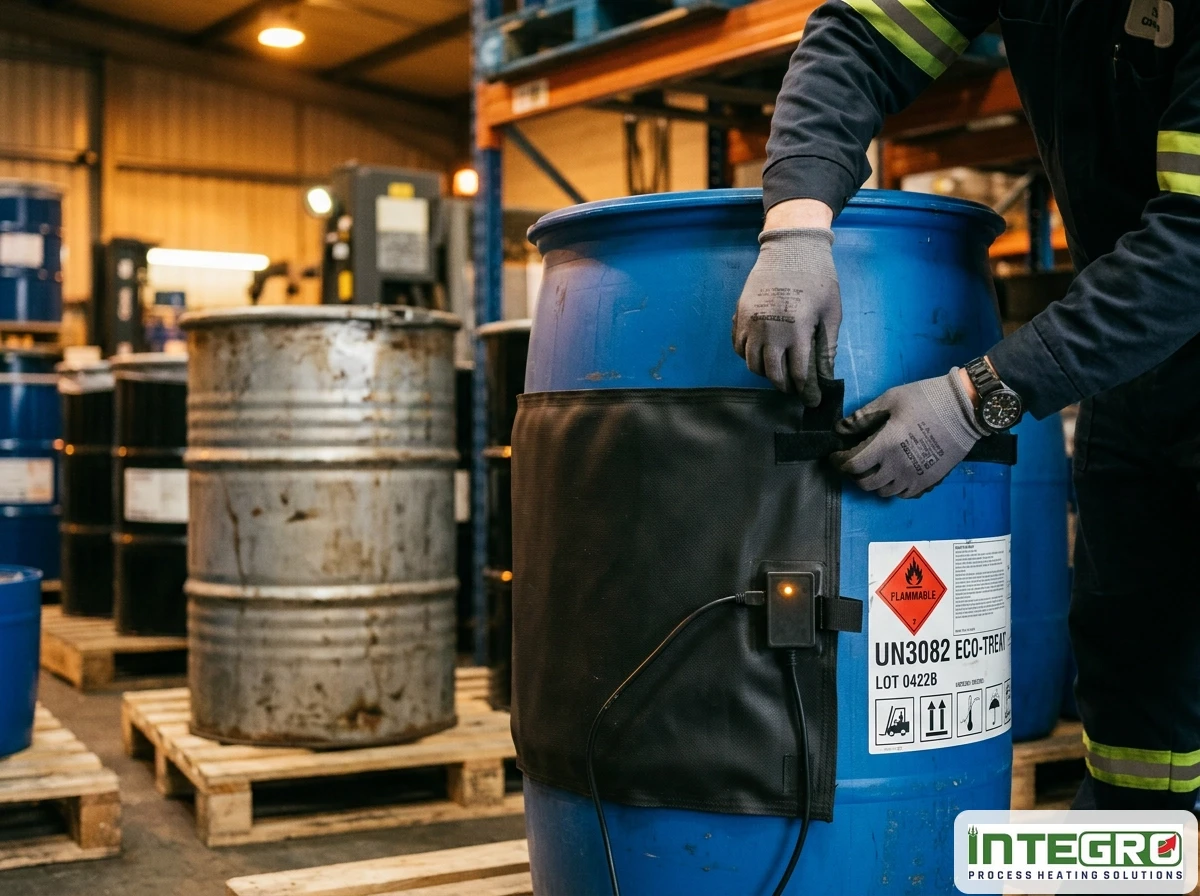
How do you translate these thermal dynamics into daily shop-floor decisions? You can't just throw any heater onto any barrel and hope for the best. Your container material and the chemical quirks of what's inside dictate your hardware choice. It's that simple.
Let's talk containers first. If you're dealing with a standard plastic poly drum, you have to be careful. Plastic is a thermal insulator. It doesn't distribute heat quickly. If you wrap a high-wattage, narrow silicone band around a poly drum, you risk softening or melting the plastic wall. For these containers, a low watt density is mandatory, typically under 0.6 W/cm², with strict safety limits around 130°C. This is where flexible jacket drum heaters come in handy because they spread gentle, uniform warmth over a huge surface area. Steel drums, on the other hand, are highly conductive. They easily handle the aggressive, localized heat of stacked band heaters.
But what's actually inside the barrel? That's the real kicker. If you're warming up temperature-sensitive materials like glucose, corn syrup, or specialty resins, high heat is your enemy. Too much heat in one spot will scorch the sugars. It can ruin the chemical mix right at the drum wall. For these delicate fluids, using insulated drum heater jackets with built-in digital thermostats keeps the contents stable without hot spots.
But if you're just trying to liquefy a stubborn block of heavy grease or industrial gear oil in a steel barrel, those delicate rules don't apply. You need raw power. Stacked silicone band heaters let you blast heat directly into the lower zones of the drum, quickly lowering viscosity so your pumps don't choke.
Are you operating in a hazardous area? If your facility handles volatile chemicals or solvents, standard heating bands won't cut it. You'll need Class I, Division 2 certified equipment to prevent any accidental ignition. It's an extra layer of planning, but it's non-negotiable for safety.
At Integro Process Heating Solutions, we tell clients that matching the thermal delivery to the material's tolerance is the only way to avoid ruined batches. It's a delicate balance. Honestly, the right choice isn't always obvious until you map out your exact viscosity targets. Selecting the proper industrial drum heaters is about protecting your product and keeping your line moving safely. You don't want to deal with costly downtime.
Real-world scenarios: how plants handle glucose, grease, and chemicals
Imagine a cold Monday morning at a food processing plant where a 55-gallon drum of glucose has cooled into a stubborn, concrete-like sludge. The line operator needs to pump it into the main mixing vat, but the cold syrup is too thick, risking immediate pump cavitation. If they clamp on a high-heat, narrow band, they will scorch the sugars near the drum wall. This ruins the entire batch and creates a carbonized layer that is incredibly difficult to clean.
To solve this, the facility wraps the container in a well-insulated flexible heating jacket. Because the jacket distributes gentle, uniform warmth across the entire surface area, it lowers viscosity without creating localized hot spots. The insulation prevents heat from escaping into the cold warehouse, keeping energy bills down. For plants managing larger bulk containers, using specialized ibc jacket heaters ensures identical thermal consistency across larger volumes.
Now contrast that with a mining maintenance depot handling heavy gear grease in steel drums. The grease doesn't scorch easily, but it must be thinned quickly to service heavy machinery. In this environment, a rugged silicone drum heater band system is the practical choice. Technicians stack three bands on the steel barrel, creating distinct thermal zones. As the pump draws grease from the top down, they simply switch off the upper bands to prevent empty-drum burnouts and save energy. This prevents the band from heating empty steel, which can warp the container or pose a fire risk.
We also see this division in chemical processing. Volatile solvents require precise, low-temperature regulation to avoid reaching flashpoints. A full-wrap thermal blanket prevents localized overheating that could trigger safety shut-offs or dangerous off-gassing. Whether you are preventing crystallization in sensitive chemical compounds or rapidly thinning industrial lubricants, matching the thermal delivery to the specific fluid behavior prevents costly downtime. It is not about finding the hottest heater, but the right thermal footprint for the job.
Deciding on the right thermal strategy for your facility

Photo by Soner Mazlum on Pexels
Choosing the right drum heater comes down to your container material and temperature tolerances. If you handle plastic drums or heat-sensitive materials like glucose, a rigid band heater is a bad choice. It will melt your barrels or scorch your product. You need the uniform heat distribution of insulated flexible heating jackets.
For fast, aggressive heating of stable lubricants in steel drums, a multi-zone electric drum heater configuration using silicone bands works well. But keep an eye on your electrical load. Just like a self regulating heat trace system, your drum heating setup must be sized correctly for your electrical infrastructure to prevent breaker trips during cold starts.
We routinely see plants waste thousands of dollars on energy loss by choosing uninsulated bands for long-term warming. While bands have a lower initial purchase price, they radiate heat directly into the ambient air. It's a massive waste of electricity. If you need consistent thermal control, buy the jacket. Some applications might require custom setups, and there isn't always a simple one-size-fits-all solution for every factory floor. But for standard viscosity control, match the thermal delivery method to your drum material. It saves your product, your energy bill, and your operational sanity.
If your plant is struggling with thick, unpumpable fluids, Integro Process Heating Solutions designs custom heating jackets and circulation heaters that keep your lines running smoothly.
Frequently Asked Questions
Can I use a silicone band heater on a plastic polyethylene drum?
Honestly, it's risky. Most rigid band heaters pack too much watt density for plastic, which doesn't conduct heat well and can easily melt. You'll want to stick to low-watt-density flexible jackets for poly drums.
Why does my drum heater leave a solid core of wax or resin in the middle?
That happens because narrow band heaters only heat a specific strip of the barrel, leaving the center untouched. If you're dealing with full-solid phase changes, a full-wrap heating jacket makes a huge difference.
How do I stop heavy oil from cavitating pumps in winter?
You'll need to maintain proper fluid viscosity by keeping barrels at a steady, controlled temperature before pumping. Using a 55 gallon drum heater with a digital thermostat keeps things flowing without scorching the edges.
Are flexible heating jackets more energy-efficient than band heaters?
They usually are because they include built-in thermal insulation layers that trap heat against the drum wall. That means less heat escapes into your chilly warehouse, lowering your power bill.